The metal gate at Flinders Street Station has a specific, rhythmic clatter. For decades, that sound—the mechanical thwack of a barrier opening—was the gatekeeper of the city. It was the physical manifestation of a social contract: pay your way, or stay out. But lately, in the sprawling urban expanse of Victoria and the rugged, wind-swept stretches of Tasmania, that sound is being replaced by a silence that feels like a revolution.
Public transport has long been viewed as a utility, a line item on a budget that must be balanced through the nickel-and-diming of the working class. We’ve been conditioned to see a train ride as a transaction. You trade five dollars for twenty kilometers of steel track. But something shifted in the southern corners of Australia. Governments stopped looking at the farebox and started looking at the empty seats, the congested highways, and the people trapped in their own neighborhoods by the sheer cost of movement.
Consider a hypothetical commuter named Elias. He lives in the outer suburbs of Melbourne, where the houses are cheaper but the distance to opportunity is measured in expensive, soul-crushing hours. For Elias, a five-day commute isn't just a logistical hurdle. It is a tax on his existence. When the Victorian government announced a massive expansion of regional fare caps and periods of free travel, Elias didn't just see a few extra dollars in his bank account. He saw a path. The city, once a distant and expensive fortress, suddenly became his backyard.
The Economic Ghost in the Machine
The traditional argument against free or heavily subsidized public transport is built on the myth of the "lost revenue." Critics point to the millions of dollars that evaporate when you stop charging at the turnstile. They see a hole in the balance sheet. What they fail to see is the economic friction that fares create.
Every dollar spent on a train ticket is a dollar not spent at a local café, a small grocery store, or a community theater. In Tasmania, where the government has experimented with free bus initiatives, the data began to tell a story that wasn't about loss, but about flow. When you remove the barrier to entry, people move. They circulate. The economy stops being a series of stagnant pools and starts behaving like a river.
In Tasmania, the "free fare" periods weren't just a gift; they were a diagnostic tool. The state realized that the cost of collecting fares—the ticketing infrastructure, the enforcement officers, the administrative overhead—often ate a staggering percentage of the revenue itself. By walking away from the ticket, they weren't just helping the poor; they were cutting the cord on a bloated, inefficient system of surveillance and control.
The Invisible Stakes of Breath and Steel
The air in Hobart smells of salt and eucalyptus, but during peak hour, that scent is increasingly choked by the grey haze of idling engines. We talk about climate change in the abstract, using terrifying percentages and distant deadlines. But the reality is the person sitting in a Toyota Corolla for ninety minutes, burning fuel to move two tons of metal just to transport eighty kilograms of human.
Victoria’s push toward more accessible, free, or capped transport is a desperate, necessary play for the climate. It is the realization that we cannot "nudge" people out of cars with polite requests. We have to make the alternative so frictionless that driving feels like a burden.
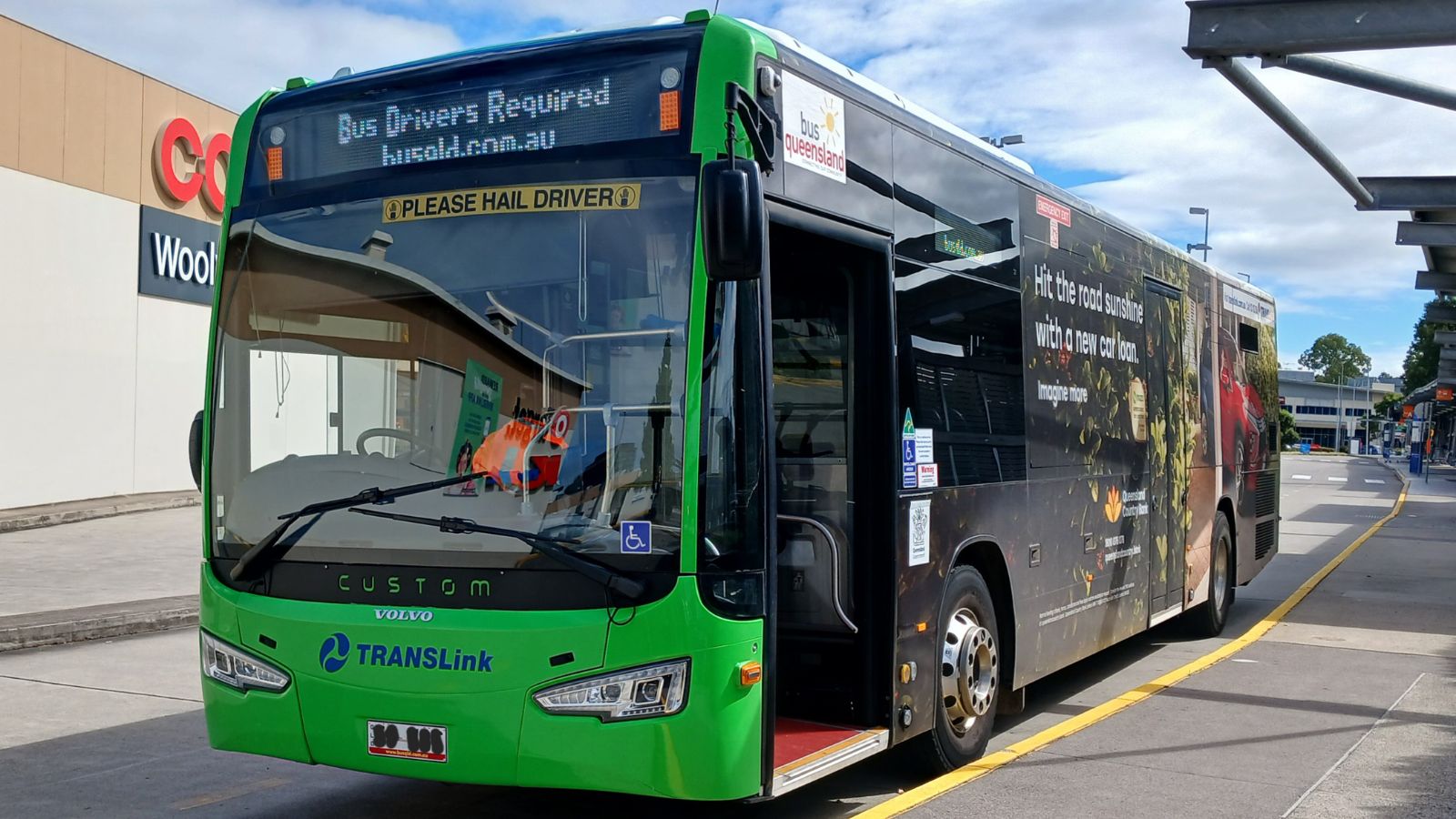
Think of the physics of a city. A single bus can take forty cars off the road. A single train can take hundreds. When Victoria slashed regional fares to match the metropolitan daily cap—effectively making long-distance travel nearly free compared to previous prices—they didn't just change a price point. They changed the geometry of the state. They collapsed the distance between the rural worker and the urban center.
The Psychology of the Open Gate
There is a psychological weight to a ticket. It is a reminder that you are a visitor, a customer, someone who must justify their presence in a public space. When a government makes transport free, it sends a radical message: You belong here. This city is yours.
In Tasmania, the social impact of free bus travel was most visible among those who had been most isolated. The elderly who had stopped visiting friends because the bus fare felt like an indulgence they couldn't afford. The students who were choosing between a meal and a ride to the library. For these people, the fare wasn't a "contribution to the system." It was a fence.
When the fence comes down, the behavior changes. We see a reduction in "fare evasion" stress—the low-level anxiety that permeates a carriage when a ticket inspector boards. We see a decline in road rage, as the sheer volume of traffic eases. These are the "invisible stakes"—the mental health benefits and social cohesion that never show up on a treasury report but define the quality of life for millions.
The Hard Logic of the Bottom Line
Let's talk about the cold, hard numbers that justify this "generosity." It costs billions to build a new freeway lane. In Melbourne, the cost of road congestion is projected to reach $10 billion annually by 2030 if left unchecked. You cannot build your way out of that problem with more asphalt.
Victoria's decision to subsidize travel so heavily is, ironically, a fiscally conservative move in the long run. Every person who switches from a car to a train is a person who isn't wearing down the road surface, isn't involved in a costly accident, and isn't requiring a billion-dollar tunnel to be dug under their house.
The "free" model isn't about charity. It’s about infrastructure efficiency. If a train is running anyway, the marginal cost of adding one more passenger is essentially zero. But the marginal benefit of that passenger not being in a car is massive. It’s a logic that private business understands well—it’s why software companies give away "freemium" versions of their products. The goal is to get you into the ecosystem. Once you’re there, the systemic benefits far outweigh the loss of a five-dollar fee.
A Tale of Two Southern Successes
Tasmania and Victoria are very different places. One is an island of rugged wilderness and quiet towns; the other is a powerhouse of industry and frantic urban growth. Yet, both reached the same conclusion: the old way of moving people is broken.
Tasmania’s experiments focused on targeted windows of free travel, designed to break the habit of car dependency. They wanted to prove to the skeptical suburbanite that the bus was reliable, clean, and—most importantly—easy. It was a marketing campaign disguised as a policy. And it worked. Ridership spiked. The "stigma" of the bus began to fade.
Victoria’s approach was a sledgehammer to the cost of living. By capping regional fares, they effectively turned the entire state into a single, interconnected neighborhood. They told the person in Bendigo or Ballarat that they were just as much a part of the Melbourne economy as the person in South Yarra.
The Frictionless Future
We are moving toward a world where the very concept of "paying for a ride" will seem as antiquated as paying for a long-distance phone call. The friction of the transaction is the enemy of the modern city.
Imagine Elias again. He steps onto the platform. He doesn't fumble for a card. He doesn't check his balance. He doesn't worry about whether he can afford to go to that job interview across town. He simply walks onto the train. The doors hiss shut.
The train pulls away from the station, carving through the morning mist. Outside the window, the highways are still clogged, a sea of red brake lights and frustrated commuters. But inside the carriage, there is a quiet, shared sense of mobility. There is the rustle of newspapers, the soft glow of smartphones, and the steady hum of a society that has decided that the right to move should not be a luxury.
The experiment in Victoria and Tasmania is more than a budget line. It is a confession that our cities have become too expensive to live in, and that the only way forward is to stop charging people for the privilege of participating in society. The ticket stub is dying. And in its place, we are finding a new way to breathe.
As the sun sets over the Derwent River in Hobart, a bus pulls up to a stop. A woman gets on, nods to the driver, and sits down. No money changes hands. No cards are tapped. She simply sits, watches the water flicker past, and heads home. The silence where the "clack" of the coin used to be is the sound of a city finally working for its people.