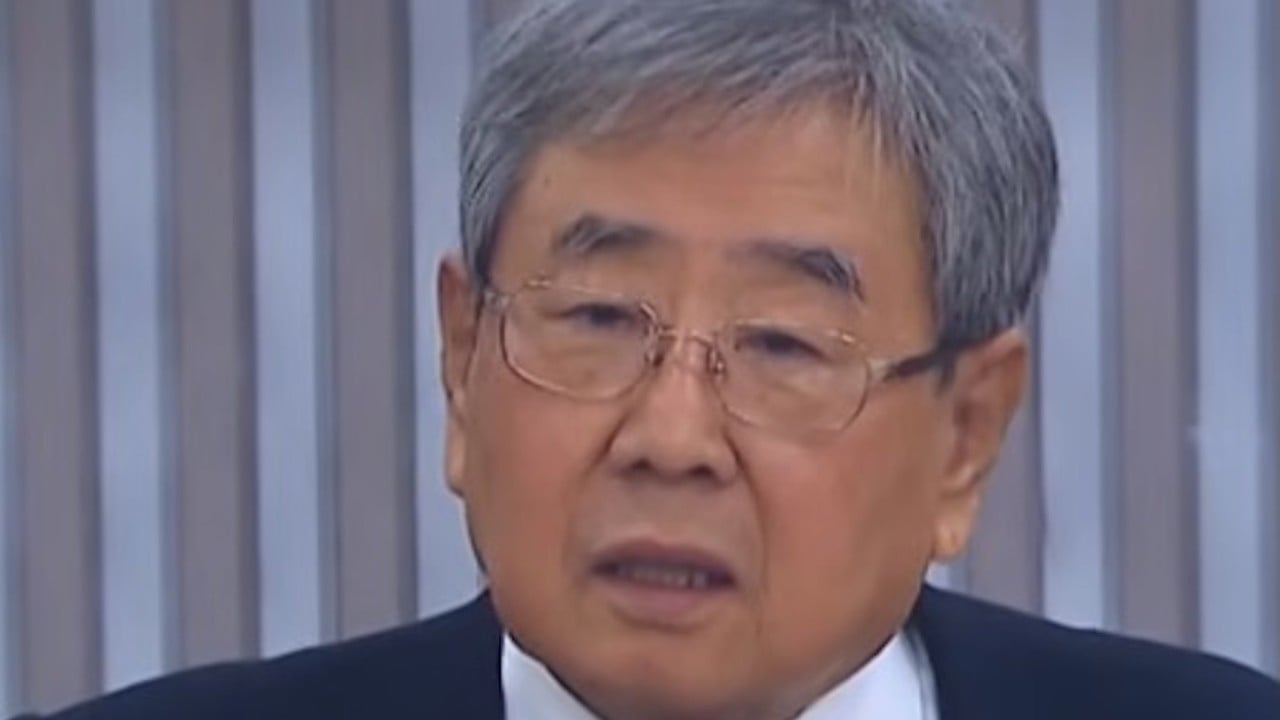
The air in the basement of the Namyoung-dong police station didn't move. It stayed heavy, thick with the scent of damp concrete and the metallic tang of old blood. In the 1980s, this was the most feared address in Seoul. It was a place where the law stopped at the door and a man named Lee Geun-an began his work.
They called him the "Torture Expert." It was a title he wore with a terrifying kind of professional pride. To the authoritarian regime of Chun Doo-hwan, he was a technician of the human soul, a man who could dismantle a person’s will as easily as a mechanic takes apart an engine.
Lee Geun-an died recently at the age of 86. He passed away in a quiet hospital bed, a sharp contrast to the cold, wet floors where his victims once gasped for air. His death didn't just end a life; it ripped the scab off a wound that South Korea has been trying to heal for four decades.
The Architecture of Fear
To understand the weight of Lee’s legacy, you have to understand the "Screaming Room." It wasn't a chaotic dungeon. It was a laboratory. The windows were narrow slits, positioned high so you could see the sky but never reach it. The bathtubs weren't for washing; they were for "water-torture," a clinical term for the controlled drowning of a human being.
Lee was a master of the "Chil-sung-pan," or the Seven-Star Board. Imagine being strapped to a wooden plank so tightly your circulation stops, while electricity is pulsed through your body until your muscles tear themselves away from the bone.
He didn't see himself as a monster. That is the most chilling part of the story. In his own mind, and in his later testimonies, he saw himself as a patriot. He believed he was a "national security artist" carving the truth out of communists and dissidents. When he applied the electrodes, he thought he was saving the country.
This is the central horror of authoritarianism. It turns the neighbor into the inquisitor. It provides a moral framework for the unthinkable.
The Victim Who Became a Giant
One name always rises above the rest when people speak of Lee Geun-an: Kim Geun-tae.
Kim was a pro-democracy activist, a man with a soft voice and a spine of tempered steel. In 1985, he was taken to Namyoung-dong. For 22 days, Lee Geun-an worked on him. Kim was water-tortured. He was electric-shocked. He was beaten until he couldn't walk.
Lee later joked that he "gave Kim a massage."
But the "massage" left Kim with lifelong trauma, a shaking hand, and a deep, localized fear of the sound of running water. Yet, years later, when the regime fell and the tides of history turned, it was Kim Geun-tae who climbed the ranks of the new democracy to become a minister.
The victim outlasted the tormentor.
The Priest in the Hiding Hole
After the 1987 June Democracy Movement swept the dictators from power, the hunters became the hunted. Lee Geun-an went underground. He disappeared for nearly eleven years.
He didn't hide in a foreign country. He hid in the attic of his own home.
Consider the psychological weight of that decade. A man who once commanded the power of life and death, reduced to a ghost in his own rafters. He watched his children grow through floorboards. He listened to the world change without him. He was a prisoner of his own making long before the police finally put him behind bars in 1999.
When he finally surrendered, he claimed he had found God. He became an ordained minister. He sat in pulpits and told congregations that he had been forgiven.
But forgiveness is a complex currency in a nation still searching for its disappeared sons and daughters. Can a man who spent years perfecting the art of pain simply pray it away? The victims didn't think so. The public didn't think so. Eventually, his Presbyterian order stripped him of his ministry, deciding that "torture expert" and "man of God" were identities that could never occupy the same skin.
The Ghost in the Modern Machine
South Korea today is a neon-lit marvel of technology and pop culture. It is the land of K-pop and high-speed rail. But under the gloss of the "Miracle on the Han River" lies the sedimentary layer of the Namyoung-dong era.
Lee’s death is a reminder that the transition from a military dictatorship to a vibrant democracy isn't a clean break. It’s a messy, agonizing crawl.
There are thousands of "small Kim Geun-taes" still living in Seoul, Busan, and Gwangju. They are the elders you see on the subway, the ones who flinch at a sudden loud noise or the sight of a police uniform. For them, the "authoritarian era" isn't a chapter in a history book. It is a recurring nightmare that plays out in the quiet hours of the night.
The tragedy of Lee Geun-an’s quiet death is the lack of a final, clarifying confession. He never truly apologized to the specific individuals he broke. He apologized to "the times." He blamed the "atmosphere of the era." He used the classic defense of the bureaucrat: I was just a tool in the shed.
But a tool doesn't take pride in its sharpness. Lee did.
The Unfinished Trial
We often want history to end with a gavel strike. We want the villain to repent, the hero to be healed, and the credits to roll.
Life doesn't work that way.
Lee Geun-an took his secrets to the grave. He took the locations of unknown burial sites. He took the names of the superiors who gave the nods and the winks. He died an old man who had seen the sun rise on a country he no longer recognized—a country his victims built with their bare, broken hands.
The "Screaming Room" at Namyoung-dong is now a museum. You can walk through the corridors. You can stand in the rooms where Lee Geun-an once stood. The walls have been painted, and the equipment is gone, but the silence there is different from the silence anywhere else in Seoul. It is an expectant silence. It is the sound of a thousand questions that were never answered.
The wound is open because justice was never quite finished. Some call for a final reconciliation, a way to bury the bitterness with the man. Others argue that to forget is to invite the shadow back into the house.
As the news of his passing fades from the headlines, the real legacy remains. It isn't found in the obituary of a torturer. It is found in the resilience of a people who refused to stay broken. It is found in the fact that today, a South Korean citizen can stand in front of that very police station and scream their dissent without fear of the bathtub or the board.
The monster is dead. The scars, however, have become part of the map.
Perhaps the only way to truly honor those who survived Lee Geun-an is to acknowledge that the "expert" failed. He could break the bone. He could scar the skin. He could even darken the mind. But he couldn't stop the morning from coming.
The water in the bathtub is still. The electricity is disconnected. The man who held the wires is gone.
The sky, visible through those high, narrow slits, belongs to the people now.