The headlines are screaming about a "dangerous new phase" of conflict. They point to crates of fresh missiles, carrier strike groups, and the arrival of "most lethal" munitions as if war were a simple game of Top Trumps. It is a seductive, lazy narrative. It suggests that by simply increasing the lethality of the kinetic tools on the table, the United States can dictate the terms of a regional shift.
They are wrong.
The obsession with missile specs—range, payload, Mach speed—is a distraction from the reality of modern attrition. While the mainstream media drools over the technical prowess of a Long Range Anti-Ship Missile (LRASM) or the deployment of specialized bunker busters, they ignore the math of the theater. We are watching a 20th-century mindset attempt to solve a 21st-century distributed nightmare.
The Lethality Trap
Lethality is a metric of destruction, not a metric of victory. In the current friction between the U.S. and Iran-backed entities, the "most lethal" missiles are often the least useful. Why? Because they are too expensive to use in the volume required and too politically heavy to launch without triggering the very regional collapse they are meant to deter.
When a news outlet tells you that the U.S. is "readying" these weapons, what they are actually saying is that the U.S. is reaching for its most expensive security blanket. A missile that costs $3 million is a liability when the target is a $20,000 drone or a decentralized command node hidden in a civilian dense urban basement. I have seen procurement cycles prioritize these "silver bullets" for decades, only to find that in a real-world skirmish, the commanders are terrified to fire them because the inventory is finite and the replacement lead time is measured in years, not weeks.
The Logistics of the Empty Magazine
Let’s talk about the math no one wants to touch. The U.S. defense industrial base is currently brittle. We have spent decades optimizing for "just-in-time" delivery of complex systems. If a high-intensity conflict breaks out, the "lethal missiles" everyone is bragging about will be gone in the first 72 hours.
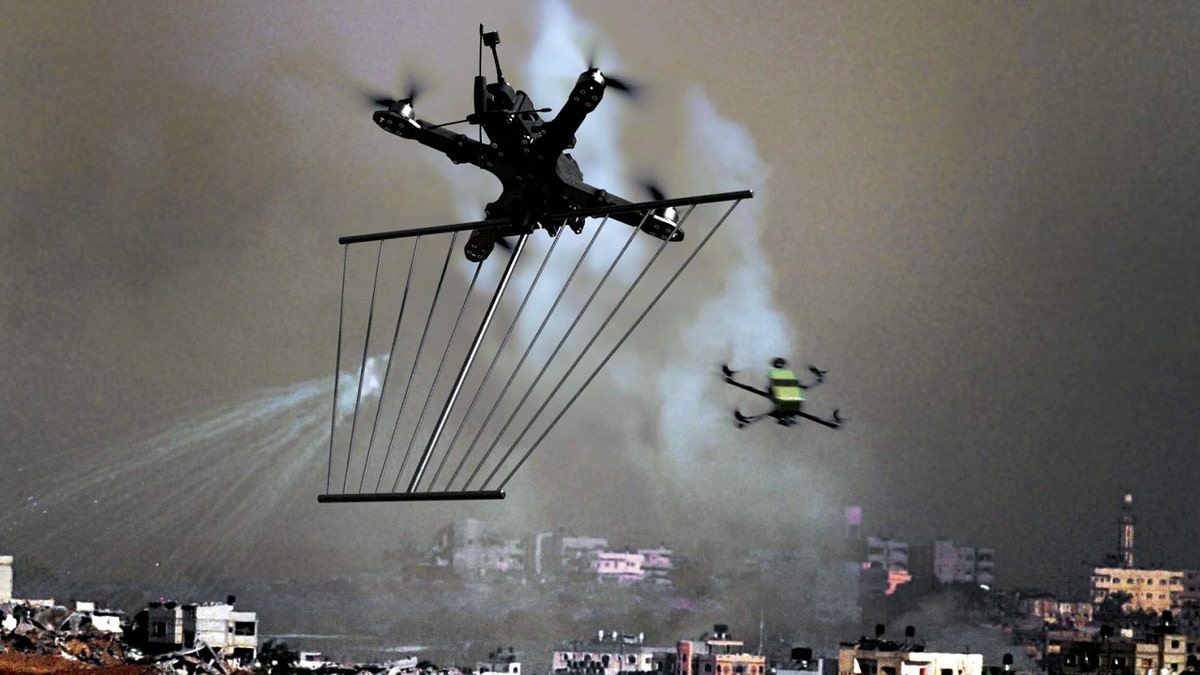
The "dangerous new phase" isn't about who has the pointiest stick. It’s about who has the deepest bucket of sticks. Iran and its proxies have mastered the art of the "cheap and plenty." They don't need a missile that can hit a coin from 500 miles away; they just need 5,000 drones that can overwhelm a billion-dollar destroyer's radar.
The Indian media and Western pundits alike focus on the quality of American steel. They should be looking at the quantity of the adversary's fiberglass. We are bringing Ferraris to a demolition derby.
Why "Surgical Strikes" Are a Fantasy
The competitor's narrative relies on the idea of surgical precision—the belief that we can decapitate a threat without bleeding out. This is a fundamental misunderstanding of the Iranian strategic depth.
- Strategic Dispersion: Iran does not keep its assets in a single, convenient "target rich environment." It uses a "mosaic defense."
- The Proxy Buffer: The U.S. isn't just fighting a country; it’s fighting a franchise model. You cannot kill a franchise by blowing up one branch office.
- The Escalation Ladder: Every time a "most lethal" weapon is deployed, it resets the baseline for what is acceptable. If you use your best tools on day one, you have nowhere to go but nuclear or boots on the ground.
The Intelligence Failure of Hardware Worship
The focus on missiles assumes that the problem is a lack of firepower. It isn't. The problem is a lack of political objective. What is the "lethal" missile supposed to achieve?
- If the goal is deterrence, it has already failed; the "new phase" is happening because the adversary is no longer deterred by the threat of high-tech intervention.
- If the goal is regime change, a missile is the wrong tool for the job.
- If the goal is "containing" the conflict, high-kinetic strikes are the fastest way to expand it.
I’ve watched planners fall in love with the video feed from a precision-guided munition. It looks clean. It looks like winning. But three weeks later, the underlying political rot that necessitated the strike has only grown. We are treating a systemic infection with a blowtorch.
The Counter-Intuitive Reality: Vulnerability as a Choice
The U.S. maintains its "lethality" by concentrating power in massive, vulnerable platforms like aircraft carriers. These are essentially 100,000-ton magnets for every anti-access/area-denial (A2/AD) weapon in the Iranian inventory.
Instead of readying "most lethal" missiles to protect these platforms, a truly disruptive strategy would be to abandon the platforms entirely. We should be moving toward a distributed, "attritable" force—thousands of small, cheap, autonomous systems that don't care if they get hit. But the Pentagon won't do that. There's no prestige in a drone that costs as much as a Honda Civic. There is massive prestige (and a massive lobbying budget) in a missile that costs as much as a private jet.
Stop Asking if the Missiles Work
People always ask: "Can the Patriot intercept the incoming salvo?" or "Can the Tomahawk hit the bunker?"
Those are the wrong questions. The right questions are:
- "How many intercepts can we afford before we are broke?"
- "Does the destruction of that bunker actually change the adversary's will to fight?"
- "Are we prepared for the 10-year insurgency that follows the 'lethal' opening act?"
The hard truth is that our technological superiority has become a crutch. It allows us to avoid the difficult diplomatic and unconventional warfare work required to actually stabilize a region. We use "lethality" as a substitute for strategy.
The Economic Asymmetry
Consider the cost-exchange ratio. If the U.S. fires a $2 million interceptor to stop a $50,000 missile, the U.S. loses that exchange every single time, even if the intercept is "successful." We are being bled dry by a thousand cheap cuts while we wait to use our one expensive sword.
The "dangerous new phase" isn't a threat to our lives as much as it is a threat to our sustainment. We are prepared for a sprint; our adversaries are running an ultra-marathon. They want us to use our "most lethal" missiles. They want us to empty our magazines on low-value targets. They want us to prove how precise we are while they prove how resilient they are.
The Missing Nuance
The "consensus" view says the U.S. is flexing its muscles to prevent war. The reality is that the U.S. is exposing its limitations. By telegraphing the arrival of these specific weapons systems, we are telling the adversary exactly what they need to counter. We are giving them the exam questions weeks before the test.
Real power in this "new phase" won't come from the fire and brimstone of a missile launch. It will come from:
- Electronic Warfare: Shutting down the kill chain before a shot is fired.
- Economic Resilience: The ability to absorb shocks that the adversary thinks will break us.
- Cognitive Maneuver: Winning the narrative before the first "lethal" strike is even authorized.
If you are waiting for the "most lethal missiles" to save the day, you are waiting for a ghost. The era of winning through superior ballistics is over. We are now in the era of winning through superior endurance and lower costs.
The U.S. isn't readying for a win. It's readying for an expensive, high-tech stalemate that it cannot afford to maintain. Stop looking at the missiles. Look at the empty factories and the bloated budgets. That’s where the real war is being lost.
Get comfortable with the chaos, because no amount of precision-guided hardware can stabilize a firestorm fueled by ideological conviction and cheap, mass-produced tech. The "most lethal" weapon we have is the one we refuse to use: a coherent, long-term regional strategy that doesn't rely on blowing things up.
Throw the missile specs in the trash. They won't save you.