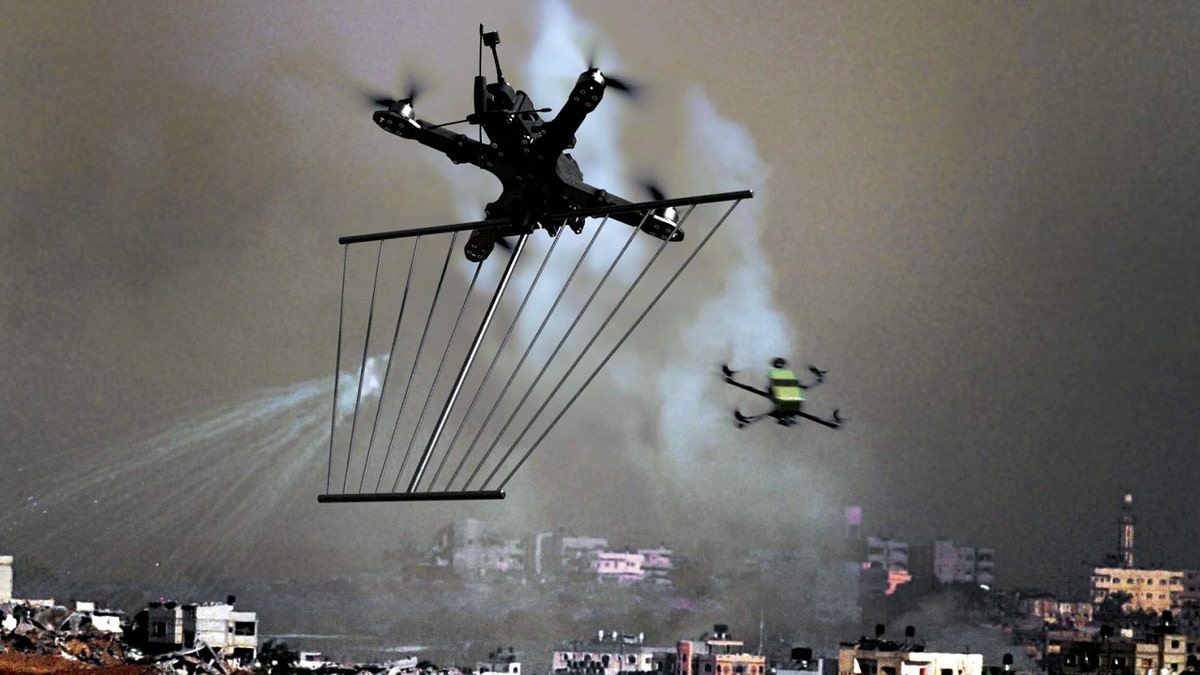
The persistent exposure to high-intensity global conflict creates a psychological and sociological phenomenon known as "compassion fatigue" or "desensitization," which functions as a defense mechanism against emotional cognitive overload. When Pope Francis addresses the Easter Vigil, his core argument centers on the "walls of indifference" that arise during prolonged geopolitical instability. From a structural perspective, this indifference is not a random occurrence but the predictable result of a saturation in the information ecosystem. The human brain’s capacity for empathetic response is finite; when the volume of crisis reporting exceeds the individual’s perceived agency to affect change, the result is a strategic withdrawal from engagement to preserve mental equilibrium.
The Triad of Conflict Saturation
The current global state can be categorized into three distinct layers of saturation that contribute to the "numbness" cited by the Vatican. Understanding these layers is necessary for diagnosing why traditional moral appeals often fail to gain traction in a modern digital environment.
- Sensory Saturation: The constant stream of high-definition combat footage and real-time tragedy via social media platforms bypasses traditional editorial filters. This creates a state of perpetual hyper-arousal that eventually leads to burnout.
- Cognitive Saturation: The geopolitical complexity of modern conflicts—often involving non-state actors, proxy wars, and deep historical grievances—requires a level of nuance that the average observer lacks the time to process. To minimize cognitive dissonance, the observer reverts to binary thinking or complete disengagement.
- Moral Saturation: The sheer number of simultaneous "existential" crises (e.g., Ukraine, Gaza, Sudan, Myanmar) creates a competition for moral bandwidth. This is a zero-sum game where the emergence of a new crisis often necessitates the psychological deprioritization of an ongoing one.
The Mechanics of Moral Agency and Inertia
Pope Francis’s rhetoric identifies "stones of death" as metaphors for the obstacles preventing a return to collective peace. In analytical terms, these "stones" represent the structural inertia inherent in the military-industrial complex and the bureaucratic entrenchment of international bodies.
The failure of the "international rules-based order" is a primary driver of public apathy. When institutional frameworks—such as the United Nations Security Council—demonstrate an inability to enforce international law due to veto stalemates, the public perceives peace as an unattainable ideal rather than a manageable objective. This perception of futility is the primary catalyst for the numbness observed during the Easter Vigil.
The Cost Function of Indifference
Indifference is not a neutral state; it carries a significant long-term cost to the social contract. When populations become desensitized to external violence, the threshold for accepting internal social decay or localized injustice lowers. This creates a feedback loop:
- Step 1: Reduced empathy for foreign casualties leads to a breakdown in international humanitarian funding.
- Step 2: The normalization of "unsolvable" conflicts encourages isolationist foreign policy.
- Step 3: Isolationism weakens global security alliances, leading to an increase in localized power vacuums and further conflict.
Strategic Frameworks for Overcoming Psychological Numbness
To move beyond the purely rhetorical appeal for "hope," we must apply specific cognitive and structural frameworks to re-engage the global public.
The Agency-Impact Alignment
The primary reason for the "numbness" is the disconnect between the scale of the problem and the individual’s ability to act. To counter this, communication strategies must pivot from "global tragedy" to "local intervention." This involves breaking down massive geopolitical events into actionable micro-contributions.
Narrative Re-Humanization
Modern conflict reporting often focuses on casualty statistics and territorial shifts, which are abstract and facilitate detachment. The Vatican’s approach utilizes "The Power of the Symbolic Instance"—focusing on specific human stories to bypass the cognitive filters associated with large-scale data. From a strategic standpoint, this is the only way to re-trigger the amygdala’s empathetic response after it has been dampened by statistical overload.
The Geopolitical Bottleneck of Peace Initiatives
The "hope" mentioned in the Easter liturgy is often hindered by the reality of the security dilemma. In international relations theory, the security dilemma occurs when one state's efforts to increase its security (such as building up arms) are perceived as a threat by other states, leading to an escalatory spiral.
The Pope’s call for a ceasefire is a direct challenge to this logic. However, the limitation of this moral stance is its lack of a verification mechanism. For a ceasefire to move from a religious aspiration to a political reality, it requires:
- Symmetrical De-escalation: Both parties must perceive a higher cost in continuing the conflict than in pausing it.
- Third-Party Guarantees: Credible neutral actors must be willing to monitor and enforce the terms of peace.
- Economic Re-alignment: The financial incentives for maintaining a state of war must be dismantled or replaced with post-conflict reconstruction incentives.
Deconstructing the Easter Vigil Rhetoric
The Pope’s address utilizes specific linguistic markers to combat apathy. By labeling the current state as "numbness," he identifies a pathology rather than a character flaw. This shift is crucial because it allows the audience to seek a "cure" rather than feel condemned.
The "brokenness of peace" is treated not as an inevitable state of nature, but as a systemic failure. The religious framework of "resurrection" serves as a metaphor for institutional and societal renewal. In a secular strategic context, this is equivalent to a "System Reset" or a "Pivot to Reconstruction."
Obstacles to Re-engagement
The path to re-sensitizing a global population faces significant friction from three primary sources:
- Algorithmic Bias: Social media algorithms prioritize high-arousal, divisive content over nuanced peace-building narratives because outrage drives higher engagement metrics.
- Economic Precarity: Domestic economic struggles (inflation, housing costs) reduce the mental and financial surplus people have available to care about international issues.
- Propaganda and Disinformation: The deliberate muddying of factual waters makes the public "check out" because they no longer trust their ability to discern truth from fabrication.
The Strategic Path Forward
To effectively combat the numbness of global conflict, the focus must shift from awareness to systemic accountability. Awareness is a depreciating asset; it spikes during the initial phases of a crisis and inevitably declines. Accountability, however, relies on legal and economic structures that do not require constant emotional engagement to function.
The international community must prioritize the creation of "friction points" for conflict. This includes:
- Digital Verification Systems: Using decentralized ledgers to verify human rights abuses in real-time, making it harder for the public to dismiss them as "fake news."
- Targeted Economic Disincentives: Moving beyond broad sanctions that harm civilian populations and toward surgical strikes on the assets of those directly profiting from the continuation of hostilities.
- Psychological Resilience Training: Integrating media literacy and "compassion management" into educational curricula to help individuals process global trauma without retreating into indifference.
The "stones of death" will remain in place as long as the cost of removing them exceeds the perceived benefit. The role of moral leaders like Pope Francis is to recalibrate the value of peace in the global marketplace of ideas, while the role of the strategist is to build the machinery that makes that peace sustainable.
Immediate action requires a move away from passive consumption of conflict news toward active participation in localized, scalable humanitarian frameworks. The goal is to transform the "Easter hope" from a theological sentiment into a measurable metric of global stability.