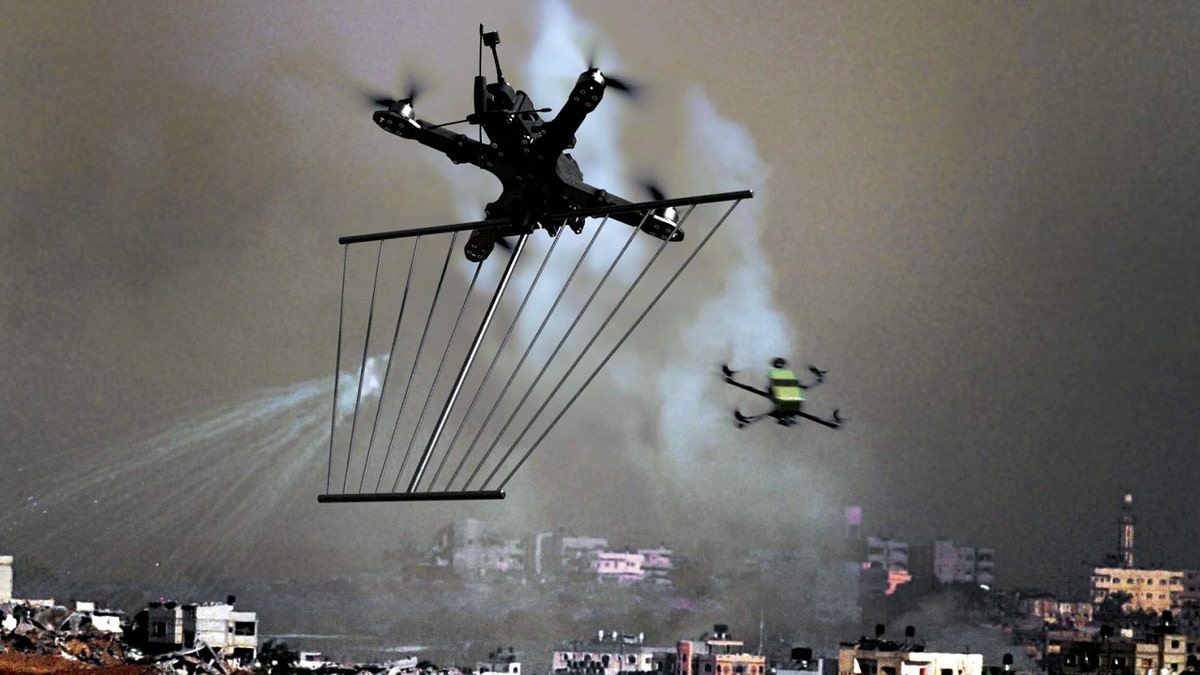
The physical security of the Russian energy machine just took another hit. A targeted drone strike has reportedly damaged a pipeline at Primorsk, Russia’s most significant oil export terminal on the Baltic Sea. While Governor Alexander Drozdenko and regional officials scramble to frame the incident as a contained emergency, the reality is far more dire for the Kremlin's balance sheet. This isn't just about a broken pipe or a localized fire. It is a signal that the reach of Ukrainian long-range strike capabilities now effectively covers the primary exit points for Russian Urals crude, threatening the flow of petrodollars that funds the ongoing conflict.
Primorsk is not a peripheral asset. It is the terminus of the Baltic Pipeline System and handles roughly 30% of Russia’s total seaborne crude exports. When a drone manages to evade layers of S-400 batteries and electronic warfare umbrellas to strike the literal valves of the Russian economy, the strategic calculus for global oil markets changes instantly.
The Strategic Fragility of the Baltic Pipeline System
Russia’s export infrastructure was built on the assumption of a "frozen" European security environment. The Baltic Pipeline System (BPS) was designed for volume and efficiency, not for survival in a high-intensity kinetic environment. The infrastructure at Primorsk consists of massive tank farms and complex pumping stations that move millions of barrels of oil every month into tankers bound for India and China.
These facilities are sprawling. They are impossible to hide. A drone costing less than a mid-sized sedan can disable a pumping station that takes months to repair due to the specialized nature of the heavy machinery involved. Since the onset of international sanctions, Russia has struggled to source the high-end industrial controllers and specialized steel components required for these high-pressure systems. Repairing a "minor" leak at a pipeline junction is no longer a matter of grabbing parts off a shelf in Germany or Finland; it is a logistical nightmare involving grey-market imports and cannibalizing parts from other aging facilities.
Why Primorsk Matters More Than Novorossiysk
While the Black Sea port of Novorossiysk often makes headlines due to its proximity to the front lines, Primorsk is the true workhorse. It serves the heart of the Russian oil industry in the Volga-Urals and West Siberian regions.
- Capacity: Primorsk can handle over 60 million tonnes of crude annually.
- Geography: It is tucked deep inside the Gulf of Finland, a narrow waterway that was once considered a safe, domestic lake for the Russian Navy.
- Economic Impact: Any disruption here forces Russia to reroute oil through the Druzhba pipeline or toward the Far East, both of which incur massive costs and logistical bottlenecks.
The strike at Primorsk proves that the "distance buffer" Russia relied on for its northern ports has vanished. If a drone can hit Primorsk, it can hit Ust-Luga. If it can hit Ust-Luga, the entire Baltic energy corridor is effectively under fire.
The Mechanics of the Strike and the Failure of Air Defense
Reports from the ground suggest the drones used in these operations are increasingly sophisticated, utilizing low-altitude flight paths that exploit the "radar shadows" created by the uneven terrain and industrial structures of the Leningrad region. The Russian military has been forced to pull air defense units from the interior to protect the front lines, leaving critical infrastructure assets like oil refineries and port terminals protected by second-tier systems or improvised mobile AA groups.
We are seeing a shift from "nuisance" strikes to "surgical" strikes. Early in the conflict, drones would often hit non-critical storage tanks, causing spectacular fires but minimal long-term operational damage. The strike at the Primorsk pipeline indicates a higher level of intelligence. Hitting the pipeline itself, specifically at a junction or a pumping node, creates a cascading failure. You cannot simply put out the fire and restart the flow. You have to inspect the integrity of the entire pressurized line, a process that can halt loading operations for days.
The Problem of Symmetrical Defense
Russia is facing an impossible math problem. They have thousands of miles of pipelines and dozens of massive industrial sites to protect. Their adversaries only need to find one gap in the sensor web. Even if Russian electronic warfare (EW) successfully jams the GPS signal of an incoming drone, modern units are now equipped with "optical flow" or terrain-mapping sensors that don't rely on satellites. They see the ground, they see the target, and they dive.
The Hidden Cost of the Shadow Fleet
To bypass price caps and sanctions, Russia has relied heavily on a "shadow fleet" of aging tankers with questionable insurance and even more questionable maintenance records. When a terminal like Primorsk is damaged, these ships are forced to linger in the Baltic Sea, creating a massive environmental and maritime hazard.
A damaged pipeline at the port doesn't just stop the oil; it creates a backlog. Each day of delay costs millions in demurrage fees. Furthermore, the increased risk of operating in a "war zone" (which the Baltic is now effectively becoming for energy transit) will inevitably drive up the cost of shipping. The "Urals discount"—the lower price Russia is forced to accept for its oil—will widen as buyers demand even steeper cuts to offset the risk of their cargo being stuck behind a burning terminal or caught in a drone swarm.
The Insurance Nightmare
Legitimate global insurers have already backed away from Russian ports. The strike on Primorsk will make the remaining "grey market" insurers even more skittish. If a drone strike leads to a major spill in the Gulf of Finland, the diplomatic and environmental fallout would be catastrophic for Russia’s relationship with its few remaining neutral neighbors. The Kremlin is gambling that they can keep the oil flowing faster than the drones can break the pipes, but it is a race they are currently losing.
The Internal Political Pressure
Governor Drozdenko’s quick public statement—minimizing the damage and claiming everything is under control—is a standard play from the regional government's handbook. However, the local population in the Leningrad region is starting to feel the heat. For decades, this region was the window to the West, a stable and prosperous hub of trade. Now, it is a frontline.
The psychological impact of these strikes cannot be overstated. When the sky over a major industrial city lights up because a pipeline is venting flame, the narrative of a "distant" special operation collapses. The workers at Primorsk, the sailors on the tankers, and the engineers who have to fix the damage all know that the air defenses failed. That realization breeds a specific kind of quiet panic that can erode the operational efficiency of the entire sector.
The Role of Domestic Sabotage
While the long-range drones are the primary threat, industry analysts are quietly discussing the possibility of internal disruption. A pipeline is a static, vulnerable target. Knowledge of its exact pressure points and weak spots is usually restricted to employees and contractors. The precision of recent strikes suggests that the attackers are receiving high-quality data on where to hit for maximum effect. Whether this data comes from satellite imagery or from someone on the inside with a blueprint remains a point of intense speculation within the intelligence community.
Weaponizing the Energy Transition
There is a grim irony in the fact that Russia’s aging fossil fuel infrastructure is being dismantled by the very technology—cheap, decentralized, battery-powered drones—that characterizes the modern era. The Kremlin is fighting a 20th-century war with 21st-century liabilities.
The drones hitting Primorsk are the "poor man's cruise missile." They represent a democratization of precision strike capability that renders the traditional Russian strategy of "depth and mass" obsolete. You don't need to defeat the Russian Navy to block the Baltic; you just need to make the port of Primorsk too dangerous or too broken to function.
Market Volatility and the Global Ripple
As news of the Primorsk damage filtered through trading desks, Brent crude saw an immediate uptick. The market is finally pricing in the "infrastructure risk" of Russian oil. For a long time, the assumption was that as long as the oil existed, it would find a way to market. That assumption is now being tested. If the BPS is crippled, the global supply of medium-sour crude tightens significantly. This puts the pressure back on OPEC+ and creates a headache for Washington, which wants to keep pump prices low while simultaneously strangling the Russian war chest.
The Technical Reality of Repair
Replacing a section of a large-diameter oil pipeline is a labor-intensive process that requires specialized welding and non-destructive testing (NDT) to ensure the pipe won't burst under the massive pressures required to move crude over long distances.
- Decompression: The flow must be stopped and the remaining oil drained, a process that can take 24 to 48 hours alone.
- Safety Purging: The line must be cleared of explosive vapors before any welding can begin.
- Sourcing: If the damaged section involves a manifold or a specialized valve, the repair time jumps from days to weeks.
- Testing: Once the repair is made, the line must be hydrostatically tested.
Russia’s domestic capacity for these high-end repairs is being stretched thin by the sheer frequency of attacks across its refinery and pipeline network. They are playing a game of "whack-a-mole" where the hammer is a drone and the mole is the lifeblood of their economy.
Beyond the Immediate Smoke
The strike on Primorsk is a watershed moment for the security of the Baltic. It marks the end of the Gulf of Finland as a safe haven for Russian commerce. As the smoke clears and the repair crews move in, the fundamental question remains: how does Russia defend a 2,000-mile-long pipeline network against an enemy that can build a strike force in a garage?
The answer is that they probably can’t. They can only react, patch, and pray that the next drone misses the most sensitive valves. But in the cold math of attrition, the drones have the advantage. They are cheaper to build than the pipes are to fix, and they are far more numerous than the air defense systems meant to stop them.
The energy infrastructure of the Russian Federation is no longer a source of strength; it has become a massive, immovable target. Every mile of pipe is a liability. Every storage tank is a potential bonfire. Primorsk is just the latest chapter in a story of systematic industrial degradation that will haunt the Russian economy for a generation.
The oil is there, the demand is there, but the bridge between them is burning. For a petro-state, there is no greater nightmare. The vulnerability of the Primorsk terminal is now a permanent feature of the global energy landscape, and no amount of official denial can change the fact that the fire has reached the gate.