The perception that China’s silence regarding direct military escalations between the United States and Iran is a byproduct of diplomatic passivity ignores the sophisticated financial and energy architecture Beijing has constructed to insulate itself from West Asian volatility. At the center of this architecture sits the Bank of Kunlun. This institution does not merely facilitate trade; it acts as a specialized financial valve that regulates the flow of Iranian crude while shielding the broader Chinese banking system—and by extension, the global economy—from the contagion of U.S. secondary sanctions.
Understanding China’s strategic calculus requires analyzing the interaction between three distinct variables: the Financial Firewall Mechanism, the Hydrocarbon Arbitrage Advantage, and the Escalation Parity Model.
The Financial Firewall: The Role of Bank of Kunlun
Bank of Kunlun, majority-owned by the China National Petroleum Corporation (CNPC), serves a singular structural purpose. It is a "closed-loop" financial entity designed to process payments for Iranian oil in Renminbi (RMB) or other non-dollar currencies. By isolating these transactions within an entity that has minimal exposure to the U.S. financial system, Beijing achieves two objectives:
- Sanction Sequestration: The U.S. Treasury’s ability to "weaponize" the dollar depends on a bank’s need for access to the Society for Worldwide Interbank Financial Telecommunication (SWIFT) or New York-based clearinghouses. Because Kunlun is already under U.S. sanctions (since 2012) and operates primarily in RMB, the threat of further designations carries zero marginal cost.
- Systemic De-risking: Larger Tier-1 Chinese banks, such as ICBC or Bank of China, maintain massive holdings in U.S. Treasuries and extensive dollar-clearing operations. If these institutions touched Iranian oil payments, the resulting "Sudden Stop" in their ability to transact in dollars would trigger a systemic financial crisis in China. Kunlun, then, is a sacrificial shield that allows Beijing to maintain its energy security without risking its financial stability.
The "silence" that observers note is not a sign of Beijing’s impotence; it is the sound of an optimized machine. If China were to vocalize a more aggressive stance, it would invite the very scrutiny that could disrupt this quiet financial bypass.
The Hydrocarbon Arbitrage Advantage: A Strategic Reserve
A primary reason for China’s lack of diplomatic intervention in the U.S.-Iran war or escalating skirmishes is the massive discount it receives on Iranian crude. This "Tehran Discount" acts as an unacknowledged economic stimulus for the Chinese refining sector.
Independent Chinese refineries, often called "teapots," are the primary purchasers of these barrels. The logistical chain involves "dark fleet" tankers, ship-to-ship transfers in the Malacca Strait, and re-labeling of oil as "Malaysian" or "Omani." This creates a Cost Function that favors Chinese industry:
- Discounted Feedstock: Iranian crude typically trades $5 to $10 below the Brent benchmark.
- Currency Arbitrage: Payments are processed through Kunlun in RMB, which prevents the depreciation of China’s foreign exchange reserves.
- Buffer Capacity: This supply acts as a hedge against global price shocks. In a full-scale U.S.-Iran conflict, Brent prices would spike. However, China’s existing "grey market" infrastructure ensures it remains the only major global economy with a direct, non-dollar, non-SWIFT-dependent pipeline to the world’s fourth-largest oil reserves.
China’s strategic neutrality serves to prolong this arbitrage. A resolution to the U.S.-Iran conflict—either through a total U.S. victory or a comprehensive diplomatic "grand bargain"—would likely normalize Iranian oil prices and potentially reintegrate Iran into the dollar-clearing system. This would eliminate China’s exclusive access to discounted energy. Therefore, the status quo of "contained escalation" is the most profitable outcome for Beijing.
The Escalation Parity Model: Avoiding the Trap
Western analysts frequently ask why China does not leverage its position as Iran’s largest trading partner to de-escalate regional violence. This question ignores the "Escalation Parity" problem. If Beijing intervenes to restrain Tehran, it assumes a level of regional responsibility that the U.S. has historically held.
The U.S. presence in the Middle East—specifically the Fifth Fleet in Bahrain—effectively subsidizes China’s energy security. As long as the U.S. remains bogged down in security guarantees and counter-insurgency operations, it is depleting its own resources while China focuses on its domestic Industrial-Technological Complex.
The structural risk for China is a "Pivot" by the U.S. toward the Indo-Pacific. A U.S.-Iran war acts as a "Strategic Anchor," keeping American carrier strike groups and diplomatic bandwidth focused on the Persian Gulf. For Beijing, every dollar the U.S. spends on a Tomahawk missile launched toward an IRGC target is a dollar not spent on the "First Island Chain" or the AUKUS partnership.
Operational Constraints and the Limits of Influence
While the Bank of Kunlun and the "Dark Fleet" are effective, they are not infallible. The "Kunlun Protocol" faces three critical bottlenecks that prevent China from completely ignoring the U.S.-Iran dynamic:
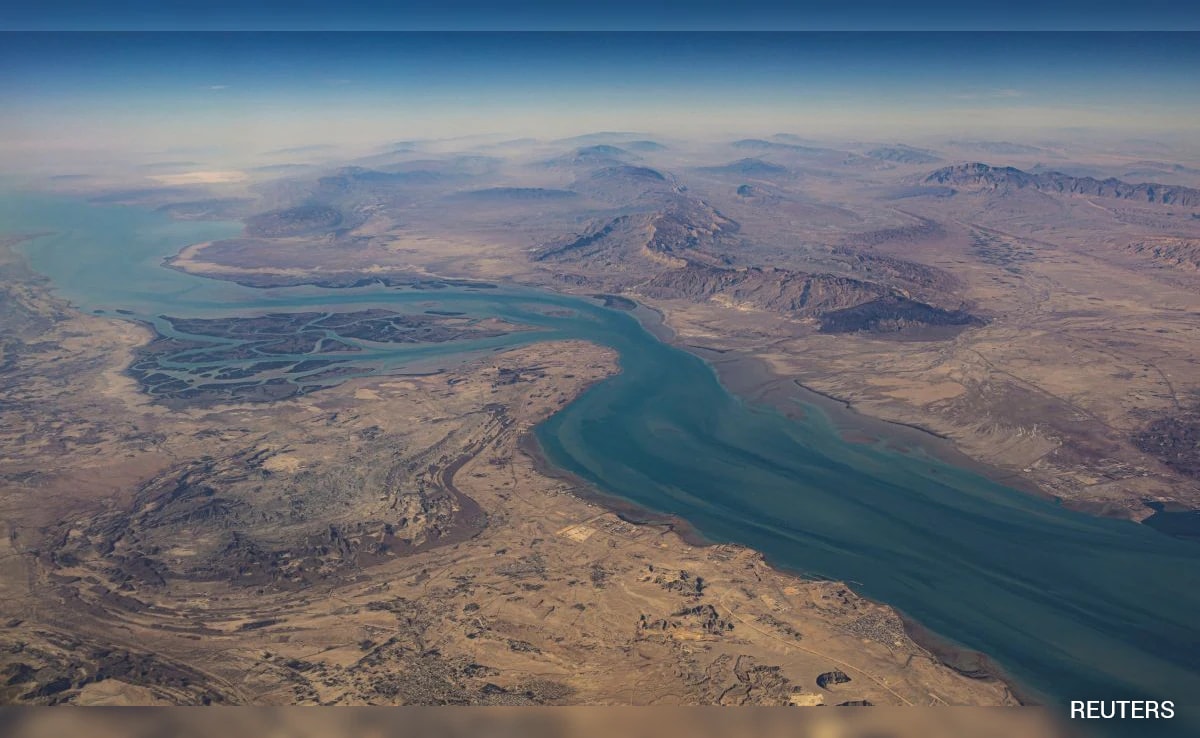
- The Hormuz Paradox: 40% of China’s total crude imports pass through the Strait of Hormuz. While China has a "closed-loop" for Iranian oil, it still depends on Saudi, Kuwaiti, and Emirati oil which flows through the same chokepoint. A total war would shut the Strait, rendering the Kunlun bypass irrelevant.
- Refining Incompatibility: Not all Chinese refineries are configured for the heavy, sour crude produced by Iran. Shifting the entire national energy mix toward Iranian supply would require significant capital expenditure in the refining sector.
- The Secondary Sanction Ceiling: While Kunlun is insulated, the shipping companies, insurance providers, and port authorities involved in the oil trade are increasingly vulnerable to sophisticated U.S. tracking. The "Sanction Sequestration" only works if the number of participants remains small and specialized.
The Asymmetric Power Dynamic: China’s Leverage
China’s silence is also a form of "Strategic Patience." Beijing understands that Tehran is more dependent on China than China is on Tehran. By refusing to intervene, China forces Iran to accept unfavorable terms for long-term investment deals, such as the 25-year Comprehensive Strategic Partnership.
In this agreement, China secures energy at a fixed discount in exchange for infrastructure development. However, the infrastructure development is largely stalled. China is "warehousing" the Iranian economy—keeping it afloat just enough to maintain the energy flow and the distraction for the U.S., but not investing enough to trigger a regional realignment that would force Beijing into a defensive posture.
Strategic Recommendation
The most logical move for global observers is to stop looking at the UN Security Council for China’s response and start looking at the balance sheet of the Bank of Kunlun and the volume of "Malaysian" crude imports into Shandong.
For Beijing, the optimal strategy remains:
- Maintain the Financial Bypass: Continue using Bank of Kunlun as the primary clearinghouse to avoid exposing Tier-1 banks to U.S. Treasury retaliation.
- Encourage Contained Instability: As long as the conflict does not close the Strait of Hormuz, the "Strategic Anchor" effect remains beneficial, diverting U.S. naval assets away from the South China Sea.
- Aggressive Neutrality: Use diplomatic silence to avoid "owning" the security outcomes in the region. This prevents China from being forced into the role of a security guarantor, a role that has historically yielded diminishing returns for the United States.
China’s silence is not a lack of strategy; it is the strategy itself. It is a cynical, data-driven calculation that favors energy arbitrage over geopolitical peace, and financial insulation over global leadership.