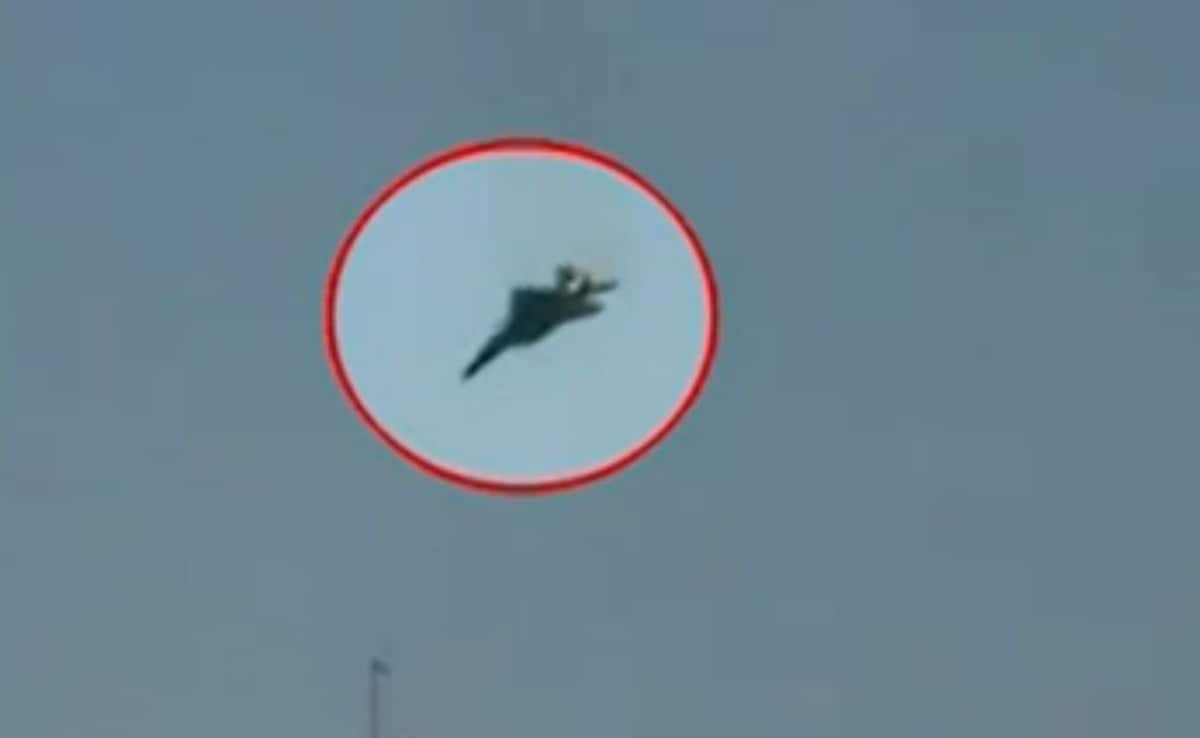
The desert at night is not actually dark. If you are sitting in the cockpit of an F-15 Eagle, suspended thirty thousand feet above the Persian Gulf, the world is a monochromatic wash of neon greens and phosphor glows. The cockpit smells of bottled oxygen and the faint, metallic scent of ionized air from the avionics suites. You are strapped into a multimillion-dollar suit of armor, feeling the low-frequency hum of two Pratt & Whitney engines vibrating through your spine. You feel invincible.
Then the cockpit screams.
It is a jagged, digital shriek—the Radar Warning Receiver (RWR) telling you that someone, somewhere on the invisible ground below, has stopped looking and started aiming.
The story of three American F-15 jets being downed by Kuwaiti air defenses is not a story about mechanical failure or even human error in the traditional sense. It is a story about the terrifying speed of modern war, the fragile bridges we build between allies, and the split second where a computer's logic overrides a human’s intuition.
Friendly fire is a sterile term. It sounds like an accident at a neighborhood barbecue. In the military, we call it "blue-on-blue." It is the ultimate nightmare for any pilot. You spend your entire life training to defeat the enemy, only to find that your own shield has become the sword that strikes you down.
The Invisible Handshake
Modern air defense relies on a technology called IFF, or Identification Friend or Foe. Think of it as an invisible handshake. When a radar pulse from the ground hits an aircraft, the plane’s transponder is supposed to fire back a coded response.
“I am one of you,” it says.
“Welcome home,” the radar replies.
But what happens when the handshake misses? What happens when the codes are out of sync by a single digit, or when the electromagnetic clutter of a high-tension battlefield swallows the signal?
On the night of the incident, the Kuwaiti Patriot missile batteries were on high alert. Tension in the region was a physical weight. The air was thick with the dust of recent maneuvers and the static of a thousand different radio frequencies competing for space. To a radar operator sitting in a darkened van, staring at a green cathode ray tube, an F-15 doesn’t look like a jet. It looks like a "squawk"—a tiny, flickering chevron moving across a grid.
Imagine you are that operator. You have been awake for twenty-two hours. Your eyes are stinging. Your coffee is cold and tastes like battery acid. Your screen shows three incoming tracks. They are moving fast. They are not responding to the standard "interrogate" signal. You have roughly fifteen seconds to decide if these are hostile attackers coming to destroy your city or if they are brothers-in-arms returning from a mission.
Fifteen seconds.
The system is designed to be "fail-safe," but "fail-safe" is a relative term when a computer's default setting is to protect the ground at any cost.
The Anatomy of a Mistake
The three F-15s were flying in a tight formation. In the air, they were a symphony of coordinated power. But on the radar screen, they were a cluster. A cluster that, for reasons still being debated in high-level debriefing rooms, failed to provide the correct response to the Kuwaiti battery’s electronic inquiry.
When the first Patriot missile left the rail, it wasn't a slow build. It was an explosion of white light and kinetic energy. These missiles travel at Mach 4. That is nearly 3,000 miles per hour. If you are the pilot, you have almost no time to react. The RWR goes from a steady tone to a frantic, staccato pulse.
Ping. Ping. Ping. PING-PING-PING.
Then, the world turns upside down.
Consider the physics. A Patriot missile doesn't necessarily have to hit the plane dead-on. It uses a proximity fuse to detonate near the target, shredding the aircraft with a cloud of tungsten pellets. It is like being hit by a shotgun blast the size of a city bus.
One pilot ejected. Two did not.
The sound of an ejection seat firing is something you never forget. It’s a controlled explosion under your ass that launches you out of the cockpit with enough force to compress your spine. You go from the air-conditioned silence of the cockpit to the roaring, freezing chaos of the slipstream in less than a second.
As the debris of three of the world’s most advanced fighter jets rained down into the desert sand, the tragedy was only beginning. The real damage wasn't just in the loss of hardware—though at $30 million a piece, that is a staggering figure. The real damage was the immediate, suffocating realization on the ground that the "enemy" they had just destroyed was wearing the same flag.
The Psychological Ghost
Why do we talk about this now? Because we are entering an era where we trust the "black box" more than we trust the man in the seat.
We live in a world of automated systems. We have self-driving cars, automated stock trading, and air defense systems that can identify and engage targets faster than a human can blink. We tell ourselves that these systems remove "human error."
They don't. They just relocate it.
The error wasn't in the missile. The missile did exactly what it was programmed to do. It found a non-responsive target and it neutralized it. The error was in the assumption that technology could perfectly bridge the gap between two different nations, two different military cultures, and two different sets of equipment.
Hypothetically, let’s look at a technician named "Elias" (a name used here to represent the countless men and women behind the scenes). Elias is responsible for loading the daily "crypto keys" into the IFF systems. If Elias is tired, or if the paper containing the keys is smudged, or if the software update on the American side hasn't quite synced with the Kuwaiti hardware, the entire system breaks.
The handshake fails. The ghosts appear.
The "ghosts" are the signals that aren't there—the "friend" who looks like a "foe" because of a software glitch.
The tragedy in Kuwait wasn't just a failure of communication; it was a failure of imagination. We failed to imagine that our most sophisticated tools could be so blind. We failed to imagine that the very systems we built to keep us safe would be the ones to kill us.
The Cost of the Connection
When an incident like this happens, the diplomatic fallout is immediate. Phone lines between Washington and Kuwait City buzz with frantic, guarded apologies. Generals pace in the "Tank" at the Pentagon, trying to figure out how to tell the public that their own allies pulled the trigger.
But for the families of the pilots, the technicalities don't matter. The IFF codes don't matter. The diplomatic relations don't matter.
There is a specific kind of grief that comes with friendly fire. It’s a jagged, bitter pill. If your son or daughter is shot down by an enemy, there is a clear narrative. There is a "bad guy." There is a sense of sacrifice in the face of aggression.
When it’s an ally, the narrative breaks. It feels senseless. It feels like a waste.
The Kuwaiti operators who fired those missiles will carry that weight for the rest of their lives. They weren't villains. They were soldiers trying to do their duty, staring at a screen that lied to them. They were told the sky was full of threats, and they believed the machine.
This is the hidden cost of our reliance on high-tech warfare. We have created weapons so fast and so powerful that we have effectively taken the human out of the loop. By the time a person realizes something is wrong, the missile has already finished its flight.
The investigation that followed the downing of the three F-15s was exhaustive. They looked at the frequencies. They checked the transponders. They interviewed the surviving pilot. They analyzed the "kill chains."
The results were a mess of "interface issues" and "procedural gaps."
But the real answer is simpler and much more frightening: We are building a world where we can no longer distinguish between our friends and our enemies because we have outsourced our judgment to the silicon.
The Desert Stays the Same
If you go to that patch of desert today, you won't find much. The sand has a way of swallowing history. The twisted aluminum has long since been hauled away. The diplomatic tensions have been smoothed over with handshakes and new defense contracts.
But the lesson remains, buried just beneath the surface like an unexploded shell.
Technology is a mirror. It reflects our brilliance, but it also reflects our arrogance. We believe that if we can just get the code right, if we can just make the signal stronger, we can eliminate the chaos of war.
The three F-15s are a reminder that chaos cannot be programmed away. It is an inherent part of the human condition. When we forget that—when we trust the green glow on the screen more than the reality of the people in the sky—we invite the ghosts to come back.
The desert wind blows over the dunes, indifferent to the "blue" or the "red." It doesn't care about IFF codes or diplomatic status. It only knows the heat and the silence.
And in that silence, if you listen closely, you can still hear the shriek of a radar warning receiver, crying out for a handshake that never came.
The pilot who ejected lived to tell the story, but he never flew the same way again. He said that every time he looked at his radar after that, he didn't see targets. He saw possibilities. He saw the faces of the people who might be behind those flickering green dots. He learned the hard way that in the high-speed ballet of modern combat, the most important piece of equipment isn't the radar or the missile.
It’s the doubt.
Without doubt, we are just machines waiting for a reason to fire.