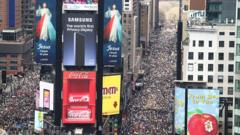
The third wave of "No Kings" protests that swept through more than 3,000 cities on March 28, 2026, was not merely another weekend of coastal outrage. It was a mass rejection of the administrative expansion and wartime maneuvers that have defined Donald Trump’s second term. While previous demonstrations in 2025 focused on civil rights and immigration, this latest mobilization suggests a fundamental shift in the American resistance. It has transitioned from a series of disjointed grievances into a unified front against what organizers describe as an unchecked executive branch.
The Minnesota Epicenter
St. Paul, Minnesota, became the symbolic heart of the movement on Saturday. The choice of location was deliberate. The Twin Cities have remained in a state of high tension following the fatal shootings of activists Renée Good and Alex Pretti by federal agents during an immigration enforcement operation. These deaths acted as a catalyst, transforming local grief into a national flashpoint. You might also find this related story interesting: Strategic Asymmetry and the Kinetic Deconstruction of Iranian Integrated Air Defense.
Bruce Springsteen’s performance of "Streets of Minneapolis" at the state capitol was more than a celebrity appearance. It served as a cultural anchor for a crowd that spanned generations. When 79-year-old protesters stand beside Gen Z activists, the narrative of "youth-led unrest" begins to fail. The demographics in Minnesota reflected a broader trend seen across the country: the "No Kings" banner is being held by people who historically stayed home.
Beyond the Blue Strongholds
One of the most significant aspects of the March 28 protests was the volume of activity in traditionally conservative areas. Reports from Driggs, Idaho, and various towns across Alabama and Texas show that the movement is encroaching on territory where the administration previously enjoyed unquestioned support. As highlighted in latest articles by USA Today, the results are worth noting.
This is not a partisan echo chamber. Data from recent surveys indicate that the percentage of participants who do not identify as "progressive" is rising. The drivers of this participation are concrete.
- The Iran War: The escalation of conflict in the Middle East has alienated voters who were promised an "America First" policy of non-intervention.
- Operation Metro Surge: Aggressive ICE operations in urban centers have led to a perception of "domestic invasions" that disturb local commerce and safety.
- Economic Anxiety: Rising gas prices and the strain of federal government shutdowns have eroded the economic goodwill the administration banked on.
The Decentralized Engine
Unlike the movements of the early 2010s, "No Kings" lacks a singular, charismatic figurehead. This is a tactical choice. The coalition—spearheaded by groups like 50501 and Indivisible—functions as a decentralized network. This structure makes the movement difficult to "decapitate" through legal or political pressure.
In Washington, D.C., the atmosphere was one of calculated mockery. Protesters at the Lincoln Memorial Reflecting Pool used satire as a weapon, dressing in Revolutionary War costumes or "LICE" tactical vests to spoof immigration agents. This "mock and awe" strategy aims to strip the administration of its perceived authority by refusing to treat its directives with solemnity.
The Global Echo
The movement has also crossed oceans. Significant rallies in Rome, Paris, and Berlin on Saturday showed that the world is watching the American executive branch with increasing apprehension. In Rome, the protests merged with local opposition to Premier Giorgia Meloni’s judicial reforms, suggesting a transnational anxiety regarding the independence of the courts.
This international solidarity provides the domestic movement with a sense of legitimacy that is difficult for the White House to dismiss as "fringe." When millions of people across six continents coordinate their message, the administration's attempt to frame the protests as the work of "paid agitators" loses its sting.
The Cost of Power
The administration’s response to these protests has been a mix of silence and dismissiveness. However, the sheer scale of the March 28 events creates a logistical nightmare for law enforcement and a political one for members of Congress.
If these protests continue to grow, the administration faces a choice: double down on the "Metro Surge" and risk further casualties like Good and Pretti, or pivot away from the aggressive tactics that are fueling the fire. The "No Kings" movement is betting that the American public has a finite appetite for authoritarian optics.
The streets are no longer just places for transit; they have become the primary venue for a referendum that the ballot box has yet to resolve.
Check the local permits and organizing schedules for your city’s next planning session to see how the movement is evolving in your backyard.