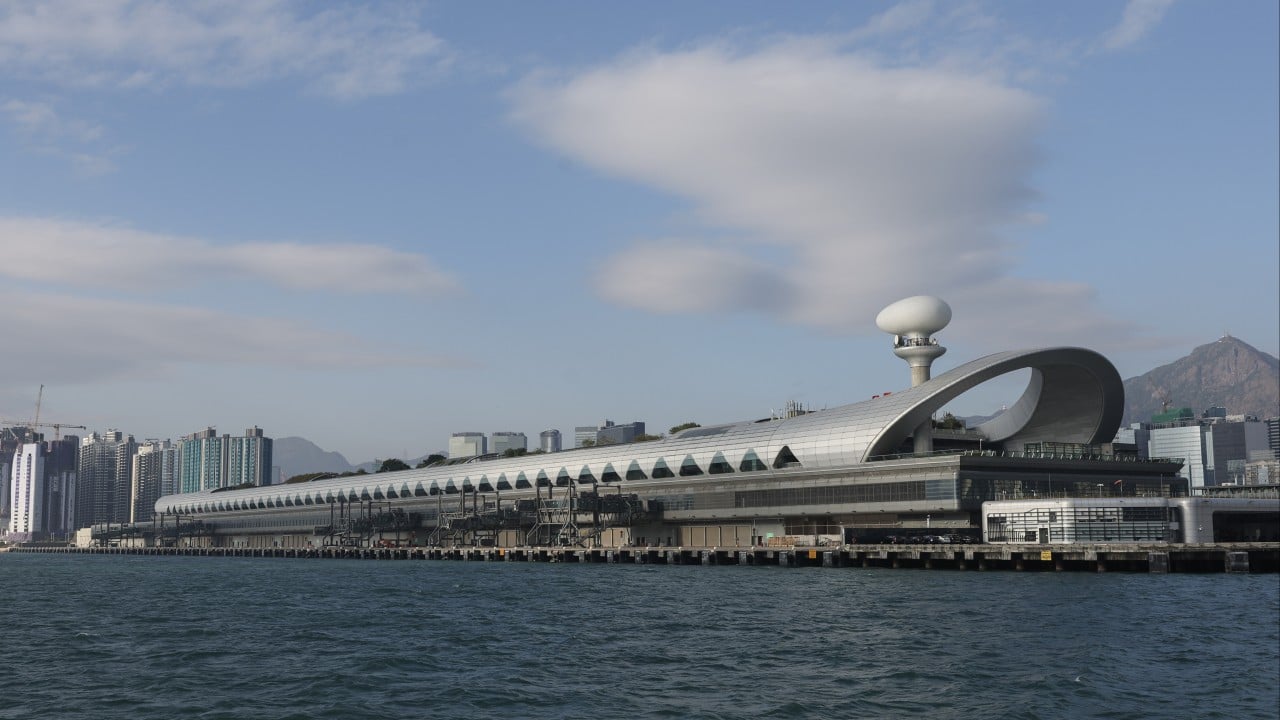
The decision by Hong Kong authorities to push the tender deadline for the Kai Tak Cruise Terminal by a month is not a mere administrative delay. It is a loud, ringing alarm. By extending the window to late 2024 or early 2025, the government has signaled to the global maritime industry that the interest they expected simply isn't there. The terminal, once promised as a crown jewel of the city’s post-colonial infrastructure, has instead become a case study in how to build a massive asset without a functional heartbeat.
The extension reveals a deep-seated anxiety within the Commerce and Economic Development Bureau. They are hunting for an operator willing to take on a facility that has struggled with poor transport links, a lack of commercial foot traffic, and a reputation for being a "ghost terminal" during the off-season. This isn't just about managing ships; it is about who is brave—or subsidized—enough to try and turn a concrete finger in the harbor into a profitable business.
The Infrastructure Trap
Kai Tak was built on the hallowed ground of the city's former airport, a site with more historical capital than almost anywhere else in the region. Yet, the terminal has never managed to shed its isolation. To understand the current tender crisis, one has to look at the geometry of the site. It is a long, narrow strip of land that is notoriously difficult to access. For years, cruise passengers arriving in Hong Kong found themselves stranded, waiting hours for taxis or shuttles to take them to the actual "Hong Kong" they came to see.
This logistical failure is why the tender is a hard sell. A new operator isn't just inheriting a building; they are inheriting a decade of bad reviews and a neighborhood that is still, stubbornly, a construction zone. The government’s move to grant more time suggests that the potential bidders are asking for concessions that the current terms don't cover. They want better connectivity, and they likely want the government to foot the bill for it.
The Connectivity Deficit
The primary grievance from previous operators and cruise lines has always been the "last mile." While the government has touted the trunk road and potential green transit links, these projects have faced delays that mirror the terminal’s own struggles. A terminal cannot survive on ship arrivals alone. It needs to be a destination for locals during the 300 days a year when a mega-ship isn't docked.
Currently, the commercial spaces within the terminal are often bleak. Retailers have fled, and restaurants have struggled to stay afloat without a consistent stream of customers. Any bidder looking at the new contract is seeing a massive overhead with a revenue stream that is entirely dependent on a volatile global cruise market and a local government that has been slow to integrate the terminal into the city's wider transport network.
Shifting Tides in the Asian Cruise Market
Hong Kong is no longer the only game in town. The competitive environment in East Asia has shifted dramatically since Kai Tak first opened its doors. Singapore has solidified its position as the premier hub of Southeast Asia, while mainland Chinese ports like Shanghai and Shenzhen are pouring billions into their own facilities.
When the Kai Tak tender was first envisioned, Hong Kong was the undisputed gateway. Today, cruise lines are looking for efficiency and high-spending onshore environments. They are looking for ports where their passengers can step off the gangway and immediately engage with the city. Kai Tak, for all its architectural ambition, feels like an island.
The one-month extension is a grace period to allow interested parties to recalculate their risk-reward ratios in a high-interest-rate environment. Operating a facility of this scale requires immense capital. If the city cannot guarantee a certain volume of traffic or provide a significant overhaul of the surrounding infrastructure, the "winner" of this tender may find they have bought nothing but a very expensive headache.
The Commercial Reality of the Tender Terms
The government is looking for an operator to manage, operate, and maintain the terminal. That sounds standard, but the devil is in the operational requirements. The authorities want someone who can bring in more high-end "fly-cruise" tourists—those who fly into Hong Kong specifically to board a ship. This is the gold standard of cruise tourism because these travelers spend significantly more on hotels and luxury retail.
However, attracting these travelers requires a level of service and a "sense of place" that Kai Tak currently lacks. The terminal feels like a functional airport pier rather than a luxury gateway. The next operator will likely be forced to invest heavily in the "software" of the experience—the lounges, the baggage handling, and the VIP services—at a time when margins are thinner than ever.
A Lack of Competition
If the market were bullish on Hong Kong's cruise future, the tender would have been flooded with bids. The extension suggests the opposite: a tepid response or a series of "clarification" requests that point toward a lack of confidence. Rumors in the industry suggest that global port operators are wary of the geopolitical climate and the slow recovery of the mainland Chinese cruise market, which historically fed a large portion of Hong Kong’s passenger numbers.
Without a strong influx of mainland travelers, the terminal's capacity—designed for the world’s largest Oasis-class ships—is overkill. You don't need a massive, multi-billion dollar terminal to handle boutique ships. You need it for the giants, and the giants only go where the numbers make sense.
Beyond the Concrete
To fix Kai Tak, the government needs to stop thinking like a landlord and start thinking like a partner. The tender shouldn't just be about who pays the most rent or offers the best maintenance schedule. It should be about a radical reimagining of what that space is for.
Is it a park? Is it a shopping mall? Is it a transit hub? Currently, it tries to be all three and fails at each. The extra month of the tender process will likely see behind-the-scenes negotiations regarding the "commercial usage" of the rooftop gardens and the underutilized hall spaces. If the government doesn't allow the operator more flexibility to turn the building into a year-round entertainment hub, the facility will continue to drain the public coffers.
The history of Kai Tak is one of grand visions met with mediocre execution. The runway was supposed to be a vibrant "metropolitan park," but for years it remained a fenced-off wasteland. The terminal was supposed to be a world-class entrance to the city, but it became a logistical bottleneck. This tender is the last real chance to change that narrative before the building becomes a permanent monument to poor urban planning.
The Operational Hurdles
Any entity taking over the terminal faces an immediate staffing and operational crisis. Hong Kong’s labor market is tight, particularly in the service and hospitality sectors. Running a terminal that can process 5,000 passengers in a few hours requires a massive, coordinated workforce that can scale up and down instantly.
- Customs and Immigration: Efficient processing is vital, yet the terminal has seen long queues that sour the first impression of the city.
- Transport Coordination: The operator must manage a fleet of buses and taxis, often in a city where drivers are reluctant to make the long trip to the end of the runway without a guaranteed fare back.
- Maintenance Costs: The salt-air environment of the harbor is brutal on buildings. The cost of keeping the glass and steel structure in "world-class" condition is astronomical.
These are the "how" and "why" questions that the competitor's brief announcement ignored. The one-month extension is the government's way of acknowledging that these hurdles are currently taller than the potential rewards.
If the tender closes with only one or two lackluster bids, the city will have to face a hard truth: the Kai Tak Cruise Terminal is a white elephant that needs more than just a new manager. It needs a reason to exist for the people who live in Hong Kong, not just those who sail past it.
Wait for the results of this extended deadline. If a major global player like Global Ports Holding or a major cruise line consortium doesn't step up, expect the government to start talking about "re-purposing" parts of the facility for something far less ambitious than international tourism.
Track the specific language of the revised tender documents for any mention of increased government subsidies for transport—that will be the true sign of how much leverage the bidders actually have.