The air in a Midland Realty branch in Central doesn't smell like money. It smells like stale coffee and the frantic, rhythmic tapping of mechanical keyboards. Mr. Chan—let’s call him that, though his real name is written in the sweat on his brow—clutches a smartphone like a talisman. He just closed a deal on a two-bedroom flat in Taikoo Shing. The price? A number that would have seemed like a fever dream two years ago.
Hong Kong is breathing again. Or so it seems.
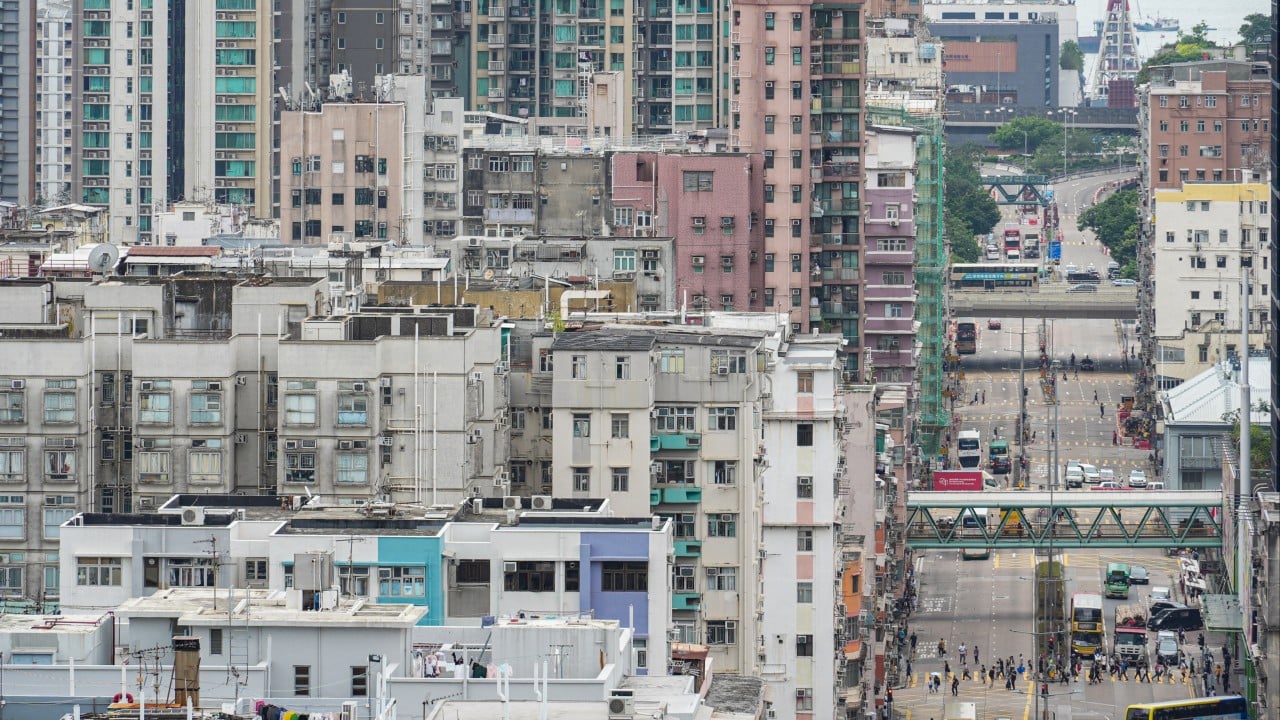
For twenty-four months, the city’s property market felt like a lung collapsed by the weight of high interest rates and a post-pandemic hangover. But the recent data tells a story of a sudden, sharp inhalation. Home prices have surged, clawing back toward a two-year high. The scrapped cooling measures—those draconian stamp duties designed to keep the market from overheating—are gone. In their place is a gold rush. Or perhaps, more accurately, a desperate scramble for the last lifeboats.
The Weight of the Brick
In Hong Kong, a "brick" isn't just building material. It is the only religion that never loses its congregation. To own a home here is to possess a piece of the divine, a physical manifestation of security in a city that feels increasingly transient.
When the government removed the shackles of the New Residential Stamp Duty and the Buyer’s Stamp Duty, the floodgates didn't just open; they burst. Investors who had been sitting on their hands, watching their capital erode in low-yield accounts, suddenly saw a green light. Transaction volumes tripled in a matter of weeks. You could feel the kinetic energy in the streets of West Kowloon and the mid-levels of Hong Kong Island.
Consider a hypothetical buyer named Elena. She is thirty-four, an accountant, and has lived with her parents for a decade to save for a down payment. For two years, she watched the market dip, but she was too afraid to jump. Fear is a powerful preservative. But when the prices started their vertical climb last month, her fear of losing money was eclipsed by a much older, more primal fear: the fear of being left behind.
She signed the papers yesterday. She is now the proud owner of 400 square feet of concrete. She is also tethered to a mortgage that assumes the world will remain exactly as it is today for the next thirty years.
That is the gamble. It is the same gamble being taken by thousands of others who have pushed the price index to levels we haven’t seen since the world felt much smaller and safer.
The Shadow over the Strait
While the champagne corks are popping in the sales offices of Henderson Land and Sun Hung Kai, a different kind of pressure is building five thousand miles away.
Economics is often taught as a series of graphs and cold equations. In reality, it is a nervous system. When a nerve is pinched in the Middle East, the pain registers in the bank accounts of a family in Sha Tin. The escalating tensions between Israel and Iran are no longer just headlines on a flickering television in a cha chaan teng. They are the "war clouds" that threaten to darken the local horizon.
The logic is brutal and direct. Conflict in the Middle East sends oil prices into the stratosphere. High oil prices fuel global inflation. Inflation forces the U.S. Federal Reserve to keep interest rates high—or worse, to nudge them even higher. Because the Hong Kong dollar is pegged to the greenback, our interest rates are a mirror image of Washington’s.
We are a city built on cheap credit, now living in an era of expensive money.
If the "shadow war" turns into a regional conflagration, the Federal Reserve’s anticipated rate cuts—the very thing Hong Kong buyers are banking on—will vanish like a mirage. The "surge" we are seeing now could be the final, frantic peak before a long, cold descent.
The Arithmetic of Anxiety
Let’s look at the numbers, not as statistics, but as limits.
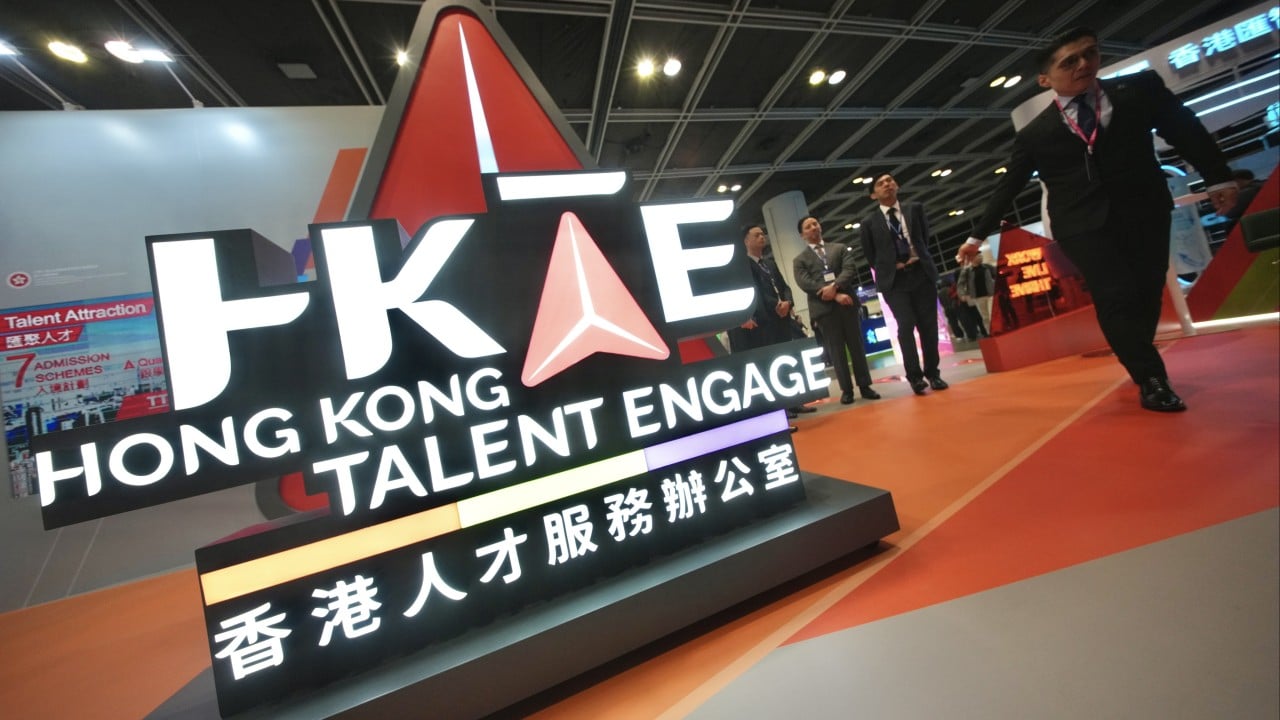
The price index for lived-in homes rose by over 1% in the last month alone. That sounds small. It isn't. In a market as leveraged as this one, 1% represents billions of dollars in equity. But the rental market is the real canary in the coal mine. Rents are rising even faster than sale prices. Why? Because the influx of talent from the mainland and the "Top Talent Pass Scheme" has created a desperate demand for roofs.
But there is a ceiling to what a human being can pay.
When the mortgage payment exceeds 50% or 60% of a household's income, the "brick" stops being an asset. It becomes a weight. We are approaching that threshold for many first-time buyers who rushed into the market in March and April. They are betting that the geopolitical storm will pass. They are betting that the Strait of Hormuz will remain open. They are betting that the world’s appetite for conflict is lower than their need for a stable home.
The Invisible Stakes
Why does this matter to someone who isn't buying a penthouse in the Peak?
Because property is the sun around which the entire Hong Kong economy orbits. When prices surge, people feel wealthy. They spend money on dinners in Soho. They buy new cars. They hire decorators. But when the "war clouds" cause the market to shudder, that wealth effect reverses with terrifying speed.
The psychological toll is the part that never makes it into the financial papers. It’s the late-night calculations at the kitchen table. It’s the way a father looks at his daughter, wondering if the home he bought for her future is actually a debt he’s passing on to her.
We are currently in a state of "suspended animation." The momentum of the policy changes is carrying us upward, but the friction of global instability is pulling at our heels. The market is at a near two-year high, yes. But it is a high built on a foundation of "if."
If the war doesn't spread.
If the rates eventually fall.
If the demand from the north remains insatiable.
The tragedy of the Hong Kong property market is that it requires us to be optimists in a world that is increasingly cynical. We buy into the surge because the alternative—admitting that the ground beneath us is shifting—is too much to bear.
Mr. Chan at the Midland branch is hanging up his phone. He has a smile on his face, but his eyes are darting to the news ticker at the bottom of the screen. He sees the word "tehran" and the word "missile." He looks back at his commission slip.
The ink is still wet.
The glass is beautiful, and it is rising, but it is still glass. And the wind is picking up.
The city waits, perched on its expensive, glorious, terrifying ledge, watching the horizon for a sign of rain.
Would you like me to analyze the specific impact of the HIBOR (Hong Kong Interbank Offered Rate) fluctuations on these recent property transactions?