Hong Kong is facing an identity crisis that no amount of government spending can fix. For decades, the city thrived as the indispensable middleman, a place where Western capital met Eastern opportunity under a predictable, common-law framework. But that bridge is narrowing. While the government touts thousands of new arrivals under various talent schemes, a closer look at the data reveals a lopsided reality. Nearly 95% of these "new" professionals come from mainland China. By focusing almost exclusively on integration with the Greater Bay Area, Hong Kong is inadvertently eroding the very "internationalism" that made it valuable to China in the first place.
If Hong Kong becomes just another high-end Chinese city, it loses its reason for being. The capital that flows through the Hong Kong Stock Exchange isn’t looking for a replica of Shanghai; it’s looking for a gateway that operates by global rules. The current brain drain of Western and Southeast Asian expatriates, replaced almost entirely by mainlanders, suggests a city that is diversifying inward rather than outward.
The Talent Trap of Statistical Success
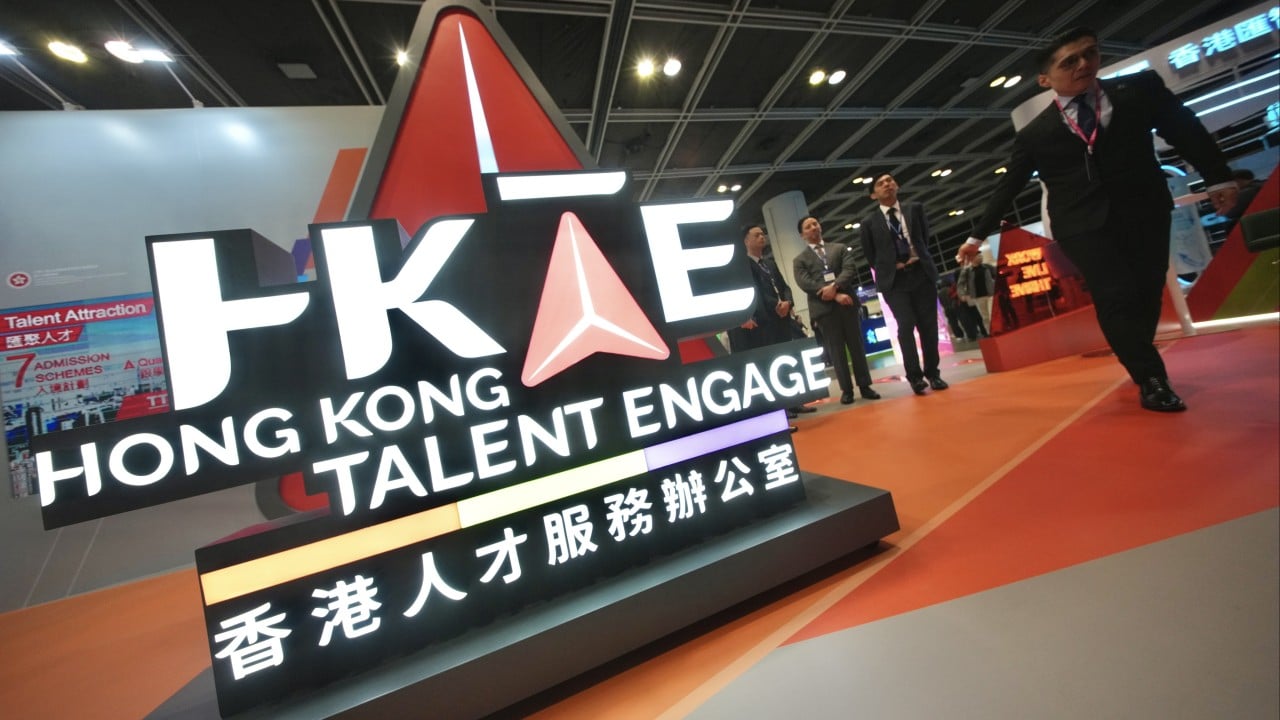
The numbers look good on a government press release. The Top Talent Pass Scheme (TTPS) has seen a surge in applications, and officials are quick to point to these figures as proof of the city’s enduring appeal. However, quantity is not quality, and regional origin matters when your entire economic model relies on being a global hub.
When you dig into the demographics of these applicants, you find a recurring pattern. These are often mainland Chinese graduates from overseas universities or professionals already working in Chinese firms who view Hong Kong as a convenient "onshore-offshore" base. They bring immense skill, but they do not bring the global networks, diverse linguistic capabilities, or Western market intuition that once defined the Central District.
The risk is a monoculture. A global financial center requires a friction-of-ideas that only happens when a London-trained lawyer, a New York hedge fund manager, and a Singaporean tech lead sit in the same room. When everyone in the room shares the same cultural and professional background, the "window to the world" starts to look more like a mirror.
The Cost of Living Versus the Cost of Staying
It isn’t just about politics. The math of living in Hong Kong has become increasingly difficult for the middle-management tier of global talent. In the past, the "Hong Kong Dream" was built on low taxes and high energy. Today, that is balanced against some of the highest real estate costs on the planet and an education system that is undergoing a radical transition.
Expatriate families are looking at the international school circuit and seeing a different environment than they did five years ago. Many are choosing Singapore or Dubai not because they hate Hong Kong, but because those cities are currently more aggressive in courtships of global citizens. Singapore, in particular, has mastered the art of being "China-lite" for business while maintaining a distinctly international social fabric.
The Hidden Flight of Local Talent
We talk a lot about expats leaving, but the departure of the local middle class is perhaps more damaging. These are the bilingual, bicultural professionals who acted as the "glue" of the economy. When a senior manager from a local firm moves to the UK or Canada, they take decades of institutional memory with them. Replacing a local veteran with a mainland recruit isn't a one-to-one swap. The recruit may be technically superior, but they lack the local nuance and the bridge-building experience that connects Hong Kong to the West.
The Common Law Fortress Under Pressure
The ultimate selling point for Hong Kong has always been its legal system. Investors trust the courts. They trust that a contract in Hong Kong means the same thing it does in London or Sydney. While the judiciary remains professional, the perception of its independence is what drives investment.
International businesses operate on "perceived risk." Even if the commercial courts remain untouched, the broader atmosphere of security legislation creates a hesitation. Legal firms are seeing a shift where "governing law" clauses in contracts are increasingly moving toward Singapore or New York. Once that plumbing of international finance is rerouted, it is incredibly difficult to get it back.
The Myth of the Passive Middleman
For too long, Hong Kong sat back and assumed its position was God-given. It assumed that because it was the only door into China, the world would always knock. But China has changed. Beijing is more confident in its own internal markets, and it is less reliant on Hong Kong for basic capital raising.
To survive, Hong Kong must offer something Beijing cannot provide itself. That "something" is genuine, messy, diverse internationalism. If the city only offers what Shenzhen offers, but at three times the price, the business logic for staying evaporates.
Reversing the Inward Spiral
Fixing this requires more than just "Buy Hong Kong" ad campaigns or food festivals. It requires a fundamental policy shift that treats international talent—specifically non-Chinese talent—as a strategic necessity rather than an optional luxury.
- Targeted Incentives: Instead of broad talent passes, the government should create specific tracks for sectors where the city is losing its edge, such as specialized fintech, green energy, and international arbitration.
- Schooling and Housing: Aggressive subsidies or support for international school places would signal to families that the city still wants them.
- A New Narrative: The city needs to stop selling itself as "The Gateway to China" and start selling itself as "The Global City that Happens to be in China." The distinction is subtle but vital for the psyche of international investors.
The current trajectory suggests a city that is becoming more efficient at serving the mainland while becoming less relevant to the rest of the world. That is a dangerous trade-off. A Hong Kong that only speaks one language, follows one line of thought, and recruits from one pool of talent is a Hong Kong that has given up on its greatest strength.
The city doesn't need to choose between being a Chinese city and a global one, but it does need to realize that if it stops being global, it ceases to be useful to anyone—including China. The window is still open, but the frame is beginning to rust.
Ask yourself what happens when the next generation of global CEOs looks at a map and sees Hong Kong as just another branch office, rather than a regional headquarters.
Would you like me to analyze the specific flight of capital from the Hong Kong Stock Exchange to the Singapore Exchange (SGX) over the last three fiscal quarters?