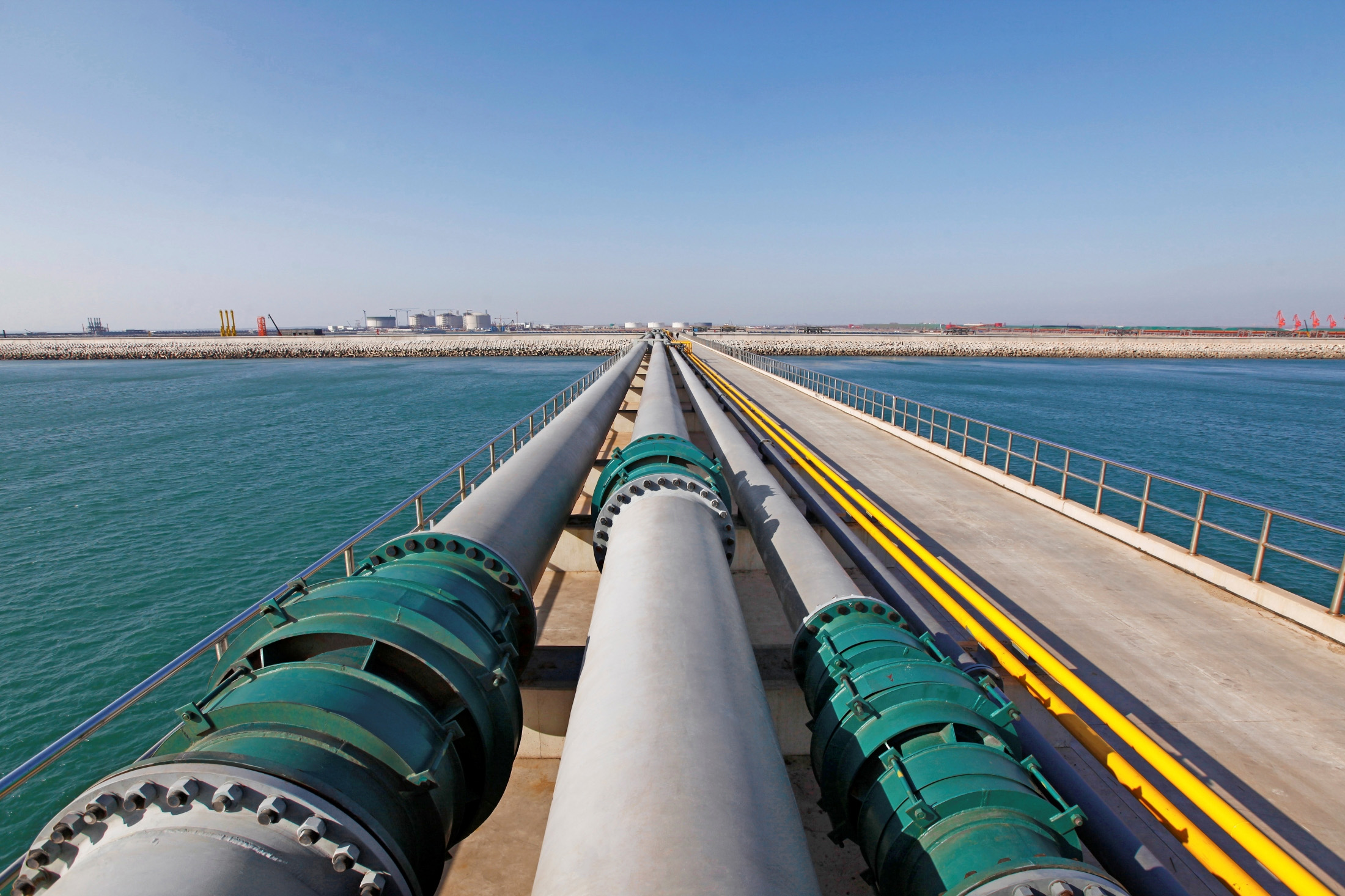
A freight ship sits low in the water off the coast of Long Beach, its hull packed with three thousand steel shipping containers. Inside one of those corrugated metal boxes, tucked between stacks of consumer electronics and industrial machinery, is a single pallet of specialized aluminum components destined for a small factory in Ohio.
To the customs agent at the port, this is just paperwork. To the factory owner in Ohio, it is the lifeblood of next month’s payroll. But to the architects of American trade policy, that pallet is a pawn in a high-stakes geopolitical chess match that most Americans haven't heard of.
The game is called a Section 301 investigation.
It is a dry name for a blunt instrument. While most people discuss "tariffs" as if they are a simple weather pattern—either sunny or cloudy—the reality is far more surgical. Section 301 of the Trade Act of 1974 is not a suggestion. It is a legal trapdoor. It gives the President of the United States the unilateral power to identify "unfair" foreign trade practices and retaliate with whatever force is deemed necessary.
Usually, that force looks like a tax. A big one.
The Ghost of 1974
Imagine a quiet room in the Office of the United States Trade Representative (USTR). There are no flashing lights. No sirens. Just stacks of data showing that a foreign government is subsidizing its own industries or, more commonly, stealing intellectual property from American firms.
In the old days of trade, we waited for the World Trade Organization to mediate. We filed complaints. We sat through years of litigation while domestic industries withered. Section 301 changed the rhythm of the room. It allowed the U.S. to act as judge, jury, and executioner in its own defense.
During the first Trump administration, this obscure legal provision became the primary engine of economic policy. It wasn't just about "protectionism" in a broad sense. It was a specific, targeted strike against China’s "Made in China 2025" initiative. The goal was to punish the theft of American trade secrets and the forced transfer of technology.
But the punishment doesn't fall on the foreign government. It falls on the person waiting for that pallet in Ohio.
The Human Cost of a Line Item
Consider Sarah. She owns a mid-sized company that manufactures high-end medical diagnostic equipment. She doesn't care about the grand theories of globalism or isolationism. She cares about the cost of a specific sensor that can only be sourced from a handful of suppliers in Shenzhen.
When a Section 301 probe concludes that China is acting unfairly, the U.S. government slaps a 25% tariff on those sensors. Sarah’s costs don't go up by a little. They go up by a fortune.
She has three choices.
She can eat the cost, which means she doesn't hire the five engineers she planned to bring on this summer. She can raise her prices, which means the hospitals buying her equipment pass those costs on to patients. Or she can try to move her entire supply chain to Vietnam or Mexico—a process that takes years and millions of dollars she doesn't have.
This is the friction of the 301 probe. It is a macro-economic tool with a micro-economic sting. While the headlines talk about "standing up to adversaries," the reality on the ground is a series of impossible choices made by people in suburban office parks.
Why the Probes are Coming Back
If the first Trump term was a warning shot, a potential second term looks like a sustained barrage. The rhetoric has shifted from targeted strikes to a "universal baseline tariff." However, the Section 301 probe remains the most potent weapon because of its legal flexibility.
These investigations are the "why" behind the "what." Before you can legally justify a massive hike in duties on electric vehicles, batteries, or semiconductors, you need a Section 301 finding. You need a document that says, "We investigated, and we found they are cheating."
It provides the veneer of due process for what is, essentially, an act of economic warfare.
The logic is simple: if the U.S. market is the most valuable prize in the world, then access to that market should be a privilege, not a right. By using 301 probes, a President can bypass the gridlock of Congress. He doesn't need a bill. He doesn't need a vote. He just needs a pen and a report from the USTR.
The Illusion of "They Pay"
There is a persistent myth that the "target" of the tariff pays the bill. It is a seductive idea. It feels like justice.
But when the U.S. Customs and Border Protection agency collects a tariff, they don't send an invoice to Beijing. They send it to the American company importing the goods. The money comes out of American bank accounts.
We saw this play out in the 2018-2019 trade war. Billions of dollars were collected. Did it bring manufacturing back to the Rust Belt? In some niches, yes. It created a "wall" that allowed domestic producers to breathe. But for every steelworker who kept his job because of a tariff, there was a specialized manufacturer who lost their competitive edge because their raw materials became too expensive.
It is a redistribution of pain.
The Great Decoupling
The real power of a Section 301 probe isn't the money it collects. It is the uncertainty it creates.
Business thrives on predictability. If you know your costs will be $100 for the next five years, you can plan. If you think your costs might jump to $160 next Tuesday because of a presidential tweet or a new USTR finding, you stop investing. You freeze.
This is the "decoupling" in action. By making it risky and expensive to do business with certain nations, 301 probes force companies to look elsewhere. It is a slow, painful ripping of the velcro that has bound the global economy together for thirty years.
It feels like a divorce. It's messy, it's expensive, and nobody leaves the room truly happy, but one side decides they can no longer live under the same roof.
The Strategy of the Blunt Object
Critics argue that 301 probes are a relic of a pre-globalized world. They say that in a world of integrated supply chains, hitting your "enemy" with a tariff is like punching yourself in the kidney to hurt the person standing behind you.
Proponents see it differently. They see a world where the rules were written for a game that no one else is playing. They see a China that uses state-owned enterprises to crush American competition. In that context, a 301 probe isn't an "interference" in the market—it is an attempt to level a field that was tilted long ago.
The shift we are seeing now is a move toward "Securitization." Trade is no longer just about economics; it is about national security. If we can't build our own chips or process our own minerals, we are vulnerable. The 301 probe is the tool used to build the fortress.
The Shadow on the Dock
Back at the Port of Long Beach, the sun is setting over a forest of white and red cranes. Thousands of containers are being winched onto trucks, moving toward warehouses and eventually into your living room.
Each one of those boxes represents a web of contracts, dreams, and thin profit margins. When we talk about Section 301 probes, we are talking about the power to reach into those boxes and change the math of American life.
It is the power to decide which industries live and which ones are "acceptable collateral damage." It is a heavy responsibility, often buried in the fine print of federal registers and trade bulletins.
But for the person in Ohio waiting for that pallet, the fine print is the only thing that matters. They are watching the news, not for the politics, but for the signal of whether they can afford to keep the lights on another year. The invisible hand of the market is being replaced by the very visible hand of the executive branch, and the ripples of that change are only beginning to reach the shore.
The ship is docked. The paperwork is filed. The probe is active.
Somewhere, a pen is hovering over a desk, and the cost of your morning coffee, your next car, and your neighbor's job is hanging in the balance.