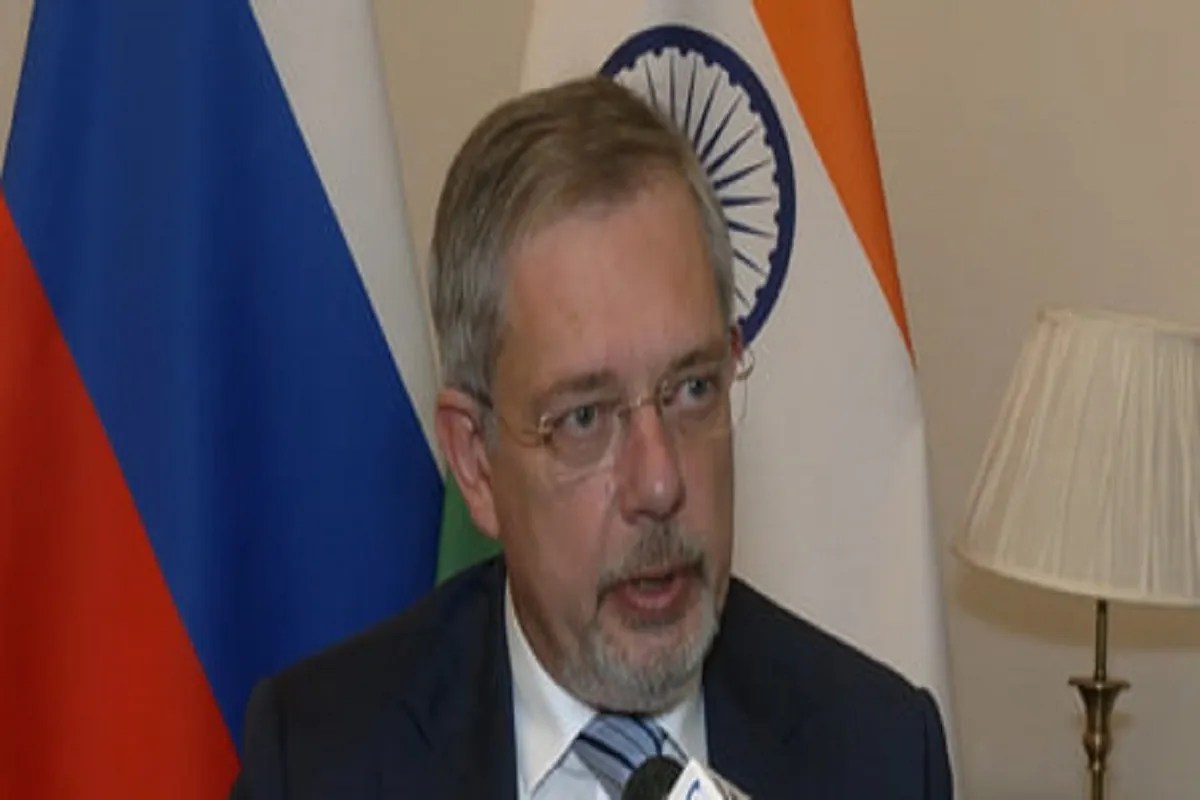
Geopolitics is often reduced to a series of chest-thumping headlines about "sovereignty" and "defiance." The latest narrative—fueled by Russian diplomatic posturing—suggests that India has heroically resisted Western pressure to buy discounted Siberian crude. Moscow gets to play the role of the supportive big brother, telling Washington to back off, while New Delhi enjoys the optics of an independent foreign policy.
It is a beautiful story. It is also a complete fantasy.
The idea that India is "choosing" its energy partners out of a sense of strategic autonomy ignores the cold, hard mechanics of global trade. India isn't buying Russian oil because it’s a rebel. India is buying Russian oil because it is a desperate price-taker in a market that rewards ruthlessness, not loyalty. If you think this is about a "special relationship" or Russia "standing up" for India, you are falling for a public relations stunt designed to mask a crumbling global order.
The Myth of the Russian Discount
Let’s dismantle the biggest lie first: the "cheap" oil.
For the past two years, the narrative has been that India is saving billions by snapping up Urals grade crude at a massive discount compared to Brent. On paper, the spread looked magnificent. In reality, that margin has been cannibalized by opaque shipping costs, inflated insurance premiums, and the logistical nightmare of navigating a "shadow fleet" of tankers.
When Russia tells America that India can buy from whoever it wants, they aren't defending Indian sovereignty. They are defending their last remaining lifeline. Russia is currently a captive seller. They have nowhere else to go. By framing this as a gesture of support for India’s independence, Moscow is simply trying to maintain the illusion that they still hold cards in this game. They don’t.
The Rupee-Rouble Trap
If you want to see the "battle scars" of this trade, look at the currency accounts. I have watched analysts cheer for "de-dollarization" as if it were a spiritual awakening. It isn't. It’s a functional disaster.
Russia has accumulated billions in Indian Rupees that it literally cannot spend. The trade imbalance is so skewed that Moscow is sitting on a mountain of currency that has no utility outside of buying Indian tea or tractors—neither of which help fund a high-tech war machine.
This isn't "strategic autonomy." It’s a bartering system from the 19th century forced upon two modern economies because the plumbing of global finance has been ripped out. India is getting oil, yes, but it’s paying for it by locking itself into a rigid, bilateral cage that limits its flexibility. A truly sovereign power doesn't get stuck in a currency trap; it dictates the terms of the settlement.
The American "Pressure" is a Useful Ghost
The competitor headlines love to scream about "American pressure." They want you to believe there is a shadowy man in a suit in D.C. trying to turn off India’s lights.
The truth is far more boring. The U.S. government has been remarkably quiet about India’s oil binge. Why? Because the White House knows that if India stops buying Russian oil, global prices will skyrocket to $150 a barrel, and the American voter will revolt at the gas pump.
Washington needs India to buy Russian oil. They just need India to buy it below the price cap to starve Putin’s war chest. The "pressure" is a performance. It’s a scripted dance where the U.S. pretends to be annoyed, Russia pretends to be a protector, and India pretends to be a maverick. In reality, everyone is getting exactly what they need to keep their own domestic economies from imploding.
The Refined Product Backdoor
If the West were truly serious about stopping the flow of Russian oil, they would sanction the refined products coming out of Jamnagar and Vadinar. They don't.
Europe is currently heating its homes and running its factories on diesel that was once Russian crude, refined in India, and sold back to the West at a premium. India has become the world’s "laundry" for Russian molecules. This isn't a secret. It’s a feature of the system.
When we talk about "defiance," we should be talking about arbitrage. Indian private refiners are making record cracks—the difference between the price of crude and the price of the finished product. They aren't doing this for the glory of the motherland. They are doing it because the margin is irresistible.
Stop Asking if India is "Allowed" to Buy Oil
The very premise of the question "Can India buy oil despite pressure?" is flawed. It assumes that global trade is governed by permission. It isn't. It’s governed by incentives.
Instead of asking if India is standing up to the U.S., ask what happens when Russia’s infrastructure finally begins to fail under the weight of missed maintenance and lack of Western technology. The real threat to India’s energy security isn't a memo from the State Department; it’s the inevitable decay of the Siberian oil patches that rely on Halliburton and Schlumberger tech that is no longer there.
The Hidden Cost of "Independence"
There is no such thing as a free lunch in energy. By pivoting so heavily toward Russia, India is neglecting the diversification of its energy transition. While the world argues about barrels, the real war is being fought over the supply chains for green hydrogen, modular nuclear reactors, and battery storage.
Russia can offer India nothing in these fields.
Every moment spent celebrating a "win" for buying 1970s-era fossil fuels from a pariah state is a moment lost in the race for the next century’s technology. The "contrarian" truth is that India’s reliance on Russian oil is not a sign of strength—it is a temporary bridge built over a collapsing canyon.
The Geopolitical Pivot That Isn't
Russia’s statement that "India can buy from anyone" is a desperate attempt to stay relevant in a Delhi power corridor that is increasingly looking toward the Quad and the Indo-Pacific for its actual security needs. Russia can provide oil, but it cannot provide the jet engines, the semiconductors, or the maritime security that India actually requires to counter its primary threat: China.
In fact, the more India buys from Russia, the more it funds a state that is becoming a junior partner to Beijing. Think about that for a second. India is effectively subsidizing the primary ally of its greatest geopolitical rival. That isn't "masterful diplomacy." It’s a tactical success masking a strategic blunder.
The headlines will continue to talk about "two-took" (straight talk) and "defiance." But don't look at the press releases. Look at the insurance contracts. Look at the shipping routes. Look at the technology transfers.
India is navigating a mess, not leading a revolution. The moment the discount disappears, the "special friendship" will evaporate faster than a spilled gallon of gasoline on a Delhi sidewalk.
Stop cheering for the "rebel" narrative. Start looking at the ledger.
The house always wins, and right now, the house isn't in Moscow.