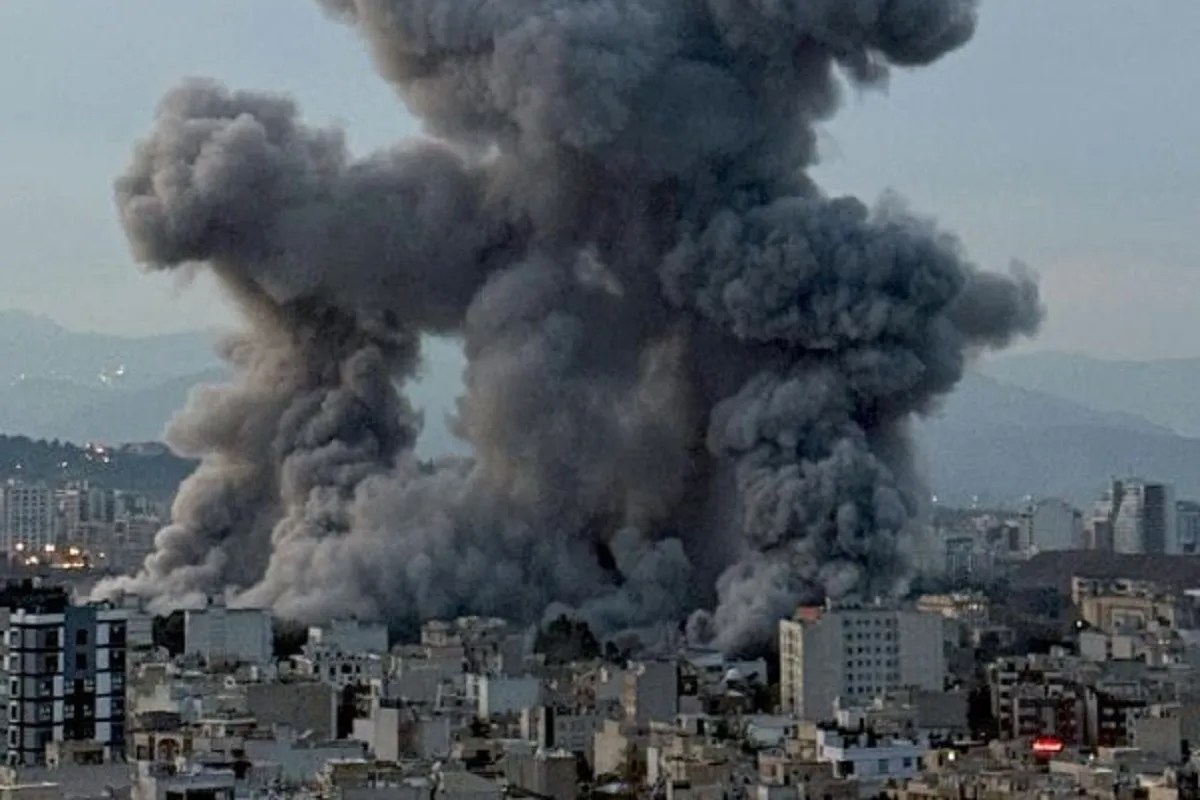
The United States is currently staring into a strategic abyss in the Strait of Hormuz that bears a terrifying resemblance to the 1956 Suez Crisis. For decades, the assumption in Washington has been that the U.S. Navy acts as the ultimate guarantor of global energy flows, maintaining an invisible umbrella over the world's most critical chokepoint. That assumption is dying. If a full-scale conflict with Iran breaks out, it will not be a repeat of the Gulf War's lopsided victories. Instead, it would likely expose the limits of American power, shattering the myth of naval invincibility and forcing a massive, painful realignment of the global economy. This is the "Suez Moment"—a point where a fading superpower realizes its reach has finally exceeded its grasp.
The lethal math of asymmetric warfare
Modern naval doctrine is built around the carrier strike group, a massive concentration of firepower designed to project influence across oceans. Iran knows it cannot win a traditional ship-to-ship engagement. They aren't trying to. Instead, Tehran has spent thirty years perfecting a "thousand cuts" strategy.
The Strait of Hormuz is barely 21 miles wide at its narrowest point. In these cramped waters, a billion-dollar destroyer is surprisingly vulnerable. Iran’s Revolutionary Guard Corps (IRGC) operates a fleet of hundreds of fast-attack craft. These boats are cheap, fast, and armed with sophisticated anti-ship missiles or packed with explosives for suicide missions. When fifty of these vessels swarm a single target from multiple directions, the defensive systems on a U.S. ship face a saturation problem. It is a simple matter of numbers.
Beyond the swarm, Iran possesses the largest ballistic and cruise missile arsenal in the Middle East. They have shifted these assets into "mountain cities"—hardened underground bunkers carved into the limestone cliffs along the Persian Gulf coast. These batteries are nearly impossible to eliminate via preemptive air strikes. From these hidden positions, they can fire high-speed missiles like the Khalij Fars, which uses an electro-optical seeker to home in on the heat signature of a carrier’s flight deck.
The silent threat beneath the waves
We also have to consider the mine problem. Mining the Strait is the ultimate "reset button" for global trade. It doesn't take much. Even the rumor of advanced "smart mines" anchored in the shipping lanes would cause global insurance premiums to skyrocket, effectively grounding the tanker fleet.
Clearing these mines is a slow, agonizing process. The U.S. Navy’s minesweeping capabilities have been neglected for years in favor of sexier, high-tech platforms. In a hot war, the U.S. would find itself trying to clear a path while under constant bombardment from the shore. This is the bottleneck that keeps Pentagon planners awake at night.
Why the Suez analogy actually fits
In 1956, Britain and France attempted to seize the Suez Canal to reassert their colonial relevance. They succeeded militarily but failed catastrophically on the world stage. The U.S. forced them to retreat by threatening to crash the British pound. Today, the roles are reversed, but the dynamic of overextension remains the same.
A war in the Strait would not just be a regional skirmish. It would be an economic earthquake. Approximately 20% of the world’s liquid petroleum passes through that narrow gap. If the oil stops flowing, the price per barrel doesn't just go up; it teleports. We are talking about $200 or $300 a barrel within weeks.
The American public has no appetite for the domestic fallout of such a spike. When gas hits $10 a gallon, the political pressure to "do something" will be immense, but the military options will all lead to further escalation. This is the trap. To keep the Strait open, the U.S. would have to occupy vast swaths of Iranian territory to silence the missile batteries. That is a multi-trillion-dollar commitment that the American treasury, currently burdened by historic debt levels, simply cannot sustain.
The fracturing of the Western alliance
One of the most overlooked factors in this decline is the lack of a unified front. During the Cold War, the U.S. could count on a cohesive bloc of allies. That is no longer the case.
Major powers like China and India are the primary customers for Persian Gulf oil. While they want the Strait open, they have no interest in supporting an American-led regime change in Tehran. In fact, China has been deepening its strategic partnership with Iran, signing long-term investment deals that provide Iran with a financial lifeline.
If the U.S. starts a war that shuts down the energy supply to Beijing, the Chinese won't just sit idly by. They will use their massive holdings of U.S. Treasuries and their dominance over global supply chains to retaliate. The U.S. would find itself fighting a kinetic war in the Gulf and a devastating economic war with its largest trading partner simultaneously. This is where the "Imperial Decline" becomes a visible reality. You cannot police the world if the world's other major powers are actively rooting for your failure and holding your debt.
Technological hubris and the drone revolution
The era of uncontested air superiority is over. The recent conflicts in Ukraine and the Red Sea have demonstrated that cheap, off-the-shelf drone technology can neutralize multi-million dollar defense systems. Iran is a world leader in this field. Their Shahed-series drones are slow and loud, but when launched in massive waves, they serve as effective decoys to drain the expensive interceptor missiles of U.S. warships.
It costs roughly $2 million to fire a standard interceptor missile. It costs Iran about $20,000 to build a long-range drone. That is an unsustainable ratio for the Pentagon. In a prolonged war of attrition in the Gulf, the U.S. would literally run out of ammunition before Iran ran out of drones. This shift in the cost of warfare favors the regional power over the global hegemon every single time.
The myth of energy independence
You will often hear politicians claim that the U.S. is "energy independent" and therefore shielded from a Middle East crisis. This is a dangerous half-truth. While the U.S. produces a massive amount of shale oil, the global oil market is a single, interconnected pool.
Crude oil is a fungible commodity. If the supply from the Gulf disappears, the price for American-produced oil will rise to match the global scarcity. Furthermore, many U.S. refineries are specifically configured to process the "sour" heavy crudes that come from the Middle East, not the "sweet" light crude from Texas. We are still tethered to the Strait of Hormuz by the cold reality of industrial infrastructure. There is no escaping the fallout.
The death of the petrodollar
The most lasting damage of a Hormuz conflict might be the final decoupling of the dollar from the global energy trade. If the U.S. cannot protect the shipping lanes, the primary justification for the "petrodollar" system vanishes. Nations like Saudi Arabia and the UAE are already exploring selling oil in Yuan or other currencies. A failed military intervention in Iran would accelerate this trend into a stampede. Once the dollar loses its status as the exclusive currency for energy, the U.S. loses its ability to print money to fund its deficits. The domestic standard of living would drop almost overnight.
The strategic pivot that never happened
For over a decade, American leadership has talked about a "Pivot to Asia." The idea was to move resources away from the messy, intractable conflicts of the Middle East to face the rising challenge of China. But the U.S. remains stuck.
The military-industrial complex is geared toward maintaining the status quo in the Persian Gulf because that is where the carrier groups are deployed and where the massive defense contracts are centered. By staying entangled in a potential war with Iran, the U.S. is playing directly into China’s hands. Beijing is more than happy to watch the U.S. exhaust its remaining blood and treasure in the sands of the Middle East while they continue to build their influence through trade and infrastructure.
Realities of the new map
The map of the Middle East has changed. The old "hub and spoke" model where every regional power looked to Washington for security is broken. Iran, despite decades of sanctions, has built a "Land Bridge" of influence stretching from Tehran to the Mediterranean. Their proxies in Iraq, Syria, and Lebanon provide them with depth and reach that the U.S. cannot easily counter with airstrikes.
Any attack on Iran would likely trigger a synchronized uprising from these groups. U.S. bases in Iraq and Syria would become targets for relentless rocket and mortar fire. Israel would face a rain of missiles from Hezbollah in the north. The entire region would ignite, and the U.S. does not have the troop levels or the political will to manage a three-front war.
Preparation for a post-hegemonic world
The U.S. must stop viewing the Strait of Hormuz through the lens of 1991. The world has moved on. The weapons are cheaper, the enemies are smarter, and the economic stakes are higher. Continuing to threaten a war that we cannot afford to win—and cannot manage the consequences of—is the height of strategic illiteracy.
The true "Suez Moment" isn't just the loss of a battle. It is the moment the rest of the world realizes the giant has no clothes. If the U.S. Navy is forced to retreat from the Gulf or fails to keep the oil flowing during a conflict, the American era ends. Not with a bang, but with a series of frantic, expensive, and ultimately futile maneuvers in a 21-mile wide strip of water.
The only way to avoid this fate is a radical reassessment of what "security" actually looks like in the 21st century. It doesn't look like more carriers. It looks like energy diversification, a reduced military footprint, and a cold-blooded realization that we can no longer dictate terms to the entire planet from a position of debt-fueled arrogance. The clock is ticking in the Strait.
Move your capital out of vulnerability and into resilience before the first missile flies.