Military analysts are currently obsessed with a 19th-century solution to a 21st-century energy crisis. They talk about "seizing" the Strait of Hormuz as if it were a physical gate you could simply padlock with a few carrier strike groups and a division of Marines. It is a fundamental misunderstanding of modern geography, kinetic energy, and the global crude market.
The consensus suggests that if the Trump administration wants to secure the world's most vital chokepoint, it needs a massive troop surge. This is not just wrong; it is a recipe for a multi-trillion dollar quagmire that would actually accelerate the very energy price spike it intends to prevent. You don't "seize" a waterway that is 21 miles wide at its narrowest point when the entire coastline is a jagged battery of mobile silk-worm missiles and asymmetric drone swarms. Meanwhile, you can explore related stories here: The Calculated Silence Behind the June Strikes on Iran.
If you put ten thousand troops on the islands of Kish or Qeshm, you haven't secured the strait. You’ve just given the Iranian Revolutionary Guard Corps (IRGC) ten thousand stationary targets.
The Geography of a Kill Zone
The "options" usually presented—amphibious assaults, seizing coastal strips, or establishing "safe zones"—ignore the brutal math of the Persian Gulf. The Strait of Hormuz is not a deep-water ocean; it is a bathtub filled with jagged rocks and shallow shelves. To explore the complete picture, we recommend the detailed analysis by NBC News.
The shipping lanes themselves are only two miles wide in each direction, separated by a two-mile buffer zone. Most of these lanes sit within Omani or Iranian territorial waters. To "seize" this, the U.S. would need to occupy hundreds of miles of coastline. Even then, the threat doesn't come from a standing navy that you can sink in a glorious afternoon of mid-way style dogfights. It comes from the "thousand bites" of small-boat swarms and truck-mounted anti-ship cruise missiles (ASCMs) hidden in the Zagros Mountains.
In my time analyzing regional energy security, I've seen the Pentagon run wargames where the "Blue Team" (U.S.) loses a carrier in the first forty-eight minutes because they underestimated the saturation capacity of low-cost drones. When a $2,000 drone can disable a $13 billion carrier’s radar, the "seize and hold" strategy is dead.
The Market Fallacy: Why Intervention is the Poison
The biggest misconception is that military "stability" equals price stability. In the oil markets, the mere presence of an invasion force is a signal to speculators that the supply chain is compromised.
- Risk Premium: The moment a boot hits the sand in a "seizure" operation, Lloyd’s of London triples the insurance premiums for tankers.
- The Shadow Fleet: Roughly 20% of the world’s oil passes through here. If the U.S. attempts to "control" the flow, it effectively shuts down the "Shadow Fleet" that China relies on. You aren't just fighting Iran; you are declaring economic war on the world's second-largest economy.
- The Physical Blockage: You don't need to sink a fleet to stop the oil. You only need to sink one VLCC (Very Large Crude Carrier) in the shipping lane. The wreckage creates a navigation hazard that takes months to clear under fire.
Intervention doesn't protect the oil; it weaponizes the infrastructure against the consumer.
The Drone-First Reality
Traditionalists want to talk about the 1st Marine Division. They should be talking about the Replicator program and undersea autonomous vehicles. The status quo thinks in terms of "territory." The future thinks in terms of "denial."
If the goal is to keep the strait open, you do not need troops to seize land. You need a persistent, autonomous "mesh" of sensors and loitering munitions that can intercept an ASCM within seconds of its launch. This is a tech problem, not a manpower problem.
- Distributed Lethality: Moving away from large, vulnerable hulls toward hundreds of small, unmanned surface vessels (USVs).
- Electronic Warfare Supremacy: The ability to blind Iranian coastal radar without firing a single shot.
- The "Porcupine" Defense: Turning the tankers themselves into hardened targets with modular point-defense systems.
The competitor's argument for "options" usually involves a list of bases in Qatar or Bahrain. These bases are liabilities. They are within range of every ballistic missile in the IRGC inventory. Using them as a staging ground for a "seizure" is like trying to start a fire inside a gunpowder warehouse.
The Counter-Intuitive Truth: We Don't Actually Need the Strait
Here is the take that makes the hawks scream: The U.S. is now the world’s largest producer of oil and gas. While a Hormuz closure would spike global prices, the U.S. is insulated in a way it wasn't in 1979 or 2003.
The real victims of a Hormuz closure are China, India, and Japan. By "seizing" the strait, the U.S. is effectively spending American lives and billions of taxpayer dollars to subsidize the energy security of its primary geopolitical rivals.
Why are we planning to die for China’s energy supply?
The "contrarian" move for a Trump administration isn't to send the troops in. It’s to signal that the U.S. will not be the world's maritime police for free. If the East Asian powers want the oil to flow, they should be the ones putting hulls in the water and boots on the Iranian coast.
The Logistics of a Failed Occupation
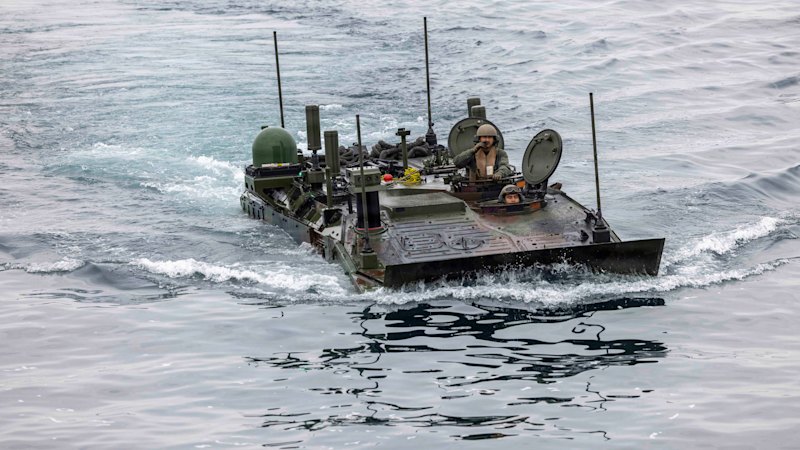
Imagine a scenario where the U.S. successfully lands troops on the Gheshm island. You now have to supply those troops. Every gallon of water, every MRE, and every battery has to be shipped through the very strait you are trying to "secure."
You have created a massive logistical tail that is itself a target. This is the "Gallipoli Factor." You occupy the high ground, but the enemy controls the water around you. You aren't a garrison; you’re a hostage.
The logic of "seizing" territory to protect a waterway only works if the enemy’s weapons have a shorter range than your perimeter. In 2026, the enemy’s "perimeter" is the entire Persian Gulf.
Reframing the "Options"
When people ask "What are the options for seizing the strait?", they are asking the wrong question. The real question is: "How do we make the strait irrelevant?"
- Pipeline Redundancy: Instead of spending $100 billion on a carrier strike group, the U.S. should be pressuring regional allies to complete the East-West pipelines across Saudi Arabia and the UAE.
- Energy Decoupling: Accelerating the ability of domestic refineries to handle the specific grades of crude typically found in the Gulf, reducing the "swing" necessity of Hormuz.
- Market Shock Absorbers: Doubling the Strategic Petroleum Reserve (SPR) to provide a 180-day buffer that removes the "panic" incentive for military intervention.
The Cost of Being Wrong
I’ve watched military contractors pitch "coastal saturation" packages for a decade. They love the idea of a "seizure" because it requires endless hardware. But a "boots on the ground" approach to the Strait of Hormuz is the most expensive way to achieve the least amount of security.
If you want to control the strait, you control the data and the air. You do not send 19-year-olds to sit on a salt flat in 120-degree heat waiting to be hit by a drone that cost less than their boots.
The "lazy consensus" is that America must be the "guarantor of the commons." But when the "commons" is a narrow strip of water surrounded by hostile batteries, the guarantor eventually becomes the victim.
Stop looking for "options" to invade. Start looking for "options" to exit the 20th-century mindset that says we need to own the dirt to control the flow.
You don't win a fight in the Strait of Hormuz by being the biggest guy in the room. You win by not being in the room when the roof collapses.
Let the nations that actually drink the oil do the heavy lifting. That is the only "America First" strategy that survives contact with reality.
Stay out of the bathtub.