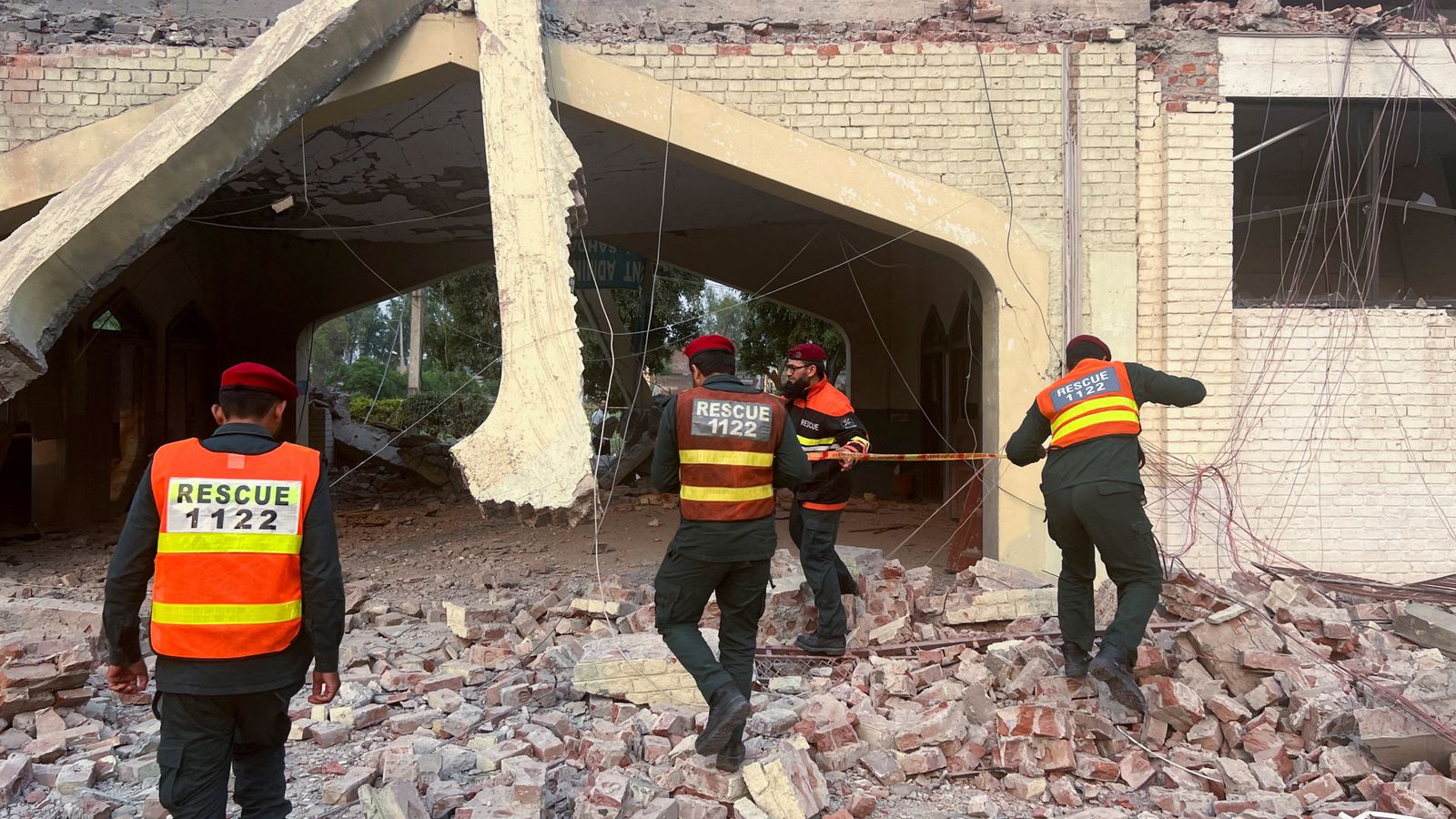
The moral outrage following a Russian missile strike near Lviv’s UNESCO-protected buffer zone is predictable. It is also intellectually dishonest. When the Prime Minister of Ukraine or Western media outlets point to a plaque on a wall as if it possesses some mystical kinetic shielding, they are leaning on a hollow bureaucracy that was never designed for high-intensity peer-to-peer conflict.
Stop pretending a 1972 Convention is a substitute for a Patriot battery.
The current discourse surrounding the "attack on heritage" in Lviv misses the point of modern warfare entirely. We are witnessing the death of the "Museum City" concept in real-time. If you think a blue-and-white shield on a building prevents a Kalibr missile from correcting its flight path toward a nearby power substation or a rail hub, you aren't just an optimist. You are a liability to the defense of the very culture you claim to value.
The Paper Tiger of International Law
The Hague Convention of 1954 is the bedrock of heritage protection in war. It is a noble, dusty document that assumes both sides care more about 17th-century masonry than they do about tactical advantage. It’s a gentleman’s agreement for a world where gentlemen no longer fight.
Here is the brutal reality: UNESCO status is a marketing tool for tourism, not a strategic deterrent. By hyper-focusing on the damage to the "historic fabric" of Lviv, we are falling into a trap of valuing stone over survival.
- The Deterrence Myth: International law only functions when there is a mechanism for enforcement. UNESCO has no army. It has no sanctions that matter to a state already under total economic blockade.
- The Buffer Zone Fallacy: Lviv’s protected area is tiny. The "buffer zone" is often just a street away from critical infrastructure. In a war of GPS jamming and electronic warfare, a "near miss" on a heritage site is a statistical certainty, not necessarily a targeted cultural cleansing.
- Symbolic Overload: By making these sites the center of the narrative, we give the aggressor exactly what they want: a high-leverage psychological target that triggers a global news cycle for the price of a single drone.
I have spent years navigating the intersection of urban policy and crisis management. I have seen heritage boards spend three years arguing over the color of window frames while the very economy that sustains the city crumbles. In Lviv, the obsession with the UNESCO tag during an active air campaign is a distraction from the hardware needed to actually keep the roof on the cathedral.
The Brutal Logic of Proximity
Lviv is a logistics hub. It is the gateway to the West. The city's "heritage" exists in the same physical space as the warehouses, tracks, and depots required to sustain a nation at war.
The "lazy consensus" argues that Russia is "targeting" heritage to erase Ukrainian identity. While cultural erasure is a documented part of their doctrine, the tactical reality is often much simpler and much uglier. If a target with military value is located 500 meters from a UNESCO-listed church, the church is already gone in the eyes of a mission commander.
We need to stop asking "How could they hit a heritage site?" and start asking "Why do we think a heritage site is a 'No-Go' zone for a state that doesn't recognize the sovereignty of the country it’s hitting?"
The False Protection of the "Blue Shield"
The Blue Shield emblem is supposed to denote protection. In reality, it acts as a neon sign for psychological warfare. If you want to demoralize a population, you don't hit a nameless apartment block. You hit the place where their grandfathers got married.
The UNESCO designation, in this specific conflict, has become a double-edged sword:
- It provides a moral high ground for the victim.
- It provides a high-value, low-risk target for the aggressor to dominate the headlines.
Stop Archiving and Start Arming
There is a fetishization of the "archive" in heritage circles. Experts are rushing to 3D-scan buildings so they can be rebuilt later. This is defeatist. It assumes the destruction is inevitable and that a "digital twin" is a victory.
It isn't. A reconstructed building is a taxidermied corpse of history.
If the international community actually cared about Lviv’s UNESCO status, the conversation wouldn't be about "condemning the strikes." It would be about the immediate transfer of Iron Dome-style short-range defense systems specifically for urban centers.
Instead, we get press releases.
"UNESCO is deeply concerned by the strikes..."
Concern is the currency of the helpless. While the bureaucrats in Paris draft their "strongly worded" statements, the 14th-century foundations of Lviv are vibrating under the impact of cruise missiles. You cannot protect a city with a PDF.
The Heritage Tax of the Future
Imagine a scenario where a city chooses to de-list itself from UNESCO during a conflict to remove the psychological incentive for the enemy to target it. It sounds insane, right? But if the designation offers 0% physical protection and 100% propaganda value for the attacker, what is the net benefit to the citizens living there?
We are entering an era of "Kinetic Urbanism." The layout of our cities—once determined by trade and aesthetics—is now being tested by the range of a Shahed drone. Lviv’s dense, historic core is a nightmare for modern civil defense. Narrow streets hinder emergency response. Older masonry collapses differently than reinforced concrete.
We are trying to fight a 21st-century war while clinging to a 19th-century definition of what a city "should" be.
The Hard Truth About Reconstruction
The competitor's article likely ended with a plea for the international community to "save" Ukraine’s history.
Here is the truth: You don’t save history by preserving buildings. You save it by winning the war.
The focus on heritage sites creates a hierarchy of suffering. When a missile hits a UNESCO site, the world gasps. When it hits a suburban strip mall in Kharkiv, the world yawns. This creates a perverse incentive where the protection of "art" outweighs the protection of "people."
If we continue to treat UNESCO sites as "special," we implicitly suggest that the rest of the country is "fair game." This is a moral failure. Every square inch of Ukraine is heritage because it is where Ukrainians live.
The Actionable Pivot
If you are a policymaker or an advocate, stop looking for "cultural protections."
- Integrated Defense: Stop treating heritage as a separate category. It must be integrated into the primary air defense umbrella. If the heritage is the soul of the city, treat it with the same tactical priority as the power grid.
- Aggressive Relocation: If a piece of art can be moved, move it. If a statue can be buried, bury it. The obsession with keeping heritage "on display" during a war is vanity.
- Redefine the 1954 Convention: It needs an update for the era of precision-guided munitions. We need a "Hard Heritage" protocol that mandates physical fortification, not just symbolic marking.
The era of the "Protected City" is over. We are now in the era of the "Fortress City." Lviv is not a museum. It is a living, breathing, fighting entity. Treat it as such.
Stop crying over the broken glass and start sending the glass-makers—and the guys who build the missile shields. The stones can wait. The people cannot.
UNESCO is a trophy we polish in peacetime. In wartime, it's just another target.
Quit the performative shock. Buy more batteries.