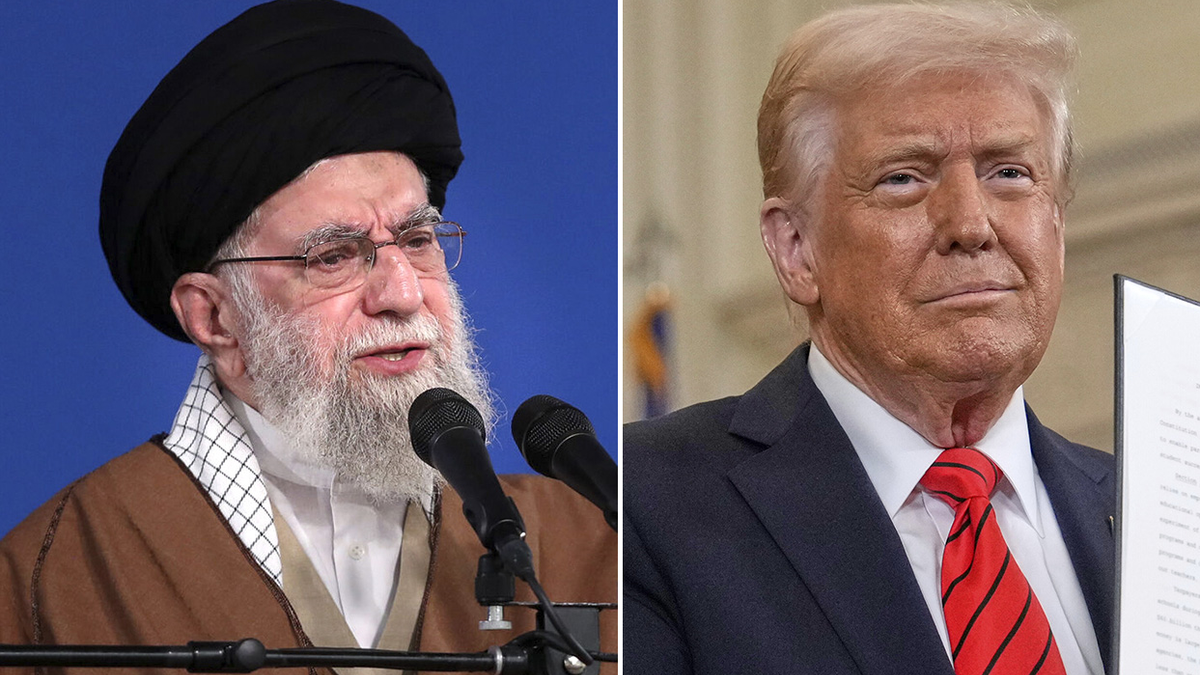
The headlines are predictably breathless. Donald Trump supposedly nodded along while Pakistani Prime Minister Shehbaz Sharif pitched himself as the ultimate middleman between Washington and Tehran. The "lazy consensus" among pundits is that Islamabad’s unique position—a nuclear-armed neighbor to Iran and a long-term (if volatile) security partner of the United States—makes it the natural conduit for a diplomatic miracle.
They are wrong. Dead wrong.
The idea that Pakistan can bridge the chasm between the "Great Satan" and the "Axis of Resistance" isn’t just optimistic; it’s a fundamental misunderstanding of how regional power dynamics actually function. If you think Sharif is about to pull off a 21st-century version of the 1971 opening to China, you haven’t been paying attention to the wreckage of the last fifty years of South Asian diplomacy.
The Myth of the Neutral Neighbor
Pakistan doesn't have the luxury of neutrality. It is a state currently suffocating under the weight of an IMF-mandated life support system and a domestic security apparatus that is fraying at the edges. To suggest that Islamabad can act as a neutral arbiter is to ignore the $100 billion-plus in debt it owes to external creditors, many of whom have a direct interest in seeing Iran remain isolated.
In the world of high-stakes geopolitics, a mediator needs two things: leverage and trust. Pakistan currently possesses neither in sufficient quantities to move the needle for Trump or the Ayatollahs.
- To the U.S.: Pakistan is a "frenemy" that spent decades playing both sides of the Afghan conflict. Washington’s institutional memory is long. The Pentagon hasn't forgotten where Osama bin Laden was found.
- To Iran: Pakistan is a Sunni-majority state with a history of hosting militant groups that irritate Tehran’s Sistan-Baluchestan province.
When Sharif offers to host talks, he isn't offering a solution; he's begging for relevance. He’s trying to trade a seat at a table that doesn't exist for a temporary reprieve from his own country’s economic freefall.
Trump Does Not Do Multilateralism
The biggest flaw in the competitor's narrative is the assumption that Donald Trump wants a middleman.
Trump’s foreign policy isn't built on the "shuttle diplomacy" of the Kissinger era. It is built on the Art of the Deal, which is fundamentally transactional and direct. Trump wants the photo op with the principal, not the appetizer with the messenger. If Trump decides to talk to Iran, he will do it via a backchannel in Muscat or a direct line to a high-ranking official, not through a Pakistani bureaucracy that leaks like a sieve.
The "approval" reported in the news wasn't a strategic green light. It was a polite "sure, whatever" from a man who knows that saying "no" to a pitch costs more energy than nodding while thinking about something else.
The Financial Reality Check
Let’s talk about the math that the mainstream media ignores. Pakistan’s economy is currently a series of fires being put out with borrowed water.
- Inflation: Hovering at levels that make long-term planning impossible.
- Energy Debt: A circular debt crisis that prevents the country from even utilizing the Iran-Pakistan (IP) gas pipeline—a project Tehran has been screaming for Pakistan to finish for years.
- The FATF Shadow: Pakistan only recently exited the "Grey List" of the Financial Action Task Force. Engaging in complex, high-level financial diplomacy with Iran—a country under the heaviest sanctions regime on the planet—is a one-way ticket back to the economic naughty corner.
If Pakistan tries to facilitate "talks" that involve any level of sanctions relief or economic cooperation, they risk triggering secondary U.S. sanctions that would vaporize their remaining credit lines. Sharif knows this. Trump knows this. The only people who don't seem to know this are the analysts writing about "bold new diplomatic horizons."
The China Factor
Everyone forgets that there is already a big brother in the room. Beijing facilitated the Saudi-Iran rapprochement. Why would China allow Pakistan—its primary "all-weather ally"—to hand a massive diplomatic win to a Trump administration that is simultaneously planning a trade war against Chinese EVs and semiconductors?
China wants a stable Iran and a compliant Pakistan. It does not want Pakistan acting as a talent scout for American diplomacy. If a deal is going to happen, it will be written in Mandarin first and translated into English later. Islamabad is simply not in the driver's seat.
The "People Also Ask" Delusion
When people ask, "Can Pakistan improve US-Iran relations?" they are asking the wrong question. The real question is: "Does the US-Iran relationship require Pakistan to improve?"
The answer is a resounding no.
The path to a deal—if one even exists—runs through the following realities:
- The status of the JCPOA (Joint Comprehensive Plan of Action) or its successor.
- The ballistic missile program in Iran.
- The regional "proxy" network (Hezbollah, Houthis, PMF).
- The price of Brent crude oil.
None of these variables are influenced by a summit in Islamabad. Pakistan has zero "skin in the game" regarding the Strait of Hormuz or the enrichment levels at Natanz. They are a spectator trying to sell tickets to a game they aren't playing in.
The Dangerous Downside of "Trying"
There is a cost to this performative diplomacy. By positioning itself as a mediator, Pakistan risks alienating its Gulf benefactors. Saudi Arabia and the UAE have poured billions into Pakistan’s central bank to keep it from collapsing. While Riyadh’s own stance on Tehran has thawed, they still view Pakistan as their security subordinate.
If Pakistan oversteps and starts playing "Global Statesman" with Iran, those deposits in the State Bank of Pakistan could vanish overnight. I have seen administrations blow through decades of goodwill for the sake of a three-day news cycle. This has all the hallmarks of a vanity project that Islamabad cannot afford.
Stop Looking for a Hero
The desire to find a "bridge" between the U.S. and Iran is a symptom of a desperate media landscape that needs a narrative arc. But geopolitics isn't a Netflix series. It’s a cold, hard calculation of interests.
The interest of the United States under a second Trump term is maximum pressure followed by a bilateral surrender. The interest of Iran is survival and regional hegemony. Pakistan is an asterisk in that equation.
Sharif’s offer wasn't a breakthrough. It was a press release.
If you want to understand the future of the Middle East, look at the movement of carrier strike groups and the flow of global oil. Don't look at a conference room in Islamabad.
The "peace" being touted is a ghost. Stop chasing it.