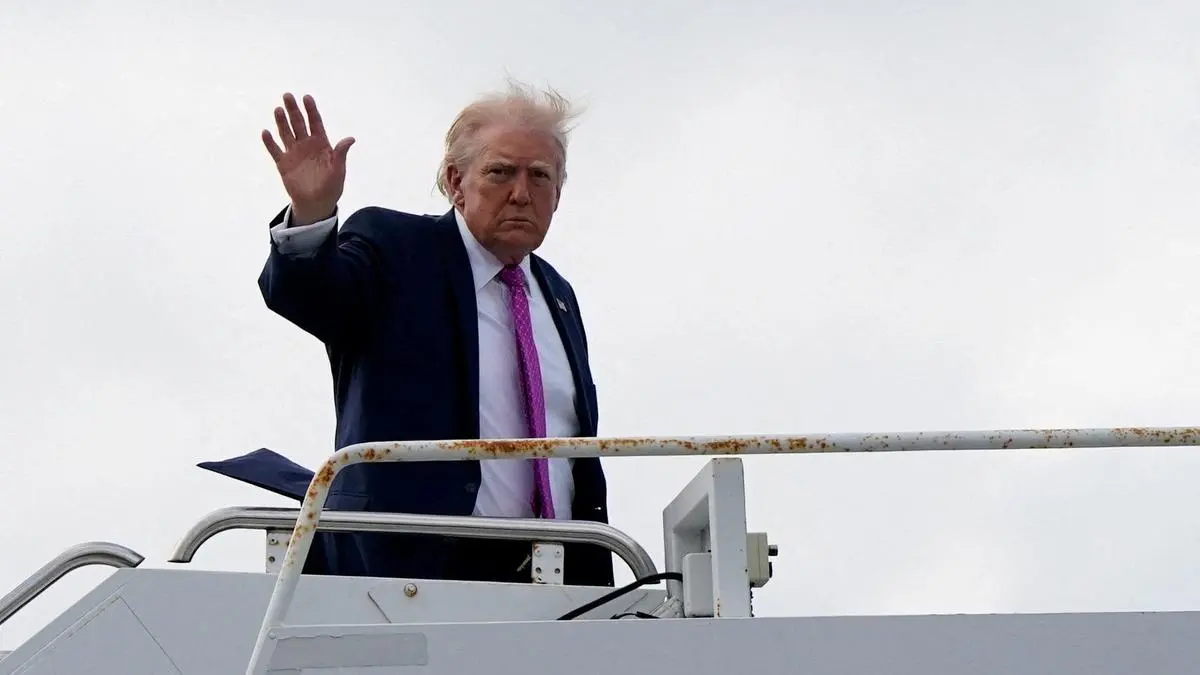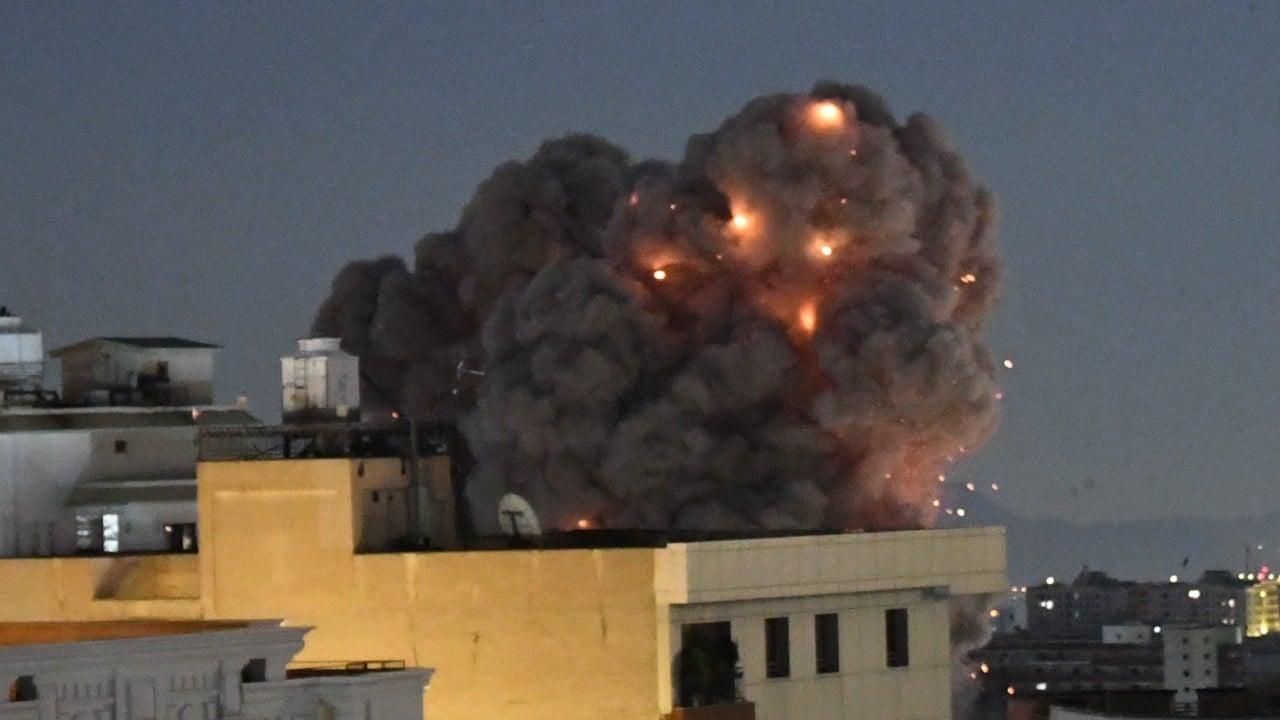
The headlines are lazy. They tell a story of bloodthirsty Gulf monarchs whispering in Donald Trump’s ear, begging for B-52s to turn Tehran into a parking lot. It’s a neat, cinematic narrative that fits a 1990s neoconservative playbook. It’s also completely wrong.
If you believe the Gulf Cooperation Council (GCC) is rooting for a prolonged American bombardment of Iran, you aren’t paying attention to the math of the modern Middle East. The "insiders" claiming Riyadh and Abu Dhabi want a regional firestorm are recycling intelligence memos from 2011. The reality on the ground in 2026 is governed by a brutal, cold-blooded pragmatism that views American kinetic intervention not as a solution, but as the ultimate liability.
The Mirage of Aggression
The mainstream media paints the Gulf allies as hawks. In reality, they are the most fragile glass houses on the planet.
Look at the skyline of Dubai. Look at the Neom construction sites in Saudi Arabia. These are not the assets of nations seeking a generational war. They are the assets of nations desperate for the status quo. A single, sustained Iranian drone campaign—the kind we saw bypass "state-of-the-art" defense systems at Abqaiq and Khurais in 2019—would vaporize trillions of dollars in foreign investment.
The GCC doesn't want Trump to start a war; they want him to project enough "madman" energy to keep Iran from starting one. There is a massive, structural difference between desiring a "strongman" deterrent and desiring a "hot" bombardment. The former keeps the oil flowing; the latter ensures the Straits of Hormuz become a graveyard for global commerce.
Why the Bombardment Narrative Fails Logic
The "bomb Iran" thesis assumes that the Gulf states trust the United States to finish the job. They don't.
Decades of American foreign policy inconsistency have left Riyadh and Abu Dhabi with geopolitical whiplash. They watched the Obama administration pivot to the JCPOA, they watched the first Trump administration's "Maximum Pressure" fail to stop regional escalation, and they watched the Biden administration’s desperate attempts to de-escalate.
From the perspective of a Gulf strategist, a US bombardment is the worst of all worlds:
- It provokes Iranian proxies (Hezbollah, the Houthis, and militias in Iraq) to target GCC infrastructure.
- It rarely destroys the subterranean nuclear facilities or the decentralized drone manufacturing hubs.
- It leaves the Gulf states to clean up the mess when the US inevitably loses interest and retreats to domestic concerns.
I’ve sat in rooms with energy analysts who have run the simulations. If a "prolonged bombardment" occurs, global oil prices don't just spike; they break the back of the global economy. The Saudi Vision 2030 plan requires a stable, high-value oil market and massive tourism. You don’t build a luxury desert resort next to a missile exchange.
The Economic Suicide Pact
The "lazy consensus" ignores the "China factor." Beijing is now the primary customer for both Tehran and Riyadh. China mediated the Saudi-Iran rapprochement for a reason: they want a stable energy corridor.
If the Gulf allies pushed Trump into a full-scale air war, they would be spitting in the face of their biggest buyer. The GCC is moving toward a multi-polar reality. They are hedging. They are joining BRICS+. They are buying Chinese hardware and Russian systems. The idea that they would sacrifice their long-term economic pivot to the East for a short-term American military sugar high is a fantasy born of Western-centric arrogance.
Dissecting the "Officials Say" Trap
Whenever you see "officials say," ask yourself: which officials?
Usually, these are mid-level defense bureaucrats or former intelligence officers whose careers were built on the Iran-threat industry. They have a vested interest in keeping the threat level at a boil.
The actual decision-makers—the Crown Princes and the sovereign wealth fund managers—are playing a different game. They are focused on $GDP$. They are focused on IPOs. They are focused on the "post-oil" transition. A war with Iran is a fast-track back to the 1970s.
Imagine a scenario where the US launches a "limited" strike on Iranian naval assets. Within six hours, a Houthi missile hits a desalination plant in the Emirates. Within twelve hours, cyberattacks shut down the banking systems in Doha. Within twenty-four hours, the insurance rates for tankers in the Gulf become so high that shipping ceases entirely.
The Gulf "allies" know this. They aren't stupid. They are terrified that Trump—unpredictable and unburdened by traditional diplomatic norms—might actually take their "tough talk" literally and pull the trigger.
The Proxy Reality Check
The competitor article likely mentions "Iranian expansionism." Sure, it's real. But the Gulf states have realized they can't bomb their way out of a proxy war. They tried it in Yemen. It cost them billions, ruined their international reputation, and ended in a stalemate.
The new strategy is "Aggressive Diplomacy." They are talking to Tehran because they’ve realized Washington is an unreliable bodyguard. When Trump suggests he wants to "finish the job," he thinks he's doing them a favor. In the palaces of the Gulf, that sounds like a death sentence for their economic reforms.
The Real Ask
So, what do they actually want from a second Trump term?
- Advanced Tech Transfers: They want the F-35s and the missile defense tech that the current administration has been stingy with.
- Nuclear Parity: If Iran gets a bomb, the Saudis want the green light to build their own—civilian first, with a "turnkey" military option.
- Transactional Silence: They want a White House that doesn't lecture them on human rights or internal governance.
Notice that "blowing up Tehran" isn't on that list. It’s too expensive. It’s too risky. And quite frankly, they’ve learned they can live with a contained Iran far easier than they can live with a collapsed one that spills millions of refugees and thousands of radicalized cells across their borders.
The Myth of the "Clean" War
The biggest lie in the bombardment narrative is the idea of "surgical strikes." In the geography of the Gulf, there is no such thing as a surgical strike. Everything is interconnected. The power grids, the water supplies, and the oil pipelines are all within range of Iranian retaliation.
The Gulf states are currently behaving like people who have just renovated a multimillion-dollar mansion and are now watching their neighbor play with a blowtorch. They might complain about the neighbor to the police, but the last thing they want is for the police to show up and start a shootout in the front yard.
The Shift You Aren't Seeing
Watch the money, not the rhetoric.
Saudi Arabia is investing in regional connectivity. They are talking about railways that link the Gulf. They are building massive entertainment cities. This is not the behavior of a state preparing for a massive regional war.
The "insider" view is clear: The rhetoric of the "Iran threat" is a tool used by the Gulf to extract better defense deals and diplomatic concessions from the West. It is a bargaining chip. But the moment that rhetoric threatens to turn into actual American kinetic action, the Gulf states will be the first ones to fly to Tehran to de-escalate.
They don't want Trump to be a war president. They want him to be a bouncer—someone who stands at the door, looks intimidating, and ensures nobody starts a fight that might break the expensive furniture.
The "prolonged bombardment" theory is a relic of an era when the US was the only player and the Gulf was just a collection of gas stations. Today, the Gulf is a global investment hub. And hubs don't survive mid-range ballistic missile exchanges.
Stop listening to the "hawks" in DC who haven't set foot in Riyadh in a decade. The Gulf doesn't want a war. They want a bodyguard who never has to draw his gun.
The moment the first American missile hits Iranian soil, the Gulf’s "Vision" dies. They know it. Tehran knows it. It’s time the West figured it out too.