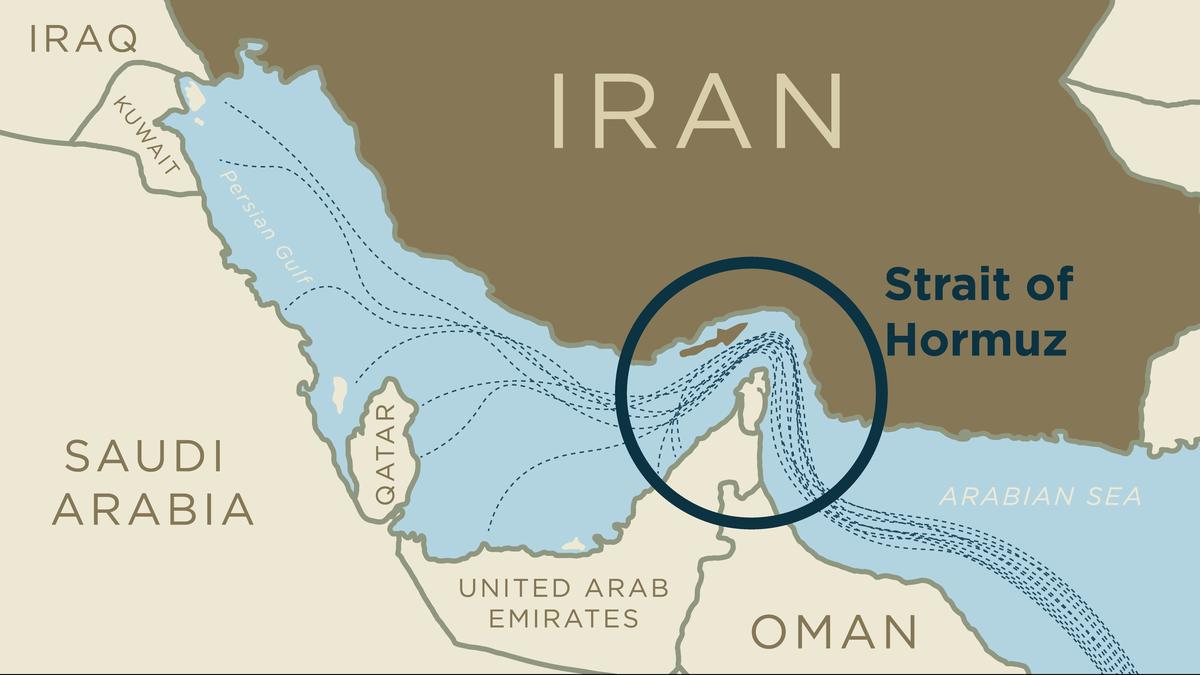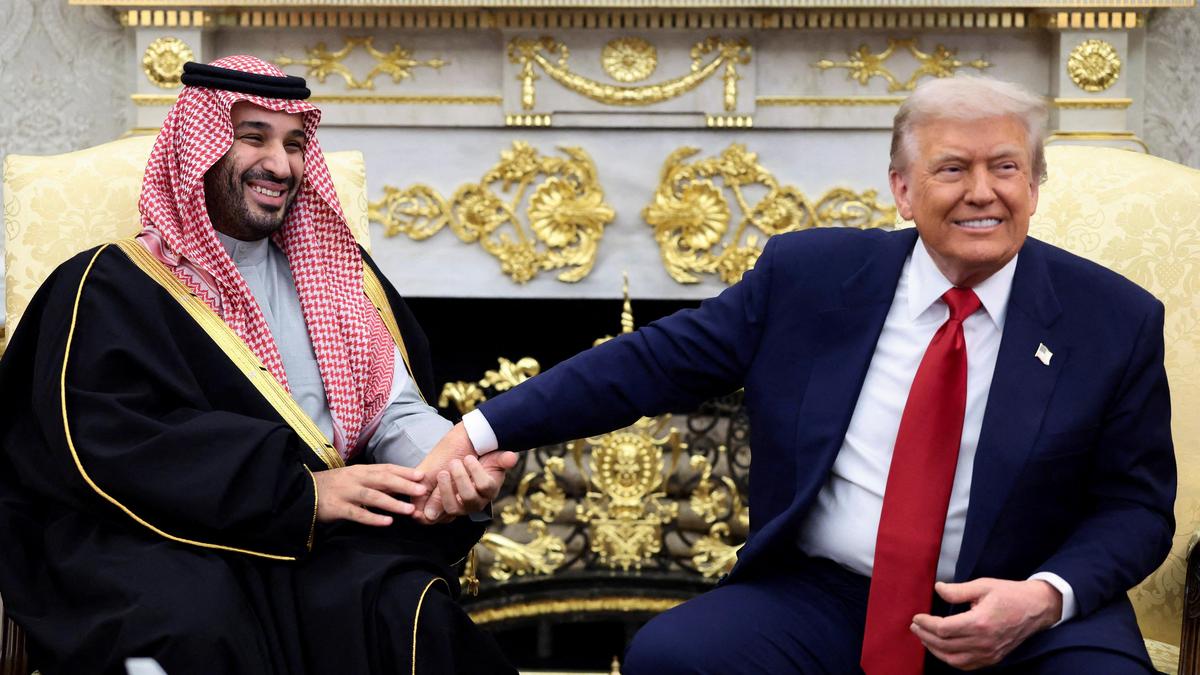
The prevailing narrative in Washington’s think-tank circles is as predictable as it is wrong. You’ve seen the headlines. They suggest that Gulf monarchs are whispering in Donald Trump’s ear, begging him to finally "finish the job" and dismantle the Islamic Republic. It makes for a great spy novel. It’s also a total fantasy.
If you believe the Gulf states want a decisive, scorched-earth defeat of Iran, you aren't paying attention to the balance sheet. You are falling for the public relations mask.
I have sat in the rooms where these "allies" calculate the cost of a regional power vacuum. I’ve watched the panic in the eyes of energy analysts when they realize what a truly "defeated" Iran looks like. The reality is that the status quo—a contained, manageable, but existing Iranian threat—is the most valuable asset the GCC has.
The Luxury of a Common Enemy
The first lie is that the Gulf wants the threat to vanish. They don't.
Threats are useful. Threats justify massive defense spending. Threats ensure that the United States remains tethered to the region despite its pivot toward Asia and the Pacific. Without the Iranian "boogeyman," the strategic relevance of the Gulf states to Western military planners drops by half overnight.
If Iran were to collapse tomorrow, the U.S. Fifth Fleet would have very little reason to maintain its current footprint in Bahrain. The "protection" the Gulf pays for via massive arms deals with Boeing and Lockheed Martin would suddenly look like an unnecessary tax.
The Refugee Nightmare Nobody Mentions
Everyone talks about the "defeat" of the regime. Nobody talks about the 85 million people who live there.
Imagine a scenario where the central authority in Tehran evaporates. You don't get a Jeffersonian democracy. You get a massive, multi-ethnic civil war across a mountainous geography that makes Afghanistan look like a playground.
The Gulf states are not built for regional instability. They are fragile, high-end service economies. They are shopping malls with a flag. The last thing a prince in Riyadh or a billionaire in Dubai wants is millions of desperate refugees crossing the Gulf or flooding through Iraq into their borders.
I’ve seen how these governments reacted to the Syrian crisis. They didn't open the doors; they built walls and tightened visas. A collapsed Iran is a humanitarian and security catastrophe that would bankrupt the "Vision 2030" dreams of the neighborhood.
The Energy Price Trap
Here is the math the "hawk" commentators ignore.
A "decisively defeated" Iran eventually means an Iran back in the global oil market at full capacity. If the regime falls and a Western-friendly government takes over, the sanctions disappear. Suddenly, 3 to 4 million barrels of Iranian crude hit the market without restriction.
For Saudi Arabia, which struggles to keep oil prices high enough to fund its massive domestic transformations, this is a nightmare. They need oil at $80 or $90 a barrel. A flood of Iranian oil, backed by Western investment in aging Iranian infrastructure, would tank the price of Brent.
The Gulf states want Iran sanctioned, not destroyed. They want Iranian oil locked in the ground, not competing for market share in China.
The Myth of "Privately Telling Trump"
When you hear that Gulf leaders are "privately" urging Trump to go for the throat, you are hearing a specific type of diplomatic theater.
It is "performative hawkishness."
They tell the Americans what they think the Americans want to hear to maintain the relationship. If Trump is in a "maximum pressure" mood, they will nod and applaud. But look at their actions, not their words.
- Saudi Arabia recently restored diplomatic ties with Tehran via a Chinese-brokered deal.
- The UAE has been increasing trade with Iran for years, serving as a back-door for goods.
- Qatar maintains a massive shared gas field with the Iranians.
These are not the actions of states seeking a final, bloody showdown. These are the actions of states that have accepted Iran as a permanent, if annoying, neighbor. They are hedging. They are playing both sides because they know that when the American bombs stop falling, they are the ones who have to live next to the rubble.
The Proxy War Paradox
The "lazy consensus" says that defeating Iran stops the proxies—Hezbollah, the Houthis, the militias in Iraq.
This is a fundamental misunderstanding of how insurgency works. Decapitating the head in Tehran does not automatically kill the body in Yemen or Lebanon. In many cases, it makes them more dangerous.
An orphaned Houthi movement, no longer under the (admittedly loose) guidance of Tehran, becomes a wild card. Without a state actor to hold accountable, the Gulf has no leverage. You can’t sanction a shadow. You can’t negotiate with a group that has nothing left to lose because their patron has vanished.
Why the Status Quo is King
The "containment" model is the most profitable business in the Middle East.
- Military-Industrial Flow: Keeping the threat "simmering" keeps the weapons flowing and the technical advisors in place.
- Internal Cohesion: Nothing unites a domestic population behind a monarchy like an external "Persian" threat.
- Diplomatic Leverage: The Gulf can play the role of the "rational partner" against the "irrational actor" in Tehran.
When people ask, "Why don't we just end this conflict?" they are asking the wrong question. The conflict is the product. The tension is the utility.
Stop looking for a "final victory." In the real world of geopolitical chess, nobody wants to checkmate the opponent if it means the board gets flipped over and hits them in the face.
The Gulf doesn't want Trump to destroy Iran. They want him to keep Iran in a box—just small enough to be harmless, but just scary enough to keep the American security umbrella firmly opened over the desert.
The moment that box breaks, the Gulf’s era of easy wealth and borrowed security ends. And they know it better than any armchair general in Washington.
The next time a "source" tells you the Gulf is cheering for a war, ask yourself who benefits from that rumor. It isn't the people who have to breathe the smoke.