The decoupling of a Ukrainian or Middle Eastern peace settlement from the absolute security of the Strait of Hormuz represents a fundamental shift in American "maximum pressure" doctrine. While traditional geopolitical theory views the global energy supply chain as an indivisible web, the emerging strategy treats regional conflicts as isolated variables to be solved independently. This approach rests on a cold assessment of domestic energy independence versus the cost of prolonged kinetic engagement.
The Bifurcation of Global Choke Points
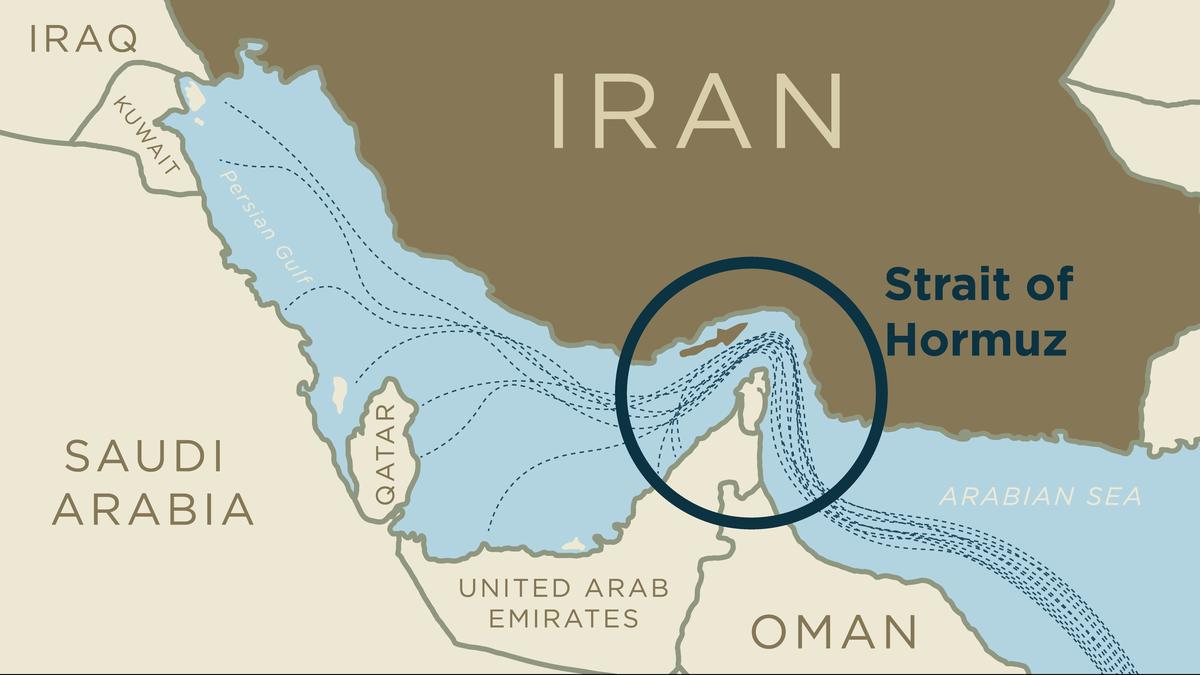
The Strait of Hormuz facilitates the passage of approximately 21 million barrels of oil per day, representing roughly 20% of global petroleum liquid consumption. Historically, US foreign policy operated under the "Carter Doctrine," which posited that any attempt by an outside force to gain control of the Persian Gulf region would be regarded as an assault on the vital interests of the United States.
The current strategic pivot suggests a transition toward Resource-agnostic Isolationism. In this framework, the diplomatic capital required to secure a ceasefire in Eastern Europe or the Levant is no longer traded for maritime security guarantees in the Gulf. This creates a distinct hierarchy of objectives where immediate cessation of hostilities outranks the long-term stabilization of global energy pricing.
The Three Pillars of Detached Diplomacy
To understand why an administration would signal a willingness to end a war without securing the Hormuz corridor, one must analyze the three structural pillars supporting this logic:
1. The Domestic Energy Buffer
The United States has transitioned into a net exporter of crude oil and petroleum products. This status reduces the "misery index" associated with Middle Eastern supply shocks. While global prices would still spike during a Hormuz closure, the domestic industry captures the upside of those higher prices, partially offsetting the inflationary impact on the consumer. The strategic necessity of the Gulf has shifted from a survival requirement to a price-management preference.
2. The Credibility of the Deterrence Gap
Negotiating an end to one conflict while ignoring a looming threat in another—specifically the Iranian threat to the Strait—acknowledges a limitation in naval power projection. Maintaining a constant carrier strike group presence in the Persian Gulf incurs massive opportunity costs, draining resources from the Indo-Pacific theater. By separating "The War" (Ukraine or Gaza) from "The Choke Point" (Hormuz), the negotiator gains speed at the expense of comprehensive security.
3. Asymmetric Leverage Application
The assumption is that regional actors, specifically Iran, are more influenced by internal economic decay and direct sanctions than by the status of a distant European war. Therefore, using a peace deal in one region as a bargaining chip for maritime access in another is viewed as a suboptimal use of leverage. Each theater is treated as a separate ledger.
The Cost Function of Decoupled Stability
Every diplomatic shortcut carries a measurable risk. The decision to bypass Hormuz in broader peace talks creates an Externalized Risk Variable. The burden of securing the Strait shifts from the United States to the primary consumers of Gulf oil: China, India, Japan, and South Korea.
The mechanism of this shift is as follows:
- Step 1: The US secures a localized peace deal (e.g., Ukraine).
- Step 2: The US reduces its naval footprint in the Middle East to signal a "return to normalcy."
- Step 3: Iranian or proxy forces maintain or increase their capability to harass tankers.
- Step 4: Insurance premiums (War Risk Surcharges) for VLCCs (Very Large Crude Carriers) increase, effectively taxing Asian economies while the US remains insulated by its own production.
This is not a failure of strategy; it is a calculated transfer of the "security tax."
The Mechanics of Kinetic vs. Diplomatic Resolution
We must distinguish between a Total Settlement and a Functional Ceasefire. A Total Settlement requires the resolution of all underlying grievances, including maritime transit rights. A Functional Ceasefire only requires the guns to stop firing.
The preference for a Functional Ceasefire is driven by the Time-Value of Political Capital. A leader facing an election cycle or domestic economic pressure prioritizes the immediate optics of "ending a war." The second-order effects—such as the potential for a 30% jump in Brent Crude if a tanker is seized the following month—are treated as manageable contingencies rather than deal-breakers.
Logical Framework: The Security Trilemma
In Middle Eastern policy, you can only choose two of the following:
- Immediate cessation of regional hostilities.
- Zero American military presence on the ground/water.
- Guaranteed free flow of energy through the Strait.
The strategy described by recent reports suggests a choice of 1 and 2. By sacrificing the guarantee of the Strait, the administration seeks to fulfill the promise of ending "forever wars" and reducing overseas spending.
Strategic Risks of the Vacuum
Removing the Hormuz guarantee from the peace equation invites "Grey Zone" aggression. If an adversary knows that a peace treaty is the primary goal of the US, they can use the Strait as a pressure valve to extract further concessions after the initial deal is signed. This creates a cycle of perpetual renegotiation.
The lack of a maritime component in a peace framework also signals a shift in the Global Commons Doctrine. If the US is no longer the guarantor of the world's most vital waterway, the vacuum will be filled by a coalition of regional powers or a rival superpower. This transition is rarely peaceful and often involves a period of high-volatility "testing" where commercial vessels are used as pawns in a broader geopolitical chess match.
Tactical Realignment for Market Participants
Investors and energy analysts must move away from the "Pax Americana" model of the Persian Gulf. If diplomatic efforts are focused solely on land-based conflicts, the maritime environment becomes a "Wild West" variable.
- Diversification of Transit: Increased reliance on the East-West Pipeline (Saudi Arabia) and the Habshan–Fujairah pipeline (UAE) becomes a mandatory capital expenditure for regional players.
- Shadow Fleet Proliferation: As the US steps back from enforcement, the "shadow fleet" of tankers operating outside of standard maritime law will likely expand, as these vessels are more willing to risk transit through contested waters.
- Private Security Resurgence: We anticipate a surge in the use of armed private maritime security companies (PMSCs) to protect commercial assets, shifting the cost of defense from the US taxpayer to the corporate balance sheet.
The strategic play here is not to wait for a comprehensive "Grand Bargain" that solves every global friction point. Instead, the focus is on the Minimum Viable Peace. This involves identifying the single most politically damaging conflict, terminating it with blunt force or rapid concession, and leaving the complex, systemic issues like the Strait of Hormuz for a later date or a different actor. This approach prioritizes immediate stability over systemic integrity, a trade-off that defines the current era of realpolitik.