The wind in the Maipo Valley doesn't just blow; it whispers. It carries the scent of ripening grapes, parched earth, and a history that most people in the town of Paine would rather leave buried beneath the topsoil. This is the fiefdom of the Kast family. To understand the rise of José Antonio Kast—the man who nearly took the Chilean presidency and remains the gravitational center of the nation’s right wing—you cannot look at polling data or televised debates. You have to walk the dirt roads of his family’s estate. You have to look at the ghosts.
Paine is a quiet place, tucked away about forty kilometers south of Santiago. It looks like a postcard of rural prosperity. But the prosperity here was built on a foundation of silence.
The story begins with Michael Kast, a lieutenant in the Wehrmacht who fled a crumbling Germany in 1947. He didn't arrive with riches. He arrived with a false identity and a hunger to rebuild what he had lost in the ruins of Europe. He found a home in the fertile central valley of Chile, a place where the social hierarchies felt familiar and the land was ripe for the taking. He started small, selling sausages from a cart. Within decades, that cart had morphed into Cecinas Bavaria, a multi-million dollar food empire.
But Michael Kast brought more than recipes from the Old World.
The Weight of the Name
Imagine a young José Antonio growing up in this environment. The youngest of ten children, he was raised in a household where discipline was a religion and the patriarch's word was law. The family wasn't just wealthy; they were the local state. They provided jobs. They built schools. They donated to the church. In Paine, the name Kast became synonymous with order.
Then came 1973.
The military coup that toppled Salvador Allende wasn't just a political shift for the Kasts. It was a liberation. While the rest of the world watched in horror as General Augusto Pinochet’s jets bombed the Moneda Palace, the landowners of Paine saw a return to the "natural" way of things. The chaos of land reform, which had threatened to redistribute their holdings to the peasants, was over.
However, the restoration of order came with a body count.
In the weeks following the coup, seventy people disappeared from Paine. It remains the town with the highest rate of disappearances per capita in all of Chile. These weren't foreign insurgents or urban guerrillas. They were local farmers, union leaders, and teenagers. They were the people who had dared to ask for a piece of the land the Kasts and their neighbors owned.
Witnesses from that era, whose voices have been recorded in the agonizingly slow proceedings of Chilean justice, describe a chilling collaboration. They speak of civilian trucks—including those belonging to the Bavaria company—being used by the police to transport prisoners. They describe Michael Kast as a man who didn't just support the regime from afar but actively assisted the local repression.
José Antonio has spent his career dismissing these accounts. He calls them "myths" or "political persecution." He paints his father as a simple immigrant who did what he had to do to survive and thrive. But for the families of the seventy who never came home, the "simple immigrant" is a figure of terror.
The Architecture of a Strongman
Politics is often a search for a father figure. In a Chile scarred by economic instability and a sudden surge in migration, José Antonio Kast offers the same stern, unyielding paternalism that his father established in Paine.
His appeal isn't based on complex policy papers. It’s based on an aesthetic of "The House." In the Kast worldview, the nation is a private estate. It must be fenced. The intruders must be kept out. The hierarchy must be respected. When he speaks about "restoring order," he isn't just talking about crime on the streets of Santiago; he is talking about returning to the era of the great hacienda, where everyone knew their place and the master took care of his own.
Consider the irony. A man who champions the "common Chilean" was forged in a bubble of European privilege, shielded by the very military power he now seeks to re-legitimize.
The human cost of this ideology is visible if you know where to look. Just outside the town center of Paine sits a memorial. It is a forest of wooden pillars, one for each of the disappeared. Some pillars are missing pieces, symbolizing the families that were broken. It is a stark, silent rebuke to the polished rhetoric of the Kast campaign.
The tension in Chile today is the tension of a country trying to decide which ghost to follow. Do they follow the ghost of the 1973 revolution, which promised equality but ended in blood? Or do they follow the ghost of Michael Kast, which promised stability but was built on the bones of his neighbors?
The Dinner Table Legacy
To meet José Antonio is to meet a man who is preternaturally calm. He does not shout. He does not lose his temper. This "polite extremism" is his greatest weapon. He frames the most radical ideas—building a ditch on the border, withdrawing from international human rights treaties, pardoning aging torturers—in the tone of a concerned neighbor discussing a property line dispute.
This civility is a legacy of the family dinner table. In the Kast household, the horrors of the past were likely never discussed as horrors. They were "necessities." They were "unfortunate consequences of war." When you are raised in a house where the villain of history is celebrated as a hero, your moral compass doesn't just break; it recalibrates.
The political rise of the Kasts is not an anomaly. It is a symptom.
Across the globe, we see a yearning for the "strong man" who can simplify a complex world. We see it in Hungary, in Brazil, in the United States. Chile is just the laboratory where this experiment is being conducted with a particularly painful historical resonance.
The "German shadows" aren't just about the Third Reich or the Wehrmacht. They are about the transplanting of an authoritarian soul into the soil of the New World. Michael Kast succeeded beyond his wildest dreams. He didn't just build a sausage company; he built a political dynasty that has forced Chile to look into a mirror and decide if it likes what it sees.
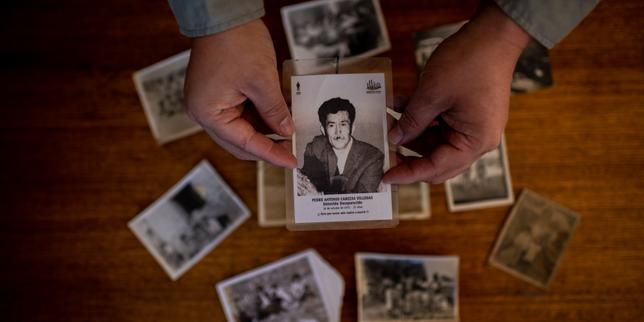
The families of the disappeared in Paine still gather. They hold photos of young men in 1970s collars, their smiles frozen in black and white. They don't have the money of the Kasts. They don't have the media platforms or the political party. All they have is memory.
They remember the trucks. They remember the uniforms. They remember the silence that fell over the valley when the "order" was finally restored.
On a warm evening in the Maipo Valley, the sun sets behind the Andes, casting long, distorted shadows across the vineyards. The estates look peaceful. The gates are locked. The security cameras blink their red eyes. It looks like the perfect vision of a secure, prosperous nation.
But if you stand still long enough, you realize that the silence isn't peace. It’s a breath held in anticipation.
The story of the Kasts isn't over. It is merely waiting for the next chapter, written by a man who believes that the only way to lead a country is to own it. The ghosts of Paine are still walking, and they are not finished speaking yet.
The soil here is rich, but it is heavy. You can harvest the grapes and turn them into fine wine, but you can never quite wash away the metallic taste of the iron that sits deep within the earth.