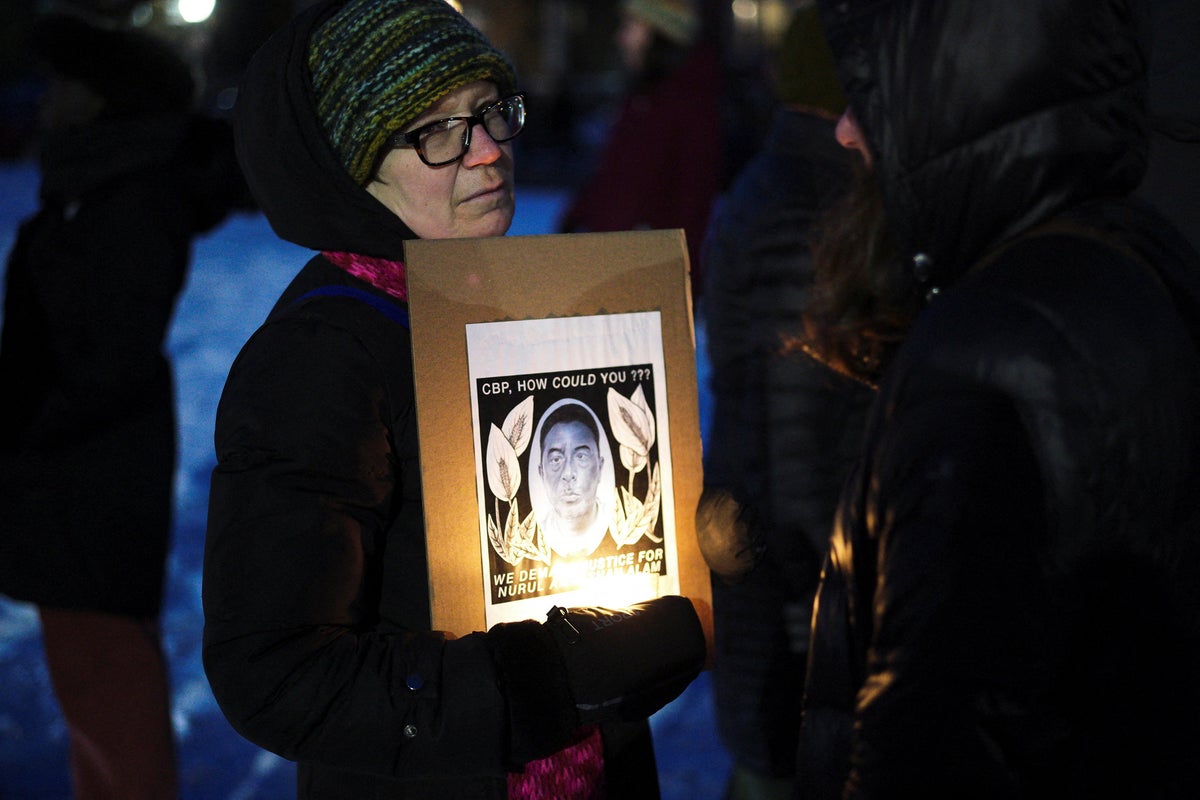
The footage is haunting, the headlines are predictable, and the outrage is curated. When video surfaced showing border agents dropping a visually impaired man on a sidewalk in New York shortly before he succumbed to the elements, the media did what it always does: it looked for a villain in a uniform. It’s an easy narrative. It fits on a protest sign. It also completely ignores the systemic rot that actually killed him.
We are obsessed with the handoff because we are terrified to look at the destination. The "tragedy" isn't just a moment on a cold curb; it is the culmination of a massive, multi-agency collapse that we’ve rebranded as a "humanitarian crisis" to avoid calling it what it is: a total administrative bankruptcy.
The False Narrative of the Cold Drop
The common outcry suggests that if Border Patrol had simply driven a few more blocks, or if a specific form had been signed, a man would still be alive. This is a comforting lie. It suggests the system works, provided the "bad actors" are removed.
In reality, the drop-off is the only functioning part of the process.
Federal agencies are currently operating as the world’s most stressed logistics company. Their mandate is processing and transport. They are not, and have never been, a long-term social services or healthcare provider. When people scream about "abandonment," they are effectively demanding that a law enforcement agency act as a concierge service for a municipal infrastructure that has already raised the white flag.
I’ve seen how these operations run from the inside. You have agents who are trained to track sensors and process biometrics now tasked with managing the complex medical and social needs of thousands of individuals daily. They are a hammer being asked to perform heart surgery. The "drop-off" isn't a sign of malice; it’s the sound of a system hitting its physical and legal limit.
Why Your Questions About Border Security Are Wrong
People ask: "How could they leave a blind man in the cold?"
The real question is: "Why did a multi-billion dollar municipal 'Sanctuary' infrastructure fail to catch him the second he landed?"
New York City spends billions on its shelter system. It has a "Right to Shelter" mandate that is unique in the country. Yet, the discourse focuses on the federal agents who delivered the individual to the city, rather than the city’s inability to manage the arrival.
If we want to talk about "duty of care," we have to talk about the gap between federal processing and local integration.
- The Federal Role: Identification, processing, and release (often mandated by court backlogs).
- The Municipal Role: Housing, healthcare, and navigation.
- The Reality: A total lack of data-sharing that ensures the most vulnerable—the blind, the elderly, the sick—disappear into the concrete the moment they step off a bus or van.
The tragedy in New York wasn't a failure of border enforcement; it was a failure of the safety net that politicians promised would be there. You cannot invite the world and then act surprised when the world shows up with complex needs.
The Data We Ignore
Let’s look at the numbers the "outrage machine" skips over. In any given month, thousands of individuals are processed through these hubs. The vast majority navigate the chaos. When one person dies, it is an outlier that exposes the brittleness of the entire structure.
If you analyze the timeline of this specific case, you see a series of handoffs where information was lost. The federal agents knew his condition. The local entities were "notified." But "notified" in government-speak is a black hole. It means an email was sent to a general inbox or a clipboard was checked.
The contrarian truth? Accountability is being dispersed so thinly that no one actually holds it. By blaming the "border agents," we give a free pass to the city officials, the shelter managers, and the non-profit industrial complex that receives millions in grants to "manage" this exact scenario.
The High Cost of Selective Empathy
We love to perform empathy on social media, but we hate the logistics of it.
True empathy would look like a unified biometric health record that follows a migrant from the Rio Grande to a shelter in Queens. But we don't do that. Why? Because the privacy advocates would scream, the federalists would argue over jurisdiction, and the tech would cost more than a new stadium.
Instead, we stick to the status quo:
- Feds drop people off.
- Cities complain they weren't ready.
- Non-profits scramble for funding.
- Someone dies.
- We blame the guy in the green uniform.
This cycle is a feature, not a bug. It allows everyone to maintain their ideological purity while the actual human beings at the center of the storm are treated like hot potatoes.
The "Near-Blind" Factor: A Failure of Triage
The fact that the victim was visually impaired is used as a rhetorical bludgeon against the agents. But consider the environment. In a processing center holding 300% of its capacity, "near-blind" is just one of a thousand medical flags.
In any other professional setting, we recognize the concept of Triage Saturation.
When a system is overwhelmed, the ability to provide nuanced, individual care drops to zero. We have reached Triage Saturation at the border and in our major cities. Expecting a "humanitarian" outcome from a saturated system is statistically illiterate.
Stop Fixing the "Drop" – Fix the "Catch"
If you want to stop people from dying in the cold, stop focusing on the bus. Focus on the sidewalk.
The unconventional reality is that we need less ambiguity in these handoffs, not more "sensitivity training" for agents. We need a hard, cold, bureaucratic transfer of custody that treats a human life with the same level of tracking as a FedEx package.
Does that sound dehumanizing? Perhaps. But a package doesn't get left on a street corner to freeze to death because someone forgot to sign a manifest. We currently treat migrant logistics with less rigor than we treat a pair of sneakers ordered from an app.
The Hard Truth About Sanctuary Cities
The term "Sanctuary City" has become a marketing slogan that the reality can't back up. It creates a "pull factor" that attracts the most vulnerable populations, promising a safety net that is currently shredded.
When New York or Chicago or Denver says they are overwhelmed, they aren't just talking about money. They are talking about the failure of their own internal systems to handle the complexity of the human condition. Blaming a federal agent for a death on a city street is the ultimate act of political deflection. It’s a way for local leaders to say, "We would have helped him, but he was delivered incorrectly."
It’s a lie. He was delivered. The city was there. The lights were on. The system just didn't care enough to look out the window.
The Industrialized Ignorance of the Media
The competitor's article focuses on the "video reveals." It treats the footage like a smoking gun. But the video doesn't reveal a crime; it reveals a routine. That is what’s actually terrifying.
The agents did exactly what they were told to do. They followed the SOP (Standard Operating Procedure). The city followed its SOP. The victim followed the only path available to him.
If everyone follows the rules and a man still dies in the street, the rules are the problem, not the people following them. We are rearranging deck chairs on the Titanic and screaming at the stewards for not folding the napkins correctly.
Logistics Over Ideology
We don't need more "heartbreaking" op-eds. We need a brutal audit of where the billions of dollars allocated for "migrant aid" are actually going.
- Why isn't there a real-time GPS tracking of vulnerable releases?
- Why isn't there a mandatory physical handoff for individuals with documented disabilities?
- Why does the "Right to Shelter" not include a "Right to be Noticed"?
The answer is simple: because that would require actual coordination between federal and local governments—two entities currently more interested in scoring points against each other than in preventing a blind man from freezing.
The next time you see a video of a "drop-off," don't look at the van driving away. Look at the empty street behind it. Look at the billion-dollar city that couldn't manage to find one person in its own backyard.
Stop blaming the delivery man for the fact that the house is on fire.


