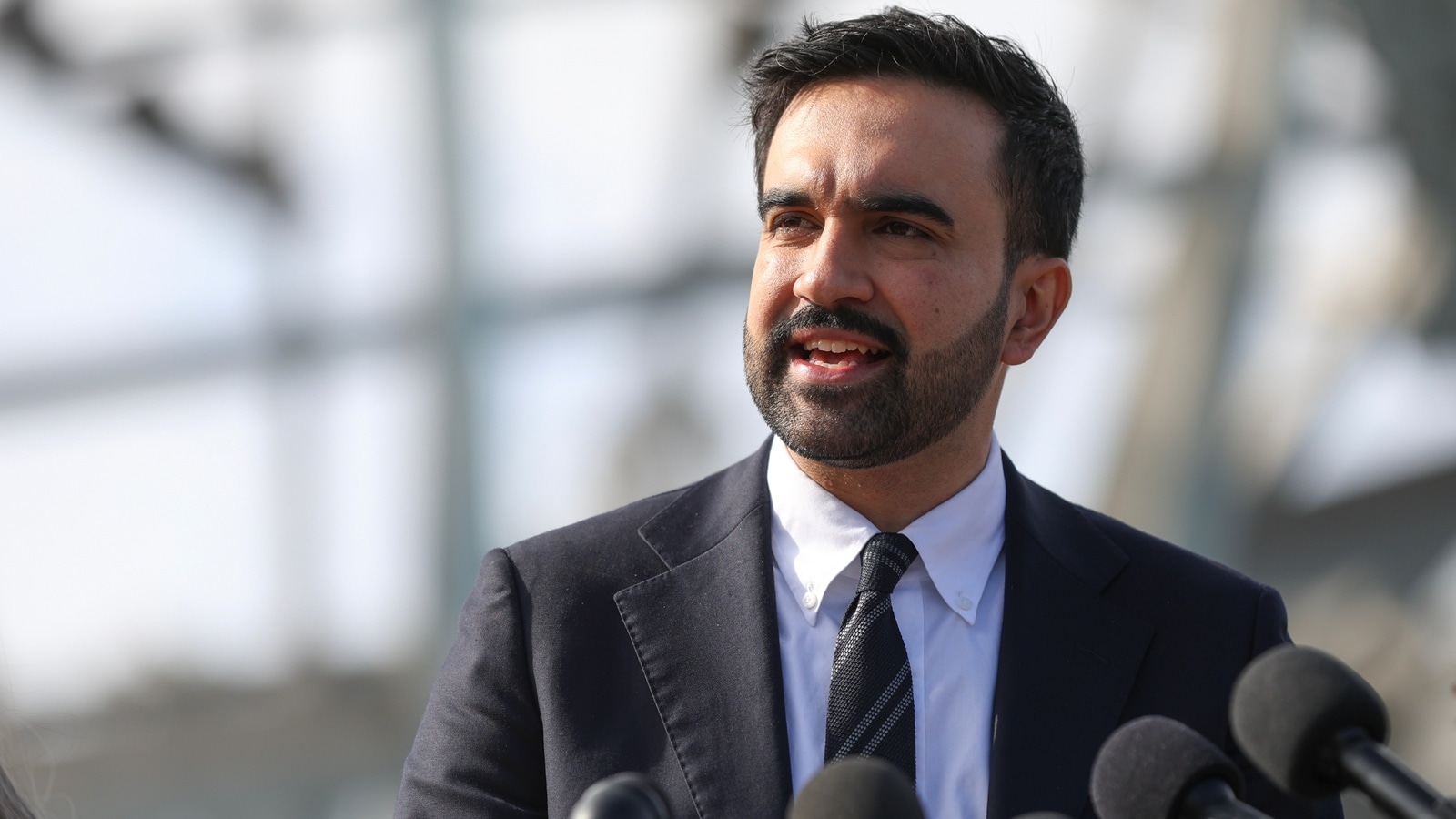
The intersection of federal immigration enforcement, municipal "sanctuary" protocols, and high-level political intervention at Columbia University reveals a volatile shift in how administrative law is applied in high-profile cases. When Zohaib Qureshi, a Columbia graduate student, was detained by Immigration and Customs Enforcement (ICE) and subsequently released following an intervention involving New York State Senator Zohran Mamdani and a direct appeal to the Trump administration, the event signaled more than a singular legal resolution. It exposed a friction point between the Discretionary Executive Authority of the federal government and the Municipal Protectionist Framework of New York City’s sanctuary status.
The release of a student under these circumstances is not a standard legal outcome but a case of High-Value Individual (HVI) Mitigation. Analyzing this event requires deconstructing the operational layers of immigration enforcement, the political cost-benefit analysis of detention, and the specific legal levers that allowed for a rapid reversal of ICE’s standard detention-to-deportation pipeline.
The Federal Enforcement Mandate and the Sanctuary Barrier
To understand why the arrest happened at Columbia, one must define the operational boundaries of ICE's current enforcement strategy. ICE operates under a federal mandate that prioritizes individuals deemed a "threat to national security" or "public safety." However, in a sanctuary city like New York, the Cooperation Gap creates a significant intelligence barrier for federal agents.
New York City’s local laws restrict the NYPD and other city agencies from honoring ICE detainers unless a judicial warrant is present. This creates a reliance on independent federal surveillance and field operations. The arrest of a student on a university campus—a "sensitive location" under traditional ICE guidelines—indicates a shift in the Risk-Tolerance Threshold for federal agents. They are increasingly willing to incur the PR cost of campus arrests to fulfill specific enforcement targets.
The detention of Zohaib Qureshi specifically highlights the Visa Compliance Loophole. Most international students are categorized under F-1 or J-1 visa statuses, which are contingent upon continuous enrollment and adherence to specific conduct codes. A "technical violation"—such as a change in credit hours or a temporary administrative lapse—can trigger an automated notification in the Student and Exchange Visitor Information System (SEVIS). Once a student is flagged in SEVIS, the legal status shifts from "Active" to "Terminated," providing ICE with the legal pretext for an administrative arrest regardless of the student’s academic standing or lack of criminal record.
The Three Pillars of Political Intervention
The release of Qureshi was not the result of a standard judicial hearing; those processes typically take months. Instead, it was an exercise in Asymmetric Political Leverage. This intervention can be broken down into three distinct operational pillars:
- The Legislative Intermediary: State Senator Zohran Mamdani acted as a bridge between the local protest movement and the federal executive. By traveling to Mar-a-Lago, Mamdani bypassed the Department of Homeland Security (DHS) bureaucracy and engaged directly with the executive decision-making circle. This moves the case from a "legal track" to a "political track."
- The Executive Discretionary Override: The Trump administration’s willingness to engage in this specific release suggests a strategic use of Prosecutorial Discretion. Even under the strictest enforcement regimes, the executive branch maintains the right to "stay" a deportation or release an individual on "own recognizance" if it serves a broader political or diplomatic interest.
- The Institutional Pressure Variable: Columbia University’s role—or lack thereof—in the initial arrest creates a secondary pressure point. When an elite institution’s student is detained, the university’s legal counsel and donor network can inadvertently become a force multiplier for the defense, even if the university officially remains neutral to avoid federal funding risks.
The Cost Function of High-Profile Detentions
For the federal government, maintaining a detention involves a Linear Cost Function that increases as the case gains media traction.
- Political Capital Burn Rate: Every day a student remains in detention without a criminal charge, the administration loses "moderate" political capital while gaining "base" capital.
- Operational Friction: A high-profile case attracts pro-bono legal teams and civil rights observers, which slows down the administrative processing of other, less visible cases.
- Diplomatic Reciprocity: If the student is a foreign national, the detention can trigger diplomatic inquiries from their home country’s consulate, complicating unrelated foreign policy objectives.
By releasing the student, the administration effectively "closed the loop" on a potential PR crisis before it reached a point of diminishing returns. The release allows the administration to project a "tough but fair" image, claiming that they can enforce the law strictly but also possess the wisdom to show leniency in exceptional cases.
The Breakdown of Sanctuary Logic in Campus Spaces
The Columbia incident proves that the Sanctuary Shield is increasingly porous. While New York City may refuse to cooperate, the physical geography of the city is not a legal "no-fly zone" for federal agents. Universities, while theoretically sensitive locations, are increasingly being treated as High-Density Enforcement Zones due to the high concentration of non-immigrant visa holders.
The legal mechanism for the arrest likely relied on Third-Party Data Aggregation. ICE uses data from private contractors who track license plates, cellular pings, and social media activity. If a student is active in public protests or is mentioned in police reports (even without being arrested), their digital footprint expands, making them an easy target for an ICE "administrative warrant," which does not require a judge’s signature.
Quantifying the Precedent
The release of Qureshi creates a dangerous or beneficial precedent, depending on one’s position in the political ecosystem. It establishes a Bypass Protocol:
- Step 1: Identify a detainee with high social or academic standing.
- Step 2: Rapidly mobilize institutional and legislative support to elevate the case beyond the regional ICE office.
- Step 3: Appeal directly to the executive's desire for a "deal" or a demonstration of absolute power over the bureaucracy.
This protocol, however, is not scalable. It relies on the rarity of the individual’s profile. For the thousands of detainees without Ivy League connections or state-level legislative advocates, the standard Expedited Removal Process remains the status quo.
Strategic Implications for Non-Immigrant Visa Holders
Students and faculty under F, J, or H-1B visas must now operate under a Zero-Tolerance Compliance Model. The previous era of "discretionary non-enforcement" for technical violations has ended.
- SEVIS Hardening: Ensure that university registrars are not just compliant but proactive in correcting administrative errors before they reach the federal database.
- Digital Footprint Management: Recognizing that federal agents use open-source intelligence (OSINT) to identify targets. Participation in high-profile activism now carries a quantifiable risk of triggering an administrative status review.
- The "First 48" Rule: In immigration enforcement, the first 48 hours are critical. Once a detainee is moved from a local holding facility to a rural federal processing center, the "political track" becomes much harder to access due to the lack of physical proximity to advocates and media.
The Columbia release was a triumph of individual intervention over a rigid system, but it also confirmed the system's power. It proved that the law is being applied not as a universal constant, but as a variable that can be manipulated through high-level negotiation. This volatility is the new baseline for immigration status in the United States.
The primary risk for institutions and individuals is the assumption that the "Columbia Model" is a repeatable strategy. In reality, it was a alignment of specific political incentives—a senator running for higher office, a university under scrutiny, and an administration looking to demonstrate its absolute control over both the arrest and the release.
Future legal defense must prioritize the Administrative Correction Phase—stopping the SEVIS flag—rather than relying on the Political Intervention Phase, which is subject to the whims of executive temperament. The focus must shift from "Sanctuary Protection" to "Data Integrity" and "Immediate Legal Interception."