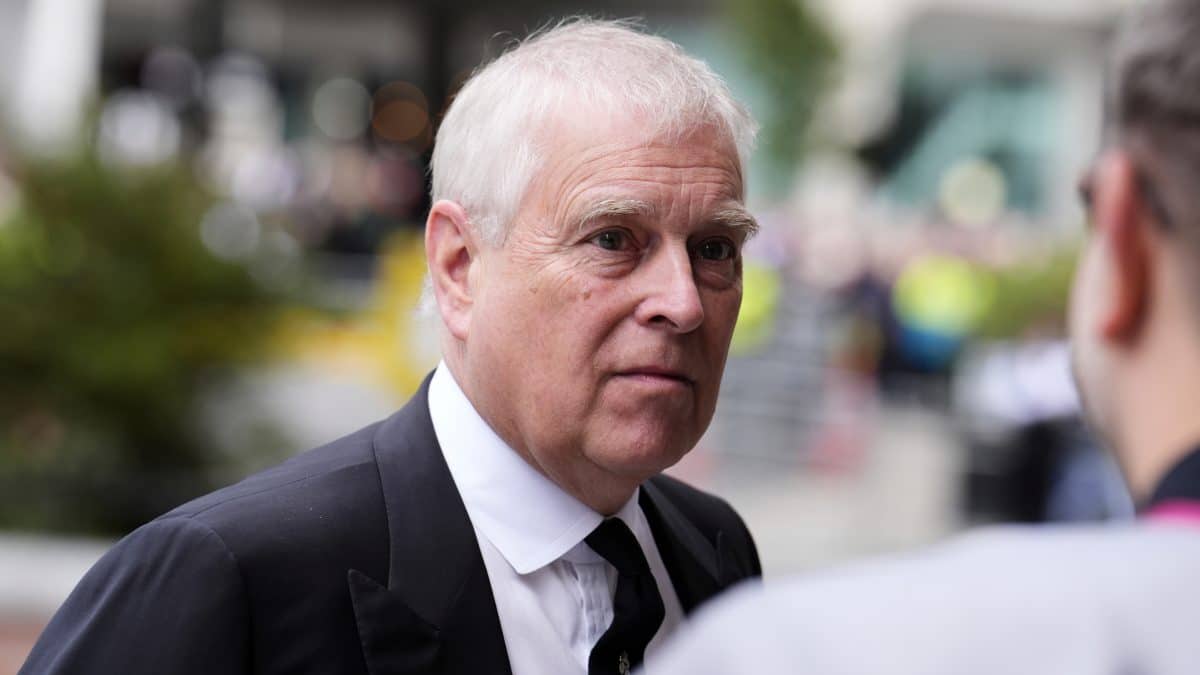
The British public is currently being fed a narrative that the release of Whitehall files regarding Prince Andrew’s stint as a trade envoy will act as a "day of reckoning." It is a comforting thought. It suggests that hidden within the beige folders of the Department for International Trade lies a smoking gun—a document that finally bridges the gap between official state business and the sordid Epstein orbit.
It is a fantasy.
The obsession with these files ignores a fundamental truth about how high-level power operates: the most damaging activities rarely leave a paper trail in a government filing cabinet. By focusing on what the government "knew" during his tenure from 2001 to 2011, the media is chasing a ghost while the real machinery of institutional rot remains untouched.
The Fallacy of the Paper Trail
Most observers assume that bureaucracy is a meticulous recording device. They expect to find memos that say, "We are concerned about the Prince’s associates, but we shall proceed anyway."
In reality, the higher you climb in the UK’s diplomatic and trade circles, the less people put on paper. Serious concerns are handled via "quiet words" in hallways or off-record briefings. If you are looking for a definitive link between state-funded travel and private misconduct in these files, you are going to find a desert of administrative boredom.
The files will likely contain:
- Standardized briefing packs on emerging markets.
- Logistics for trade delegations to Kazakhstan or the UAE.
- Polite, toothless correspondence from civil servants trying to manage a royal ego.
The "scandal" isn't in what's hidden; it’s in what was always public. We already know he was a frequent guest of a convicted sex offender while holding a taxpayer-funded role. We don't need a Freedom of Information request to tell us that the vetting process for "Special Envoys" is a joke.
The Trade Envoy Role Was Always a Vanity Project
The central misconception is that the role of "Special Representative for International Trade and Investment" was a vital cog in the UK’s economic engine. It wasn't. It was a sinecure designed to give a bored royal something to do that looked vaguely productive.
Critics argue that his behavior "damaged" the UK’s reputation. That assumes the reputation was built on his efficacy. I’ve seen how these trade missions work. Business leaders tolerate royal presence because it opens doors to foreign dignitaries who value protocol. The actual deals are hammered out by mid-level executives and career diplomats who do the heavy lifting while the royal handles the ribbon-cutting.
To suggest that his tenure was a disaster because of the Epstein fallout is to miss the point: the role itself was a vestigial organ of a pre-modern state. The real scandal is that we still use an 18th-century model of "royal charisma" to conduct 21st-century commerce.
Why "Full Disclosure" is a Diversion
The UK government’s reluctant release of these files is a classic political feint. By dragging their feet for years, they have built up the perceived value of the information. When the files are finally dumped—heavily redacted for "national security" or "privacy" reasons—the public will spend months squinting at black ink.
This is a distraction from the structural failure.
The focus on Andrew’s individual movements allows the Foreign Office and the Department for Business and Trade to avoid answering for their lack of oversight. If a trade envoy can maintain a friendship with a known predator for a decade without a single internal mechanism triggering a shutdown of his office, the problem isn't the files. The problem is the culture of deference that makes the monarchy untouchable until it becomes a PR liability.
The Cost of the "Access" Economy
We need to talk about the "Access Economy." This is where the Epstein connection and the Trade Envoy role actually intersect.
Epstein traded in access. Prince Andrew traded in access. The UK government, by granting Andrew a formal role, became a silent partner in that trade. The files won't show a conspiracy; they will show a vacuum. They will show a total lack of curiosity from civil servants who were too terrified of the Palace to ask basic questions about who was funding the Prince’s private travel or why he was meeting certain individuals on the sidelines of official trips.
- Institutional Blindness: The belief that a Royal Highness is above the standard vetting applied to a junior civil servant.
- The "Gilded" Shield: Using official government business as a cover for private networking that benefits no one but the individual.
- Accountability Lag: The fact that it took a decade of public outcry to even consider releasing documents that should have been public records from day one.
Stop Asking for Transparency, Demand Obsolescence
The "People Also Ask" sections of the internet are filled with queries about whether the Prince will face further legal consequences or if the monarchy can survive the "Epstein stain." These are the wrong questions.
The right question is: Why does the UK government still maintain a system where "envoys" operate outside the bounds of standard professional accountability?
If you want to disrupt this cycle, stop waiting for the "bombshell" memo. It doesn't exist. Instead, demand the total dismantling of the "Special Representative" system. Every trade mission should be led by a professional with a track record of economic success, not a family member with a title and a penchant for expensive hobbies.
The release of these files is a funeral for a dead era. It provides the illusion of progress while keeping the underlying power structures intact. We are being given the crumbs of a decade-old story to keep us from noticing that the same culture of deference exists today, just with different faces.
The files will show that the government was inept, deferential, and lazy. We knew that already. The real "fallout" isn't what happened in the past—it’s the fact that we are still pretending these files hold the key to a future that hasn't already been written by the sheer weight of public indifference.
Burn the files or release them; it makes no difference. The damage isn't in the secrets they keep, but in the reality they represent: a state that serves the prestige of a few at the expense of the integrity of the many.
Stop looking for the smoking gun in the filing cabinet when the house is already burnt to the ground.
Would you like me to analyze the specific diplomatic protocols that allowed these private-public overlaps to persist for so long?