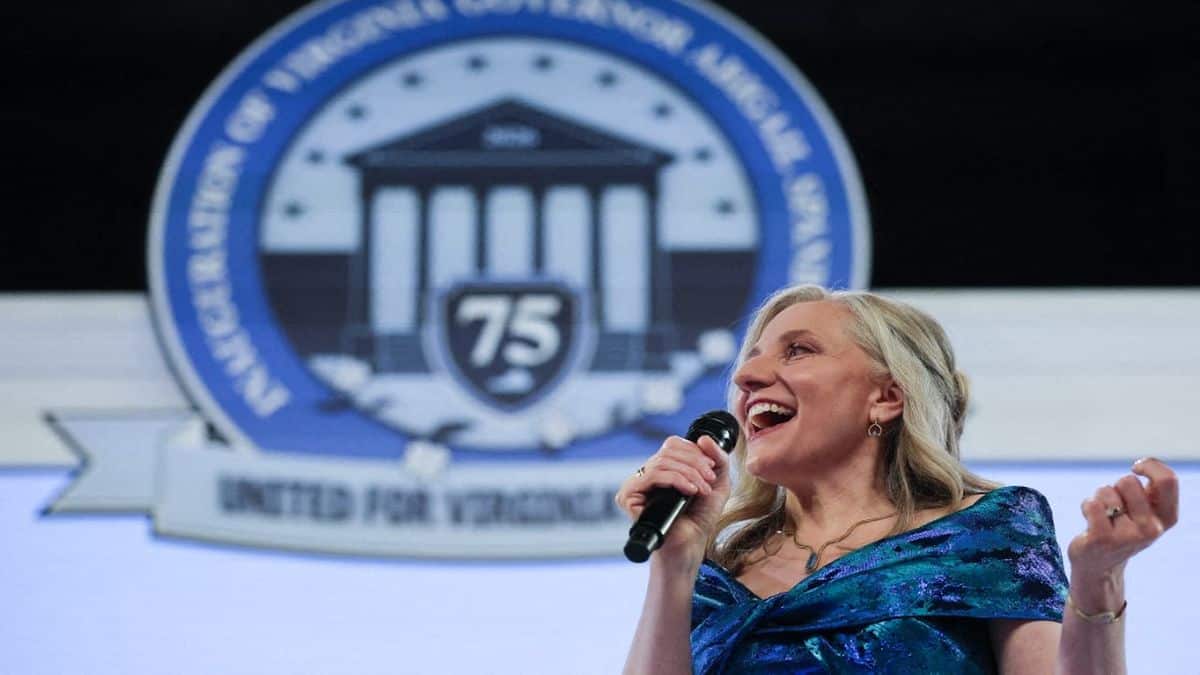
The political establishment is currently self-congratulating over Abigail Spanberger’s Democratic response to Donald Trump’s State of the Union. They call it "crisp." They call it "pointed." They point to her background as a CIA officer and her new role as Governor of Virginia as proof that she is the "perfect" foil to the 47th President.
They are wrong.
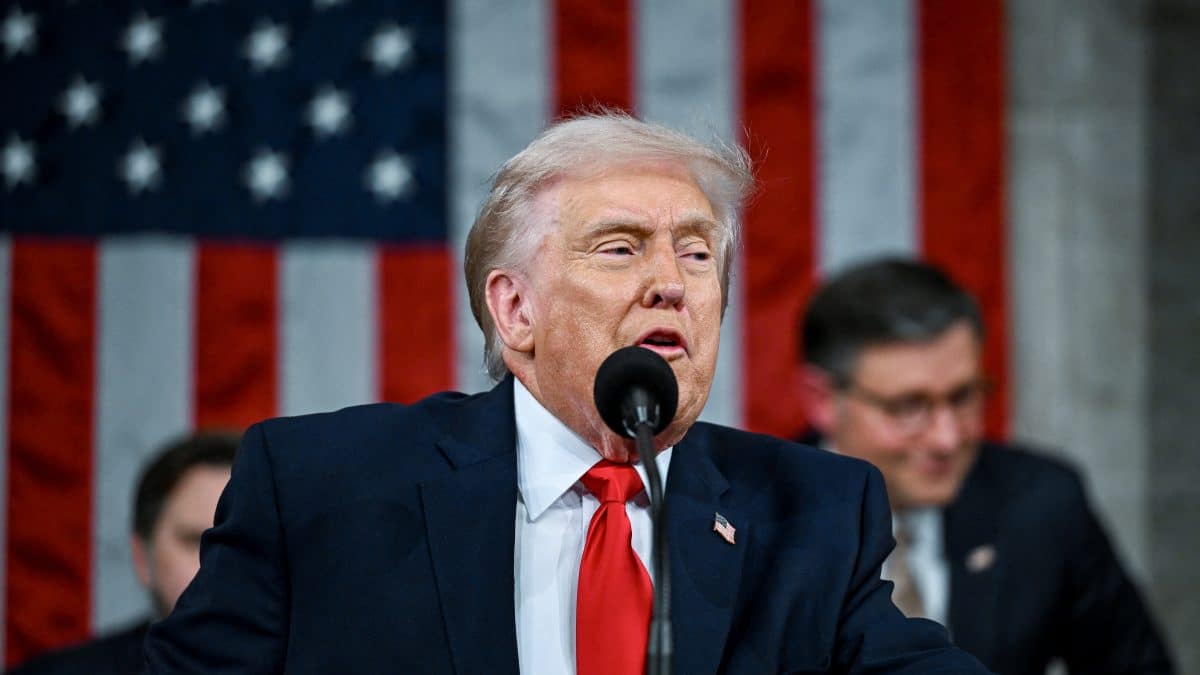
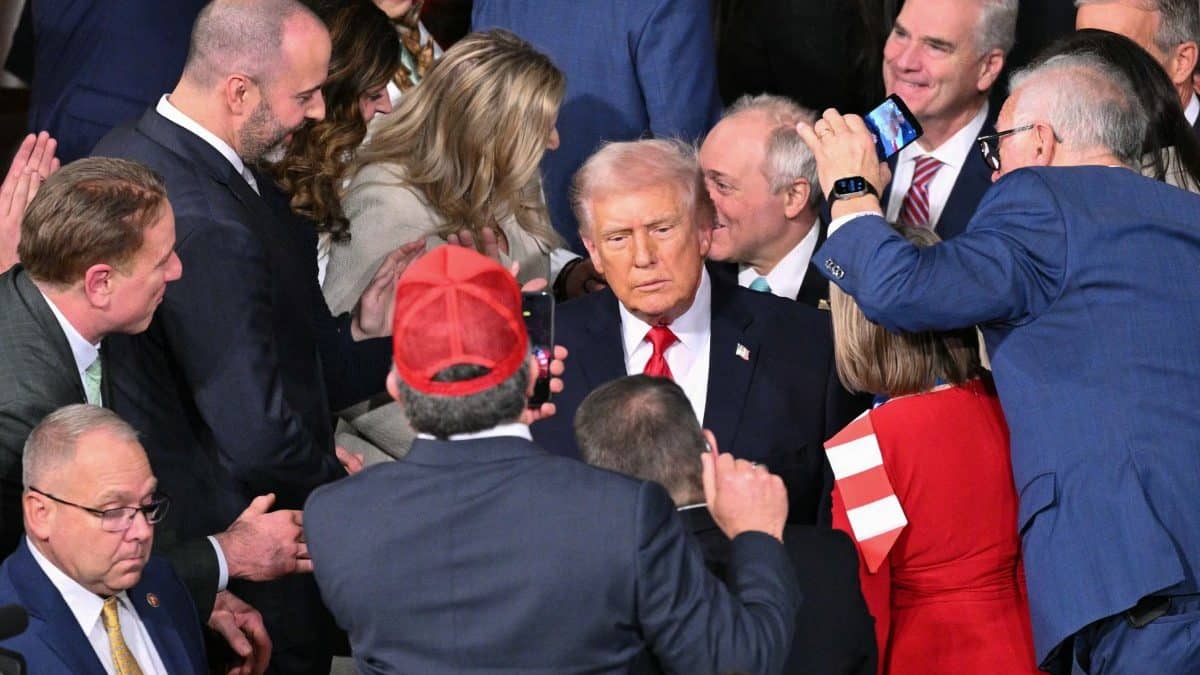
In reality, the Spanberger rebuttal was a masterclass in why the Democratic Party continues to lose the narrative war. By retreating to the safety of Williamsburg and leaning on 18th-century aesthetics, Spanberger didn't just look backward; she surrendered the present. While Trump spent nearly two hours in the belly of the beast—dominating the House chamber, goading his rivals, and declaring a "Golden Age"—the Democrats hid their rising star in a living history museum.
It wasn't a show of strength. It was an admission of displacement.
The Affordability Trap
Spanberger’s main line of attack focused on "affordability." She stood surrounded by American flags and argued that Trump’s trade policies—specifically his aggressive tariff regime—have cost the average family $1,700. This is the "lazy consensus" of the consultant class: hit them on the pocketbook with a specific, digestible number.
But here is the nuance the pundits missed: Numbers don't win against vibes. Trump isn't selling a spreadsheet; he’s selling a psychological state. When he claims that "the roaring economy is roaring like never before," he is speaking to the 53 record highs in the stock market and the plummeting core inflation rates he cited. Whether or not those $1,700 in tariff costs are "real" (and even non-partisan groups like the National Taxpayers Union can't agree on the exact figure), they are invisible compared to the loud, performative "wins" Trump broadcasts daily.
Spanberger asked, "Is the President working for you?" It's a classic Reagan-era framing. The problem? In 2026, the answer for a massive swath of the electorate—including the "Republicans and Independents" Spanberger claims to have won over in Virginia—is a resounding "yes," even if it’s based on the feeling of strength rather than the reality of the grocery bill. By centering her entire argument on "affordability," she accepted the frame that Trump is the one in charge of the economy. You don't beat a populist by arguing over the decimal point on a tariff.
The Williamsburg Mistake
Choosing Colonial Williamsburg as the backdrop was intended to be a symbolic masterstroke. The "Cradle of Democracy." The place where the Virginia Declaration of Rights was born. It was supposed to contrast 18th-century dignity with 21st-century "unserious" governance.
Instead, it felt like a reenactment.
When you speak from a museum, you sound like a relic. Trump’s speech was 108 minutes of raw, unfiltered power projection. He awarded medals, he recognized the Olympic hockey team, and he utilized the full theater of the state. Spanberger’s 12-minute response from a quiet room in a restored colonial town felt small. It reinforced the "coastal elite" vs. "real world" divide that the GOP exploits so ruthlessly.
If the Democratic Party wants to show they are a "force for good," they need to stop speaking from "historic places" and start speaking from the construction sites, the shuttered rural hospitals they claim to care about, and the borders where they say agents are "sowing fear." Standing in a costume-drama setting only highlights the distance between the party leadership and the modern American struggle.
The Myth of the CIA Foil
The media loves the "Spy vs. Trump" narrative. They frame Spanberger’s CIA background as her superpower—the serious professional taking on the chaotic amateur.
I’ve seen this play out in dozens of corporate and political campaigns. The "professional" approach fails because it assumes the audience values process over results. Spanberger criticized the "unserious people" in Trump’s administration and the "poorly trained federal agents" in American cities.
This is a procedural critique in an emotional era.
To the average voter, "poorly trained agents" are still agents taking action. When Spanberger talks about "unaccountable agents" while Trump talks about "zero illegal aliens admitted," the voter doesn't care about the warrant; they care about the result. By focusing on the methodology of the Trump administration’s immigration enforcement rather than the morality of it, Spanberger conceded the high ground. She sounded like a middle manager complaining that the CEO isn't following the HR manual.
Stop Asking the Wrong Questions
Spanberger’s three-question structure—Is he making life affordable? Is he keeping us safe? Is he working for you?—is designed for a 1992 town hall, not 2026.
The real question the Democrats should be asking is: "Why are you so afraid to lead?"
Spanberger talked about the "bravery" of protesters in Minnesota and students in Texas. She praised the people for "standing up for their communities." This is a classic Democratic pivot: shifting the burden of leadership onto the "ordinary citizen."
Trump does the opposite. He positions himself as the sole provider of the "Golden Age." He says, "I will never allow..." and "I have driven..."
Democrats are obsessed with "We the People." Trump is obsessed with "I the President." In a time of perceived chaos, the public gravitates toward the "I." Spanberger’s insistence on "We" sounds like a committee meeting. People don't want to be told they have the power to change things; they want a leader who has already started changing them.
The Redistricting Hypocrisy
You cannot claim to be the "defender of freedom" and "honesty" while simultaneously signing off on a redistricting plan designed to wipe out the opposition. Spanberger’s move to support a 10-1 Democrat-tilted map in Virginia—after previously saying she had "no plans" to redistrict—is exactly the kind of "unprincipled" behavior she accuses Trump of.
The defense is always "they did it first" (referencing Texas and California). But in the court of public opinion, "but he started it" is not a winning legal or moral strategy. It nukes your Authoritativeness. It makes the Williamsburg backdrop look like a cynical prop.
If you want to dismantle the Trumpian "Golden Age," you have to be more than just "Trump Lite" with better grammar. You have to offer a vision that isn't just a rebuttal of his. Spanberger didn't give a response; she gave a Yelp review.
The Mic Drop
The Democratic Party is currently addicted to the "sensible moderate" archetype. They believe that if they just find someone articulate enough, with a "national security background," the American public will suddenly realize they’ve been conned.
They won't.
Voters don't want a fact-checker in a historic costume. They want a fighter who isn't afraid of the arena. Abigail Spanberger is a talented politician, but her State of the Union response was a retreat to the past at a moment that demanded a lunge into the future. Trump won the night not because he told the truth, but because he showed up to the fight.
Spanberger stayed in the museum.
Would you like me to analyze the specific economic data regarding the "Delilah Law" mentioned in Trump's address?