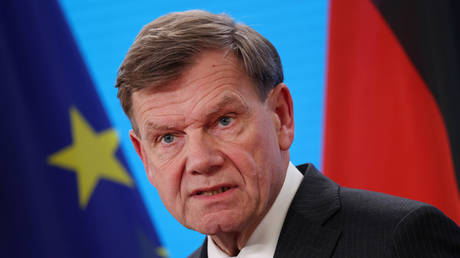
Germany just blinked. Foreign Minister Annalena Baerbock’s suggestion that the conversation on seizing Russian central bank assets is "closed" isn't a victory for international law. It’s a white flag. By clinging to a 20th-century interpretation of "sovereign immunity," European leadership is effectively subsidizing the destruction of the global order they claim to protect.
The consensus is lazy. It’s built on the trembling fear that if the EU touches Russia’s $300 billion, every "Global South" nation will pull their reserves out of the Eurozone. This is a ghost story told by risk-averse bankers who haven't looked at a balance sheet in a decade. Also making news recently: Finland Is Not Keeping Calm And The West Is Misreading The Silence.
The Sovereign Immunity Myth
Sovereign immunity was never intended to be a suicide pact. In the hallowed halls of Brussels, bureaucrats treat the principle as an absolute, immutable law of nature. It isn’t. It is a reciprocal agreement. If Country A respects the borders and sovereignty of Country B, Country A’s assets are protected.
When you shatter the primary rule—territorial integrity—you forfeit the secondary protections. To argue otherwise is to say that a state can commit any level of atrocity while its bank account remains a "no-go zone." Further details on this are detailed by The Guardian.
The Logic Gap
- The Competitor's View: Seizing assets creates a legal precedent that undermines the Euro’s stability.
- The Reality: The precedent already exists. We have frozen the assets. Freezing is already a "taking" in the eyes of any nervous dictator. If they were going to flee the Euro, they would have left in February 2022. They haven't. Why? Because there is nowhere else to go.
The Liquidity Trap: Where Else Will They Go?
Critics of asset seizure love to moan about the "weaponization of finance." They warn that China, India, and Saudi Arabia will dump their Euro holdings.
Let’s be brutally honest: Go where?
- The Renminbi? Good luck getting your money back out. The Yuan isn't a currency; it’s a closed-loop credit system managed by the CCP.
- Gold? Try paying for a national healthcare system or a fleet of fighter jets with physical gold bars. The logistics alone are a nightmare.
- The Dollar? If you’re afraid of the EU seizing assets, the U.S. Treasury—which is far more aggressive and less hampered by 27-member consensus—is even more terrifying.
The Euro exists as a reserve currency because of the rule of law. If that law is shown to be toothless against the largest land war in Europe since 1945, the currency loses its value anyway. Value is derived from the strength of the system that backs it. Right now, that system looks frail.
The Moral Hazard of "Interest Only"
The current "clever" workaround involves taxing the interest earned on these frozen assets. It’s a classic European compromise: small enough to be useless, complicated enough to keep lawyers employed for a generation.
By only taking the "profits," the EU is essentially telling the world that the principal is sacred, but the growth is fair game. This is intellectually dishonest. If you have the legal right to seize the fruit of the tree, you have the right to the tree.
The Cost of Hesitation
I’ve seen boards of directors paralyze multi-billion dollar companies because they were afraid of a 5% chance of a lawsuit. The EU is doing the same on a geopolitical scale. Every day this money sits in Euroclear earning interest for Belgian tax authorities instead of rebuilding Ukrainian power grids, the eventual bill for the taxpayer grows.
If the $300 billion isn't used, the European taxpayer will be the one on the hook for the trillion-dollar reconstruction bill. Baerbock isn't protecting "international law"; she’s signing a check on behalf of every German citizen to cover Russia’s liabilities.
Dismantling the "Precedent" Argument
"If we do it to Russia, someone will do it to us."
This is the most common pushback in the "People Also Ask" circuit. It’s a flawed premise. Western democracies don't generally invade their neighbors and annex territory in the 21st century. If your national strategy involves unprovoked conquest, then yes, you should be worried about your assets.
For everyone else, the message sent by seizure is: Stability is the price of admission to the global financial club.
A Thought Experiment
Imagine a scenario where a global bank allows a client to use their accounts to fund a heist. When the heist is discovered, the bank "freezes" the account but refuses to give the money back to the victims because "client confidentiality is a sacred principle." That bank wouldn't be praised for its integrity; it would be indicted.
The EU is currently acting as that bank.
The Euroclear Bottleneck
Most of these assets are stuck in Euroclear, the Belgium-based settlement giant. Euroclear is terrified of being sued. That’s a valid corporate fear. But this is where the "Counter-Intuitive Truth" comes in: The risk of not seizing the assets is higher than the risk of litigation.
If the EU fails to act, they signal that they are a secondary power, unable to enforce the very rules they wrote. That lack of teeth is what actually kills a currency’s "reserve" status. Investors don't run from "tough" jurisdictions; they run from "unpredictable" ones. A jurisdiction that refuses to use its most potent non-kinetic weapon during a continental crisis is, by definition, unpredictable.
Why Seizure is Actually Conservative
Seizing the principal is the only way to restore the balance of power. It creates a direct, tangible cost for aggression.
- Standard Sanctions: Often bypassed through shell companies and third-party nations.
- Asset Seizure: Absolute. Immediate. Impossible to "work around."
The Actionable Pivot
Stop asking "Is it legal?" and start asking "How do we make it legal?"
International law isn't a set of tablets brought down from a mountain; it’s a living consensus. If the G7 moves in unison, they become the law. The U.S. REPO Act (Rebuilding Economic Prosperity and Opportunity for Ukrainians Act) provides the blueprint. Europe is the laggard.
What Must Happen:
- Transfer of Title: Move the assets from "frozen" status to a dedicated reconstruction fund.
- Indemnity for Clearstream and Euroclear: State-level guarantees to protect the clearing houses from the inevitable, yet ultimately hollow, Russian lawsuits.
- Direct Offset: Publicly link every cent seized to a specific piece of destroyed civilian infrastructure.
The Failure of "Closed" Conversations
When a politician says a conversation is "closed," it usually means they’ve run out of courage. Baerbock’s stance is a gift to Moscow. It tells the Kremlin that their offshore piggy bank is safe as long as they outlast the current news cycle.
We are told that seizing these assets would "break" the global financial system. The system is already broken. You cannot have a functional global market when one of its primary participants is actively trying to burn the marketplace down.
The Euro won't fail because of a legal maneuver against an aggressor state. It will fail because the people in charge of it were too afraid to use the power they already possessed.
You don't win a fight by protecting your opponent's wallet. You win by making the cost of their actions higher than they can afford to pay. Right now, Russia is playing on the EU’s dime.
Stop talking about the "risks" of seizure. Start counting the costs of cowardice.