Low-resolution footage is the new high-yield explosive.
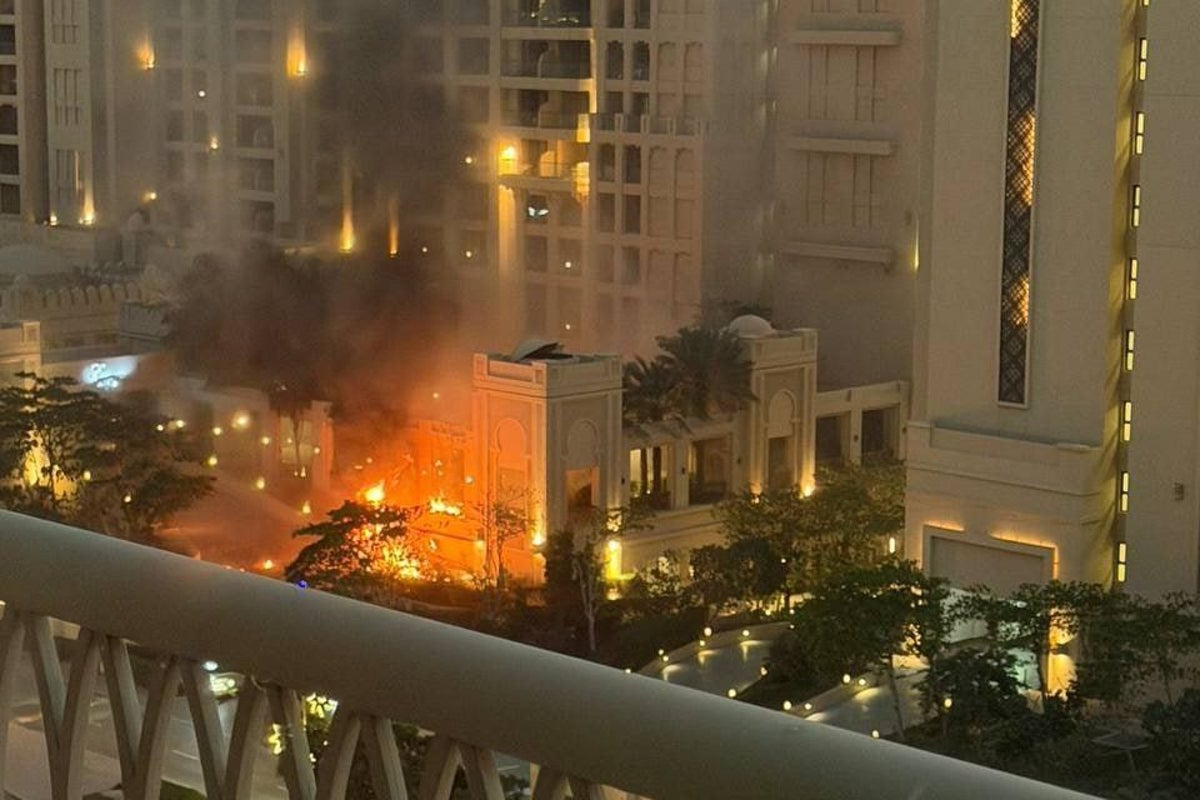
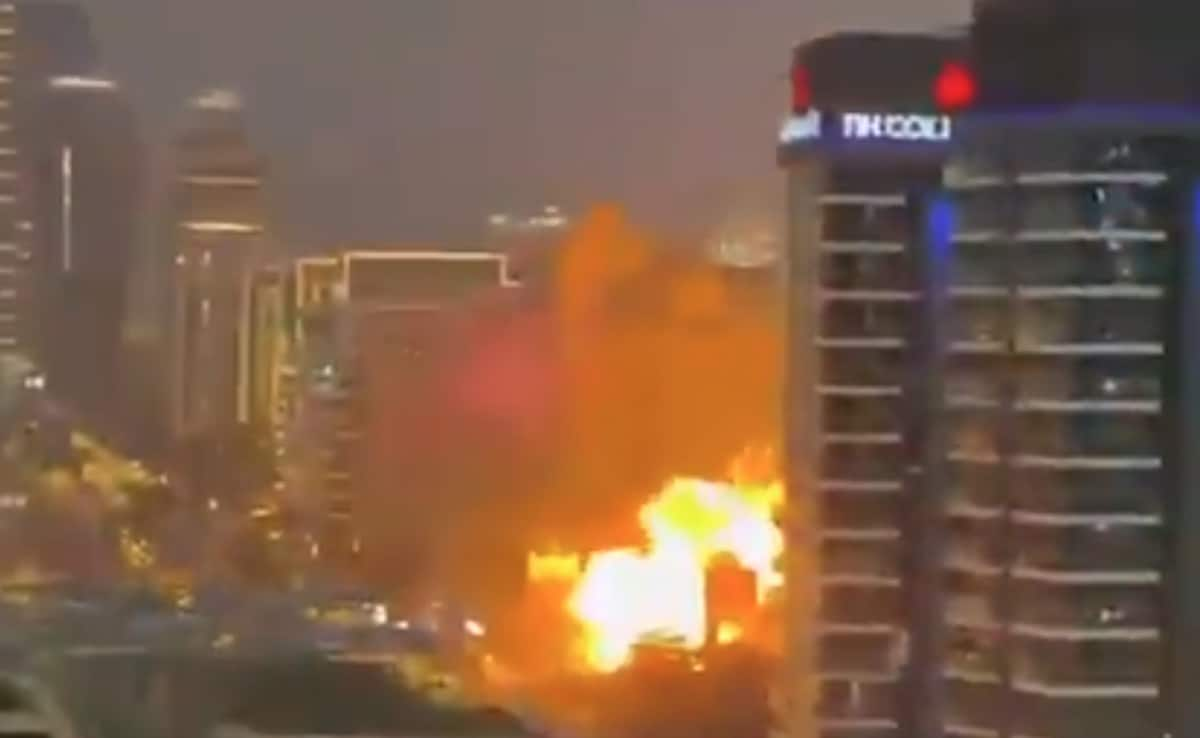
The viral "Shahed drone strike" on Dubai isn't a military milestone; it is a stress test for collective intelligence that we are failing. While mainstream outlets scramble to play the "breaking news" loop of a grainy fireball over a skyline, they are missing the glaring technical reality. This isn't a story about Iranian drone proliferation. This is a story about the total collapse of visual literacy in an era of asymmetric psychological warfare.
I have spent years analyzing flight telemetry and kinetic impact data. I have watched real-time feeds from conflict zones where Shahed-136 units actually operate. What we see in these "leaked" Dubai clips doesn't align with the physics of a 200kg delta-wing suicide drone. It aligns with the desperate need for engagement in a saturated news cycle.
The Physics of a Ghost
Let’s talk about the Shahed-136. It’s essentially a flying lawnmower packed with high explosives. It is slow, incredibly loud, and relies on a MD-550 piston engine that sounds like a vintage moped.
In a city as vertically dense and acoustically resonant as Dubai, you don’t just "see" a Shahed strike. You hear it coming from three miles away. Yet, in every "eyewitness" video circulating, the audio profile is either sanitized or filled with generic city ambiance until the moment of the blast.
The Velocity Gap
A Shahed-136 cruises at roughly $185 \text{ km/h}$.
- The Trajectory Problem: To strike a high-rise in a dense urban core like the Marina or Downtown Dubai, the drone requires a terminal guidance precision that the base Shahed model simply lacks. These are GPS-guided inertial tools designed for static, sprawling targets—power plants, warehouses, oil fields.
- The Kinetic Signature: When a 40kg warhead hits a reinforced concrete skyscraper, the blast pattern is specific. It shatters glass for blocks and creates a localized thermal bloom. The "explosions" in the viral footage look suspiciously like pre-baked assets from a VFX library—too much orange, not enough grey dust, and a frame rate that hitches exactly when the light hits the neighboring buildings.
The Lazy Consensus of Proliferation
The "industry experts" quoted in the big-box newsrooms love the Shahed narrative because it’s easy. It fits the pre-packaged geopolitical script. They tell you that because these drones are cheap ($20,000 a pop), they are now everywhere, and no one is safe.
That is a half-truth that masks a deeper incompetence.
The real threat isn't that a drone can hit Dubai; it’s that the mere suggestion of it causes more economic volatility than the hardware ever could. Dubai’s economy is built on the perception of an ultra-safe, gold-plated sanctuary. You don’t need to actually launch a drone from a thousand miles away when you can launch a 10-second MP4 file from a basement and achieve the same dip in the markets.
Your Tactical Skepticism Manual
If you want to stop being a casualty of information ops, you need to look at the mechanics of the "leak" rather than the fireball.
- Where is the debris? In a city where every square inch is scrubbed by a literal army of maintenance crews, physical evidence would be on social media within thirty seconds. We have "explosions" but zero photos of carbon-fiber wing fragments or engine components.
- The Air Defense Paradox: The UAE operates some of the most sophisticated Integrated Air Defense Systems (IADS) on the planet. Between THAAD and Patriot batteries, a slow-moving, non-stealthy, piston-engine drone is a "soft" target. To believe the drone struck, you have to believe the most expensive radar curtain in the Middle East simply went out for coffee.
- The Metadata Silence: Notice that these videos never come with a raw file. They are always screen-recordings of Telegram posts, which are screen-recordings of WhatsApp groups. This is intentional. It strips the geolocation and timestamp data that would immediately debunk the "strike."
The Wrong Question
People keep asking, "How did Iran get a drone past the defense grid?"
That is the wrong question. The right question is: "Who benefits from you believing the grid is broken?"
If I’m a competitor in the regional tourism or finance space, a "video" of a drone strike is the most cost-effective sabotage in history. It costs zero lives, requires no fuel, and bypasses every radar system ever built because it travels via fiber optic cables directly into your retina.
I have sat in rooms where security consultants charge six figures to "mitigate" these risks. Their solution is always more hardware—more sensors, more jammers, more steel. They are selling umbrellas to people during a software glitch. You cannot jam a video that has already gone viral.
Stop Looking for Fireballs
We are obsessed with the "huge explosion" because it’s cinematic. We want the world to be a Michael Bay movie because that is easier to process than the reality: we are being played by low-level digital agitators.
The Shahed is a real weapon. It is doing real damage in Eastern Europe and across the Yemeni border. But using it as a boogeyman to explain every mysterious flash in a Gulf skyline is intellectually lazy. It’s "defense-industry-lite" commentary for people who can't tell the difference between a thermal flare and a lens flare.
The next time you see a "breaking" video of a drone strike in a global hub, don't check the news. Check the wind. Check the acoustics. Check the stock price of the nearest competitor.
If it looks like a movie, it’s because it was produced like one.
Stop sharing the simulation.