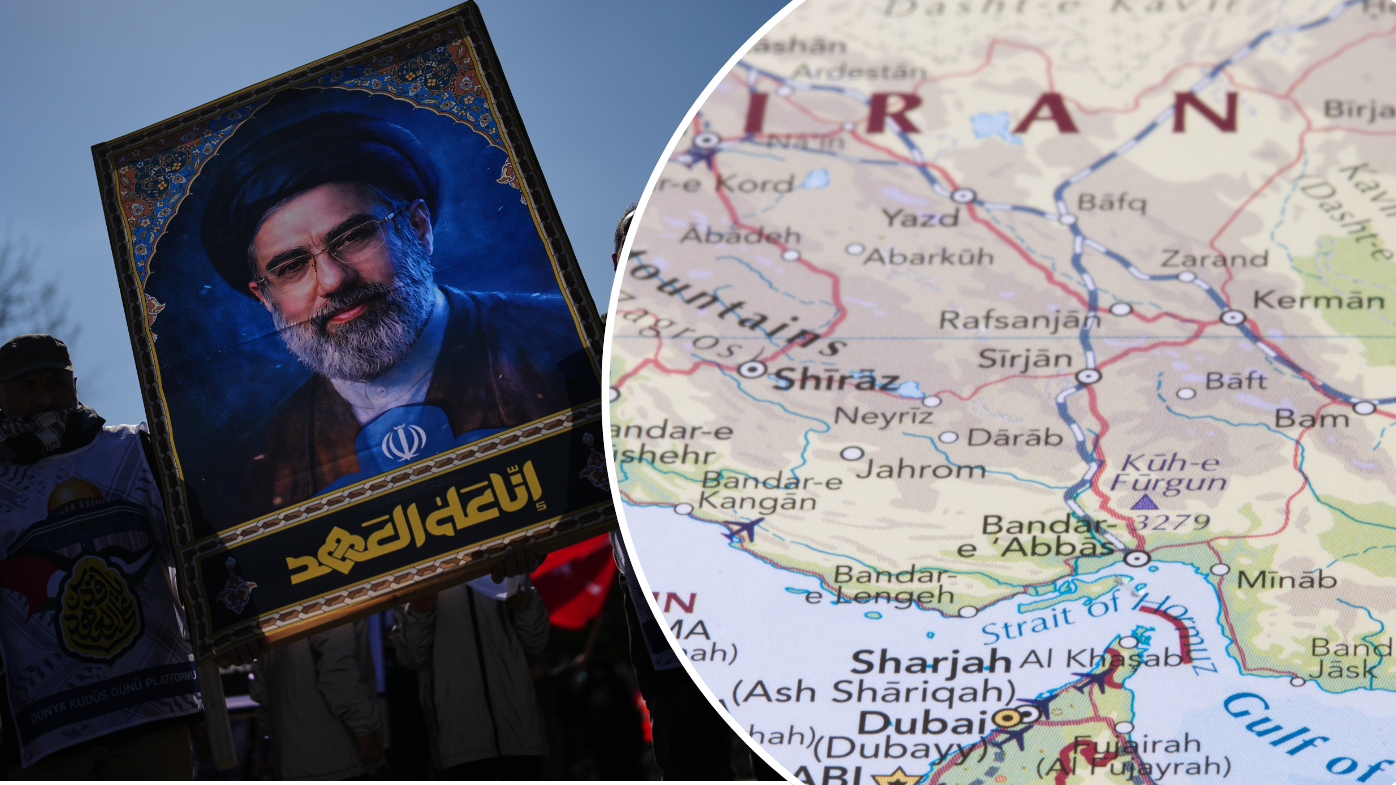
The shift in Iranian maritime posture regarding "non-hostile" oil vessels, occurring simultaneously with the arrival of a specific peace framework from the Trump administration, represents a calibrated transition from kinetic confrontation to economic preservation. This is not a gesture of goodwill but a calculated response to the Dual-Constraint Model: the intersection of internal fiscal insolvency and the external threat of unrestricted energy sanctions. By signaling openness to non-hostile transit, Tehran is attempting to decouple its regional military theater from its primary revenue stream, creating a buffer against the "Maximum Pressure 2.0" strategy anticipated under the current U.S. executive trajectory.
The Architecture of "Non-Hostile" Maritime Transit
Tehran’s recent pivot toward allowing non-hostile oil vessels through the Strait of Hormuz functions as a Risk-Mitigation Valve. To understand the strategic necessity of this move, one must examine the cost-benefit ratio of maritime disruption.
Historically, Iran has utilized the threat of closing the Strait of Hormuz—through which roughly 20% of the world’s petroleum consumption passes—as its ultimate deterrent. However, this deterrent is a "suicide pill" for the Iranian economy. The logic of the new "non-hostile" designation rests on three operational pillars:
- Revenue Protection: Iran currently relies on a "ghost fleet" of tankers to export crude, primarily to China. Total blockage of the Strait would trap their own exports, leading to a catastrophic collapse of the Rial.
- Diplomatic De-segmentation: By specifying "non-hostile" vessels, Iran is attempting to isolate the U.S. and Israel from the broader global community. If a vessel is deemed "hostile," Tehran claims a legalistic pretext for seizure; if it is "non-hostile," they maintain the flow of global commerce, thereby reducing the appetite for a NATO-led maritime protection task force.
- The Insurance Premium Wedge: Continuous threats to shipping inflate war-risk insurance premiums for all regional players. By signaling a conditional opening, Iran offers a temporary reprieve to global insurers, hoping to prevent a permanent shift in shipping routes that would bypass the region entirely.
The Trump Peace Plan as a Structural Re-ordering
The introduction of a peace plan by the Trump administration serves as the external pressure component of this geopolitical equation. Unlike previous diplomatic efforts focused on the Joint Comprehensive Plan of Action (JCPOA), this framework appears to prioritize a Geopolitical Realignment over a simple nuclear freeze.
The strategy operates through the Three-Dimensional Leverage Framework:
Dimension I: The Economic Ultimatum
The plan likely leverages the credible threat of total secondary sanctions. By signaling a "peace plan," the administration provides the Iranian regime with an "off-ramp." The logic is binary: accept the framework and retain a baseline level of oil revenue, or face a complete enforcement of the U.S. Treasury’s Office of Foreign Assets Control (OFAC) powers, which would target not just Iranian vessels, but the financial institutions in third-party nations that facilitate their trade.
Dimension II: The Regional Security Architecture
The Trump framework seeks to integrate Israeli security requirements into a broader Arab-Israeli-Iranian equilibrium. By including "non-hostile" maritime language, the administration is forcing Tehran to define its enemies in a way that is increasingly difficult to sustain without triggering immediate military retaliation from a coalition of regional powers.
Dimension III: Kinetic Credibility
A peace plan offered by an administration that has previously demonstrated a willingness to utilize targeted strikes (e.g., the 2020 Soleimani operation) carries a different weight than one offered by an administration viewed as prioritizing de-escalation at all costs. The "peace plan" is essentially the diplomatic wrapping for a "Surrender or Suffocate" doctrine.
The Volatility Index of the Israel-Iran Kinetic Exchange
Despite the diplomatic overtures, the underlying kinetic conflict between Israel and Iran remains governed by a Proportionality Trap. Each side is currently calibrated to a level of violence that is high enough to satisfy domestic political requirements but low enough to avoid a total regional conflagration.
The "Non-Hostile" maritime move by Iran is a direct attempt to escape this trap. If Iran can convince the global community that the shipping lanes are safe for "neutral" parties, it gains the freedom to continue its proxy wars via Hezbollah or the Houthis without facing the global economic backlash of a closed Strait.
Israel’s strategy, conversely, is to highlight that no vessel is truly safe as long as Iranian regional hegemony remains unchecked. This creates a Contradictory Incentive Structure:
- Iran's Incentive: Normalize the maritime environment to preserve oil revenue while maintaining sub-conventional warfare.
- Israel's Incentive: Demonstrate that the maritime environment is inherently unstable as long as Iran has the capacity to threaten it, thereby maintaining international pressure on Tehran.
Quantifying the Oil Market Reaction
The market’s response to the phrase "non-hostile oil vessels" was an immediate, albeit modest, reduction in the Brent Crude "War Premium." However, this price action is superficial. Professional analysts must look at the Supply-Side Elasticity and the Physical Flow Metrics.
The true metric of stability is not the verbal commitment from Tehran, but the Tanker Loading Frequency at Kharg Island and the Automated Identification System (AIS) behavior of vessels in the Persian Gulf. If Iranian-linked tankers continue to disable their transponders ("going dark"), the "non-hostile" rhetoric is merely a tactical screen for continued illicit trade and potential future seizures.
The Strategic Bottleneck: Enforcement and Verification
The primary limitation of the current peace overtures and maritime signals is the lack of a Verifiable Compliance Mechanism. In any strategy involving Iran, the "Trust Gap" is an unquantified variable that adds significant risk to any long-term investment in the region.
For the Trump peace plan to transition from a proposal to a functional reality, it must address the Verification Paradox: Iran will only allow inspections if they are certain no contraband will be found, but the international community will only trust the "non-hostile" designation if inspections are intrusive and frequent.
The Operational Pivot Points
To assess the viability of this de-escalation, monitor these specific indicators:
- The Rial Exchange Rate: If the Rial stabilizes, it indicates that the regime believes the peace plan offers a genuine path to economic survival.
- Centrifuge Deployment: Any increase in the enrichment grade at Natanz or Fordow would render the "non-hostile" maritime signal irrelevant, as it would trigger an immediate Israeli kinetic response regardless of U.S. diplomatic efforts.
- Houthi Targeting Logic: If the Houthis continue to strike Red Sea shipping while Tehran calls for "non-hostile" Persian Gulf transit, it proves the "Decoupling Strategy" is in full effect—Tehran is attempting to outsource its aggression while insulating its core economy.
The current geopolitical configuration suggests that we are entering a phase of Managed Instability. The "non-hostile" maritime signal is a defensive crouch by a regime that recognizes its leverage is peaking and its internal stability is fraying. The Trump peace plan is the anvil upon which this new reality is being forged.
The strategic play for global energy stakeholders is to ignore the rhetoric of "peace" and "hostility" and focus exclusively on the Hard-Asset Flow. Any entity relying on the "non-hostile" designation for long-term supply chain security is miscalculating the Iranian regime's necessity for tactical unpredictability. The only durable security in the region will come from a formal, multilateral maritime treaty that includes enforceable penalties for AIS manipulation and a cessation of proxy-led maritime interdiction. Until such a framework exists, the "non-hostile" label is a transient atmospheric condition, not a climate change.
Monitor the 48-hour window following the next scheduled U.S. State Department briefing on regional sanctions. If the rhetoric regarding "non-hostile" vessels is not met with a specific, technical definition of what constitutes "hostile" from a legal standpoint, assume the maritime threat remains at Level 4 (High). Prepare for a scenario where the "peace plan" is rejected by the hardline factions within the IRGC, leading to a sudden, violent re-assertion of Iranian control over the shipping lanes to regain lost diplomatic leverage.