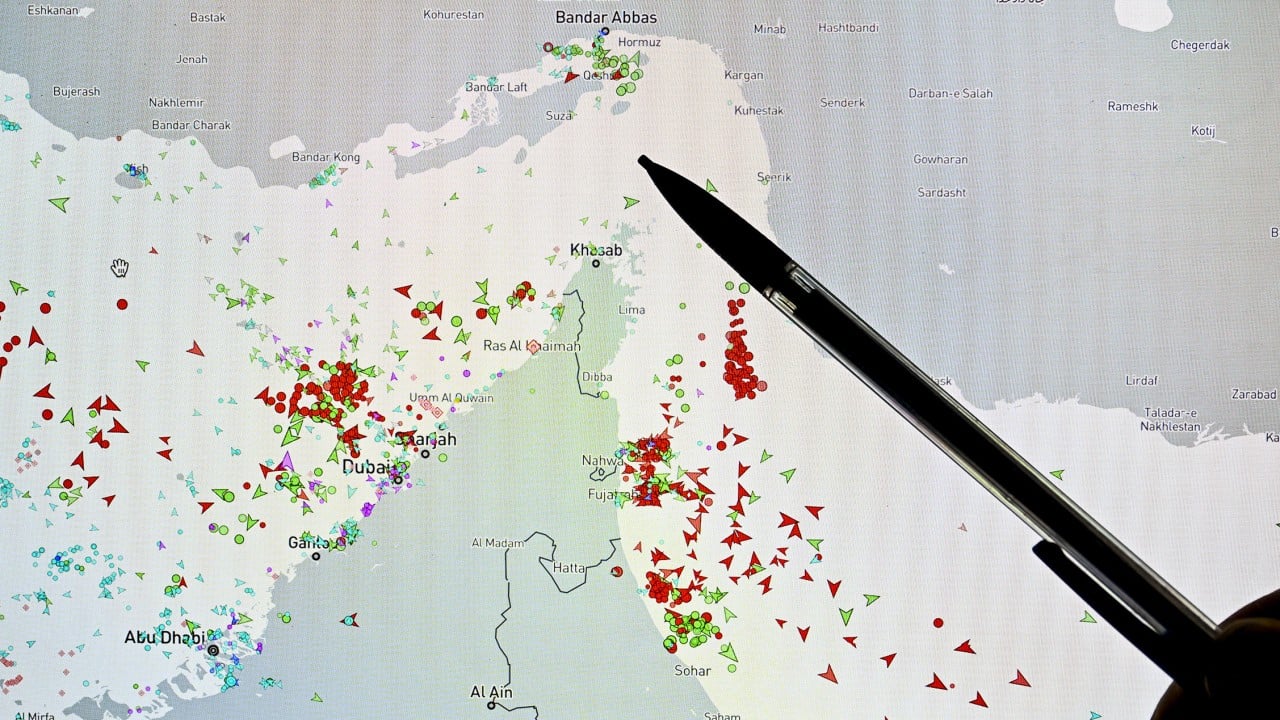
The mainstream media is obsessed with the idea that Beijing is "swinging" at Iran because of a sudden realization that energy security matters. They paint a picture of a desperate China, hat in hand, begging the Ayatollahs to keep the oil flowing through the Strait of Hormuz to satisfy the demands of European trade partners.
They are dead wrong.
Beijing isn't panicking. They aren't pivoting toward the West. And they certainly aren't "disciplining" their primary energy partner in the Middle East to save a crumbling European economy. If you think China’s recent diplomatic friction with Iran is a sign of weakness or a shift toward global stability, you’ve been reading the wrong reports.
The reality is far more cold-blooded. China is stress-testing a world where the Strait of Hormuz doesn't matter.
The Myth of the Energy Chokepoint
For decades, the "lazy consensus" among geopolitical analysts has been that China is uniquely vulnerable to a maritime blockade at Hormuz or Malacca. This theory assumes that if the tankers stop, the lights go out in Shanghai.
I’ve sat in rooms with energy traders who still think it’s 2005. They see the $1.2$ trillion in trade passing through those waters and assume Beijing is terrified of any disruption. They miss the fact that China has spent the last decade building a continental energy fortress that renders maritime chokepoints increasingly irrelevant.
Look at the numbers. Between the Power of Siberia pipelines and the massive expansion of overland imports from Central Asia, China is systematically decoupling its industrial base from the whims of the US Navy—or Iranian proxies. When Beijing "scolds" Tehran, it’s not a plea for survival. It’s a performance for the European Union.
China knows Europe is desperate. By appearing to "manage" Iran, Beijing creates a massive amount of diplomatic capital with Brussels without actually changing its strategic calculus. It’s a low-cost, high-reward move that keeps the Europeans hooked on the idea that China is a "responsible stakeholder," while the reality is that Beijing is perfectly comfortable with high oil prices that cripple Western competitors.
Europe is the Collateral Damage
The narrative says China needs Europe to stay wealthy to buy Chinese goods. That was the old playbook. The new playbook is about dominance through attrition.
High energy costs in Europe—driven by instability in the Middle East—are a gift to Chinese manufacturers. Every time a Red Sea or Hormuz disruption forces a ship around the Cape of Good Hope, European industry becomes less competitive. German chemicals and French manufacturing can’t survive $100$ per barrel oil. Chinese industry, powered by discounted Russian crude and massive domestic coal reserves, can.
When Beijing signals frustration with Iranian maritime aggression, they aren't trying to lower the price of oil for everyone. They are signaling to Europe: "We are the only ones who can talk to the people who are ruining your economy." It is a protection racket on a global scale.
The False Narrative of the China-Iran Split
Critics point to China’s recent support for the UAE’s claims on islands in the Persian Gulf as proof of a "rift" with Iran. This is a fundamental misunderstanding of how Beijing operates.
China doesn't do "allies" in the Western sense. They do customers and subordinates.
By siding with the UAE on a territorial dispute, China is reminding Iran that the $400$ billion investment deal signed in 2021 isn't a gift—it's a leash. Iran needs China far more than China needs any single Persian Gulf partner. Iran’s economy is effectively a Chinese subsidiary at this point.
- Energy Monopoly: China buys the vast majority of Iran's sanctioned oil.
- Infrastructure Leverage: Chinese firms are the only ones willing to build Iranian rail and port projects.
- Geopolitical Shield: Without China's veto at the UN, Iran is isolated.
Beijing isn't "taking a swing" at Iran. It is reminding a junior partner of its place in the hierarchy. It’s a public displays of dominance intended to keep the Gulf monarchies—who are flush with cash and looking for an alternative to US security—interested in the Chinese orbit.
The Tech Factor: Why Hormuz is Losing Relevance
While the "experts" focus on tankers, they are ignoring the digital and physical infrastructure that is actually moving the needle. The "Belt and Road" isn't just about roads; it's about the Digital Silk Road.
The Strait of Hormuz is a 19th-century problem. In the 21st century, power flows through data centers and rare earth mineral supply chains. China already controls the latter. If the Strait of Hormuz were to be closed tomorrow, the global economy would indeed shudder, but the West would face an existential crisis of inflation and energy poverty. China, with its state-controlled economy and massive strategic reserves, would simply pivot to its internal "Dual Circulation" strategy.
Imagine a scenario where the Strait is closed for six months.
- The US faces $7$ gallon gas and a political revolution.
- Europe suffers industrial de-globalization and a total collapse of the Euro.
- China activates its domestic coal-to-liquids plants, ramps up Russian imports, and uses its dominance in EV battery production to ensure its transport sector doesn't skip a beat.
Who wins that war of attrition?
Stop Asking if China Can Save the Strait
The most common question in geopolitical forums is: "Will China intervene to keep Hormuz open?"
It’s the wrong question. The right question is: "Why would they?"
Stability benefits the incumbent power—the United States. Chaos, provided it is managed, benefits the challenger. By allowing Iran to play the "wildcard" role in the Middle East, China forces the US to waste billions in carrier group deployments and diplomatic energy. Meanwhile, China plays the role of the "calm mediator," collecting concessions from both the Iranians (who need protection) and the Europeans (who need a savior).
This isn't about energy security. It’s about the managed decline of the West.
Every time a "competitor article" tells you that China is worried about its oil supply, they are projecting Western fears onto a dragon that has already moved on to the next level of the game. China isn't afraid of the fire in the Middle East. They are the ones holding the extinguisher, and they have no intention of using it until the price is right.
The Professional’s Playbook
If you are an investor or a policy maker, stop looking at the Strait of Hormuz as a "Chinese vulnerability."
- Watch the Pipelines: The completion of the Power of Siberia 2 is a far bigger deal for global stability than any skirmish in the Gulf.
- Ignore the Rhetoric: When China "condemns" instability, look at who benefits from the resulting price spikes.
- Follow the Yuan: The shift toward settling energy trades in RMB is the real "swing" China is taking. It doesn't matter if the oil flows if the USD is no longer the currency used to buy it.
The status quo is a trap. The consensus is a sedative. China isn't trying to save the world order; they are waiting for the bill to come due for the people who still believe in it.
The era of the maritime chokepoint is ending. The era of the continental fortress has begun. If you’re still worried about tankers, you’re already obsolete.
Stop waiting for Beijing to act like a Western superpower. They have no interest in policing the world. They are perfectly happy to watch it burn, as long as they own the ashes.