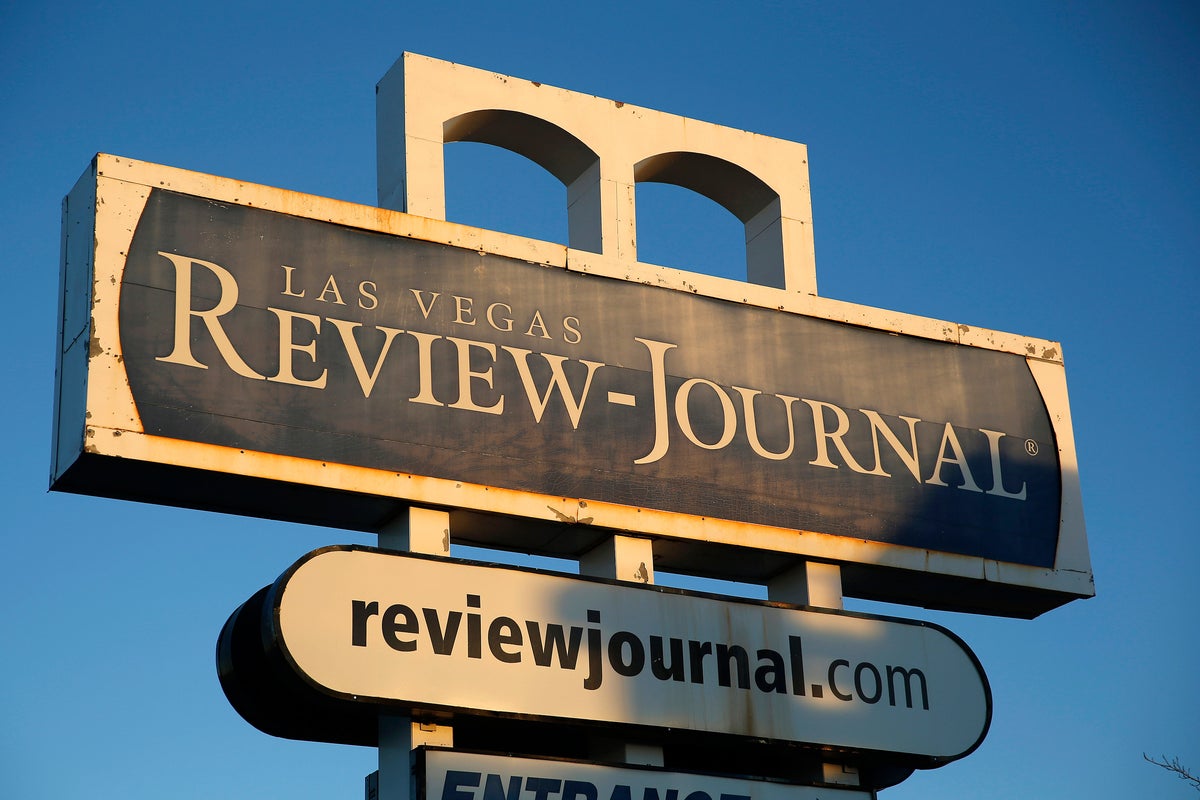
The long-standing printing arrangement between Nevada’s two largest news organizations has finally collapsed, marking the functional end of a decades-long power struggle in the Mojave Desert. The Las Vegas Review-Journal recently informed the Las Vegas Sun that it will no longer print and distribute its rival, a move that effectively guts the remaining life out of a Joint Operating Agreement (JOA) that has been on life support for years. This isn't just a technical change in a vendor contract. It is a strategic decapitation. For the Sun, losing access to the Review-Journal’s presses means losing its primary physical artery to the public, forcing the smaller outlet into a precarious digital-only existence or a desperate search for a new, likely inferior, distribution method.
To understand the weight of this move, you have to understand the JOA. These agreements were born from the Newspaper Preservation Act of 1970, a federal law designed to prevent one-city newspaper monopolies. The idea was simple: allow two competing papers to merge their business, printing, and advertising operations while keeping their newsrooms strictly independent. It was meant to save the "second voice" in American cities. In Las Vegas, that second voice was the Sun, owned by the Greenspun family. For years, the Sun was tucked inside the Review-Journal like a political pamphlet inside a heavy catalog. Now, that protection has been ripped away.
The Financial Squeeze and the Printing Lever
Printing a newspaper is an expensive, industrial undertaking. It requires massive presses, a fleet of trucks, and a small army of workers operating in the dead of night. Most modern media companies have spent the last decade offloading these assets to cut costs. The Review-Journal, however, maintained its grip on the physical means of production. By refusing to print the Sun, the Review-Journal is utilizing its overhead as a competitive weapon.
The economics of the JOA had become a source of constant friction. The Review-Journal, owned by the family of the late casino magnate Sheldon Adelson, has frequently argued that the Sun was no longer a viable partner but a financial drain. Under the terms of their agreement, the Review-Journal handled the heavy lifting of business operations while the Sun provided an editorial section. As print advertising revenue plummeted across the industry, the cost of maintaining this forced marriage became unbearable for the dominant partner.
This move follows years of bitter litigation. The two entities have traded lawsuits over everything from profit-sharing formulas to the actual definition of what constitutes a "newspaper" in the modern era. The Review-Journal’s decision to cut the cord on printing is the ultimate expression of its belief that the Sun has failed to uphold its end of the bargain. If you cannot print, you cannot fulfill the delivery requirements that many advertisers demand.
The Myth of Newspaper Preservation
The Newspaper Preservation Act was a noble failure. While it was intended to keep diverse voices alive, it often did the opposite. It created a "zombie" newspaper effect where the smaller paper became a ghost of its former self, reliant on its competitor for survival. The Las Vegas Sun, once a powerhouse that helped shape the identity of the city, had been reduced to a few pages of opinion and local reporting wrapped inside its rival’s product.
When one paper controls the ink and the paper, they control the clock. Timing is everything in the news business. If the presses run late, or if distribution routes are prioritized for the dominant brand, the smaller paper suffers. In Las Vegas, the tension between the conservative-leaning Review-Journal and the more liberal-leaning Sun was more than just ideological. It was a fight for the very soul of Nevada’s political discourse. By removing the Sun from its print run, the Review-Journal effectively silences that voice for a significant portion of the older, print-loyal electorate.
Digital Transition as a Forced March
The Sun now faces a choice that many legacy outlets have botched: go fully digital or die. While a digital transition sounds like a natural evolution, the reality is a bloodbath. Print advertising still commands a premium that digital ads cannot match. A print ad is a physical presence on a kitchen table; a digital ad is a fleeting pixel easily ignored by software or human apathy.
For an organization like the Sun, which has relied on the JOA’s profit-sharing and infrastructure, building a standalone digital revenue model from scratch is a Herculean task. They are now competing not just with the Review-Journal’s website, but with every social media platform and national news outlet on the planet. They no longer have the luxury of being "the other paper" in the morning delivery. They are now just another URL in an infinite sea of tabs.
The Adelson Legacy and Editorial Control
The Review-Journal underwent a massive shift in 2015 when it was acquired by the Adelson family. That acquisition brought a more aggressive, corporate-minded approach to the paper’s management. It also intensified the rivalry with the Sun. The Sun’s editor, Brian Greenspun, has been a vocal critic of the Adelson family’s influence, leading to a decade of public spatting that felt more like a street fight than a business competition.
This move to stop printing is the culmination of that fight. It is a consolidation of power. In a city like Las Vegas, where the local economy is driven by a handful of massive entities, having a unified, dominant media voice is a significant advantage. It allows for the shaping of narratives around development, gaming regulations, and political appointments with far less friction. The "second voice" was an annoyance; now it is an exile.
Why Other Cities Should Watch This
Las Vegas is not the only city with a crumbling JOA. From Detroit to Seattle, these agreements have been dissolving as the print industry shrinks. The Las Vegas case serves as a warning for how these dissolutions play out. It is rarely a clean break. It is usually a messy, litigious divorce where the dominant partner uses its infrastructure to starve out the smaller one.
The legal battle over this printing cancellation will likely drag on for months, if not years. The Sun will argue that the Review-Journal is violating the terms of the JOA and attempting to create an illegal monopoly. The Review-Journal will argue that they are simply making a necessary business decision in a dying industry. Regardless of the legal outcome, the damage to the local media ecosystem is done.
The Logistics of Independence
If the Sun attempts to find a new printer, they will find the options are slim. Most printing plants in the Southwest are owned by major chains like Gannett or are already at capacity. Shipping newspapers from an out-of-state press is prohibitively expensive and leads to "dead" news—stories that are 24 hours old by the time they hit the doorstep.
Furthermore, the Review-Journal owns the distribution routes. Even if the Sun finds a press, they have no way to get the product to the readers. Building a distribution network from the ground up—hiring drivers, mapping routes, and securing delivery contracts—is an investment that few independent media companies can afford in 2026. The Review-Journal hasn't just taken away the ink; they've taken away the road.
The Structural Reality of Local News
We are witnessing the final consolidation of local media. The era of the two-paper town is over, and it didn't end because of a lack of interest in news. It ended because the physical and financial infrastructure required to deliver that news was weaponized. When the history of Nevada journalism is written, this moment will be cited as the point where the city’s media landscape became a monolith.
The loss of the Sun’s print presence removes a check on the Review-Journal’s influence. While the Sun may continue to exist online, its reach is fundamentally altered. It is no longer an unavoidable part of the Las Vegas morning. It is a destination that readers have to actively seek out, and in an attention economy, that is a massive hurdle.
Stop looking at this as a mere contract dispute between two newspapers. It is a blueprint for the elimination of dissent in local markets. When one entity owns the press, the trucks, and the data, they own the conversation. The Las Vegas Sun is now a digital insurgent in its own backyard, fighting a war against an incumbent that has successfully dismantled the very platform they once shared.