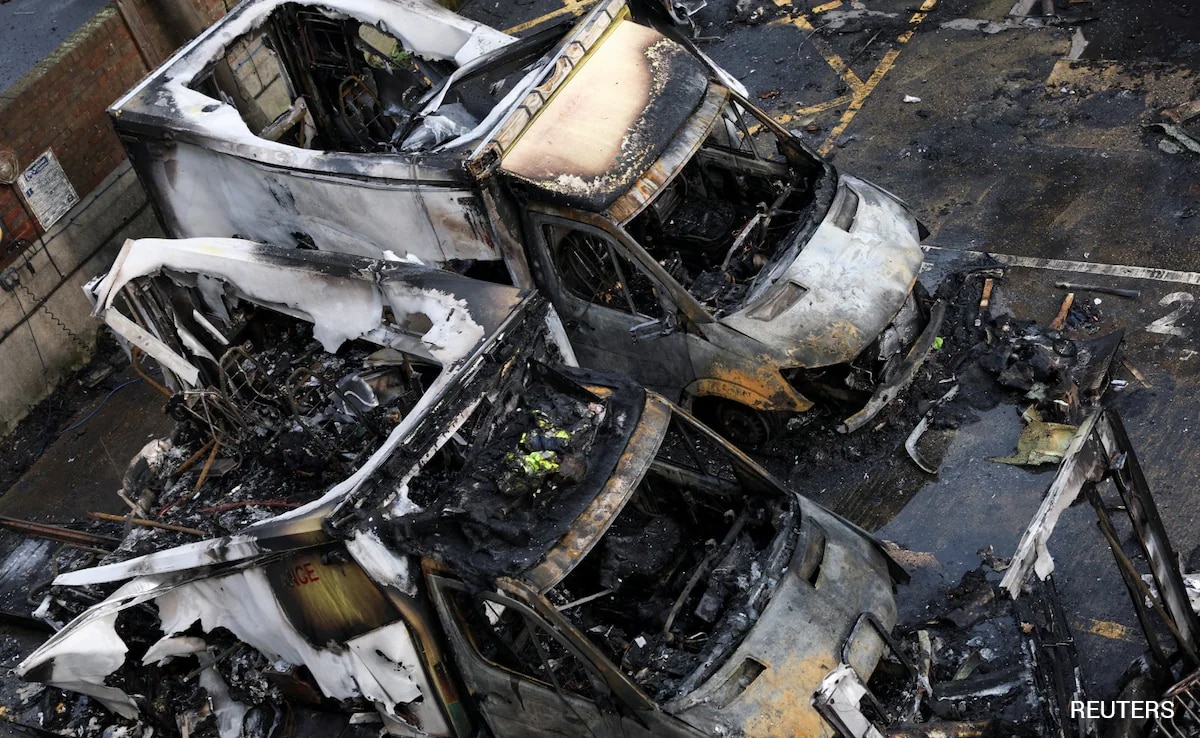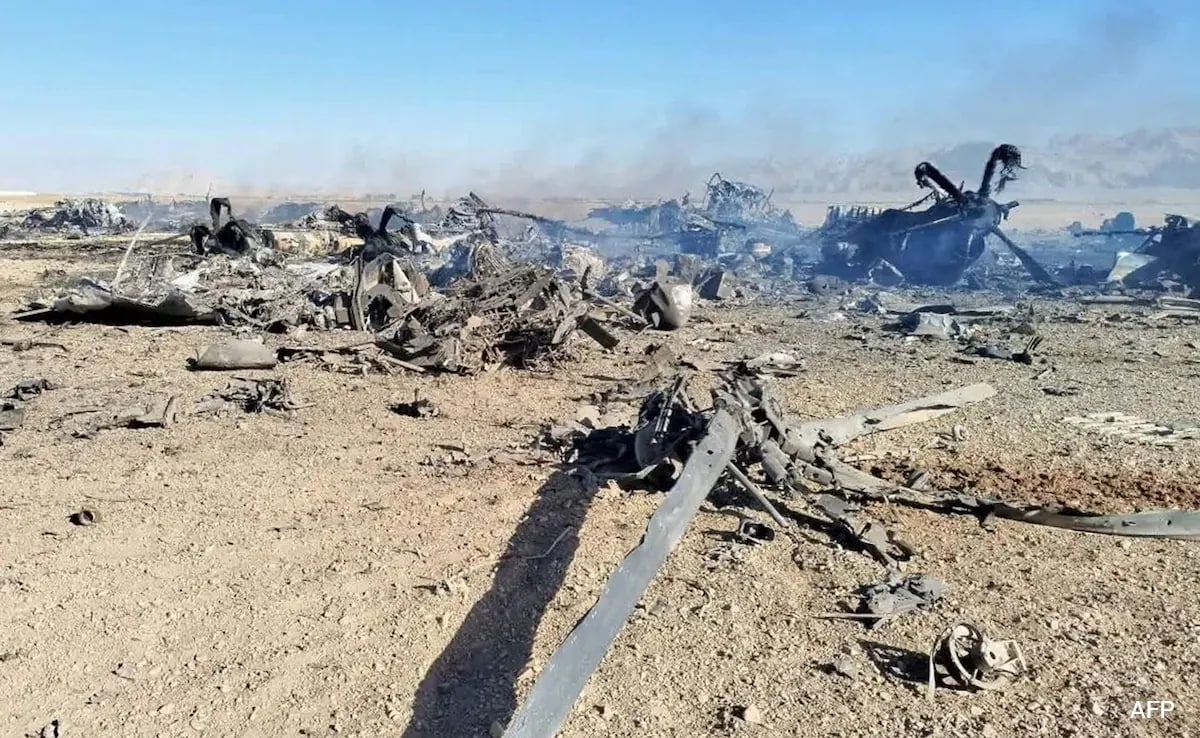
Reports emerging from Tehran claim that a Lockheed C-130 Hercules transport aircraft was brought down by "flying objects" during a high-stakes mission to rescue a downed U.S. pilot. Iranian state media outlets assert that the incident resulted in five fatalities, framing the event as a significant blow to American special operations capabilities in the region. However, a deep dive into the technical telemetry, regional geopolitical friction, and the historical reliability of the C-130 airframe suggests a narrative far more complex than a simple shoot-down. While the Iranian military celebrates a perceived victory, the lack of verifiable debris patterns or independent electronic warfare signatures points toward a sophisticated information operation or a catastrophic mechanical failure being leveraged for political gain.
Deconstructing the Official Iranian Narrative
The official statement released by Iranian authorities remains conspicuously thin on technical specifics. They describe "unidentified flying objects" or "hostile drones" intercepting a heavy transport aircraft, a scenario that defies standard engagement protocols. A C-130 is a massive, relatively slow-moving target. If it were operating near or within Iranian borders, it would be shadowed by an extensive suite of escort fighters and electronic countermeasure (ECM) platforms. The idea that five crew members were lost in a "pilot rescue op" implies the presence of a Combat Search and Rescue (CSAR) task force.
In reality, CSAR missions are the most tightly coordinated maneuvers in modern aerial warfare. They do not happen in a vacuum. If a C-130 was indeed lost, the electronic footprint of the event would be visible to every radar installation from Qatar to the Caspian Sea. To date, no such data has been leaked or confirmed by neutral monitoring agencies. This absence of evidence suggests that the "flying objects" mentioned might be a convenient placeholder for Iranian air defense systems—or perhaps a total fabrication designed to test the diplomatic reaction of the Pentagon.
The C-130 Hercules and the Myth of Invulnerability
The Lockheed C-130 has been the workhorse of global military logistics for over six decades. It is rugged. It is versatile. But it is not a stealth aircraft. When a C-130 goes down, it is usually due to one of three things: controlled flight into terrain (CFIT), catastrophic engine failure, or surface-to-air missiles (SAMs).
Iranian state media specifically mentioned "flying objects," a term that shifts the blame away from their own established ground-based missile batteries like the S-300 or the domestic Bavar-373. By claiming the aircraft was hit by something in the air, Tehran is attempting to project a capability for sophisticated drone-on-aircraft interception. This is a significant escalation in rhetoric. It suggests they want the world to believe they have perfected swarm intelligence or high-speed loitering munitions capable of taking out a shielded military transport.
The hardware tells a different story. Most C-130 variants used in sensitive zones are equipped with the AN/ALR-69 radar warning receiver and the AN/ALE-47 flare and chaff dispensing system. These systems are designed to foil exactly the kind of "flying objects" Iran is describing. For a C-130 to be blindsided and destroyed without a distress signal or an evasive maneuver, the attacking force would need to possess electronic masking capabilities that currently exceed documented Iranian technological limits.
The Geopolitical Theater of Search and Rescue
Rescue operations are high-risk by nature. They are often used as the "inciting incident" in regional escalations. By claiming they thwarted a rescue op, Iran is sending a direct message to U.S. Central Command: your people are not safe, even when they are trying to save their own.
This narrative serves a dual purpose. First, it bolsters domestic pride. The image of a powerful Western aircraft falling from the sky is a potent propaganda tool for a regime facing internal pressures. Second, it creates a "gray zone" conflict. By using vague terms like "flying objects," Iran avoids the direct legal repercussions of a declared state-on-state kinetic strike while still reaping the psychological rewards of the claim.
The Missing Pilot Factor
The most glaring hole in the Iranian report is the identity and origin of the "U.S. pilot" being rescued. Modern military transparency, even in classified environments, usually sees a ripple effect when a pilot goes missing. Families are notified. Units go on high alert. The "empty chair" at a base becomes a palpable source of tension that eventually leaks to the press or through social media channels.
As of this hour, there is no corresponding data from the U.S. Air Force, Navy, or Marine Corps regarding a missing aviator in the Middle Eastern theater. Without a specific pilot or a lost tail number for an initial crash, the C-130 "rescue" story begins to look like a ghost hunt.
Examining the Drone Swarm Theory
If we take the Iranian claim at face value for a moment, we must look at the mechanics of a drone-led takedown. Iran has invested heavily in its Shahed and Ababil drone programs. These are effective at hitting stationary targets or slow-moving tankers, but hitting a C-130 in flight requires a level of precision and speed that is difficult to achieve with low-cost kamikaze drones.
The physics are unforgiving. A C-130 cruises at roughly 300 knots. Most tactical drones used by regional actors top out at half that speed. For a "flying object" to down a Hercules, it would either need to be a jet-powered UAV—of which Iran has few—or a lucky strike against a plane that was already struggling with mechanical issues.
Mechanical fatigue is a very real factor. The global C-130 fleet is aging. Wing box cracks and engine fires are documented issues that have grounded fleets in the past. If a C-130 suffered a genuine accident near the Iranian border, it would be trivial for Tehran to claim credit for the crash to save face or project power. This "opportunistic credit-taking" is a staple of modern psychological warfare.
The Intelligence Gap and Satellite Verification
In the age of constant orbital surveillance, a crashed C-130 cannot stay hidden. Synthetic Aperture Radar (SAR) and high-resolution optical satellites from companies like Maxar or Planet Labs can identify debris fields within hours. If five people died, there is a crash site. If there is a crash site, there is a thermal signature that would have been picked up by the Space-Based Infrared System (SBIRS).
The silence from the U.S. intelligence community is loud. Usually, a loss of life of this magnitude results in a swift "condolences and investigation" statement or a vigorous denial. The current vacuum of information suggests one of two things:
- The event never happened, and the Iranian report is a total fabrication.
- The event involved a highly classified "black" project aircraft that the U.S. cannot acknowledge, even in loss.
However, the C-130 is rarely used for "black" ops in a way that wouldn't be immediately recognizable. Even the most secretive variants, like the EC-130J Commando Solo or the AC-130J Ghostrider, have distinct silhouettes.
Logistics of a Five-Man Crew
The Iranian report claims five killed. A standard C-130 crew consists of two pilots, a navigator, a flight engineer, and a loadmaster. This five-man configuration is classic. By citing this specific number, Iran is trying to add a layer of verisimilitude to their report. They are using the "known quantities" of U.S. aviation to make their story seem more grounded in reality.
Yet, in a high-threat rescue environment, the crew size often changes. Extra medical personnel, Pararescue Jumpers (PJs), and specialized tactical air controllers are usually on board. A count of exactly five suggests a routine transport flight, not a high-intensity rescue operation. This discrepancy is a red flag for any seasoned analyst. It suggests the Iranian intelligence officers who drafted the press release used a Wikipedia-level understanding of C-130 operations rather than real-time intel from a crash site.
Tactical Implications of "Flying Objects"
The use of the term "flying objects" instead of "missiles" or "jets" is a calculated move to introduce ambiguity. It hints at directed energy weapons, sophisticated electronic warfare, or "next-gen" drone tech without having to provide the wreckage of a missile to prove the claim. If Iran can convince its neighbors that it possesses "UFO-like" intercept capabilities, it changes the risk calculus for any nation flying near its airspace.
This is a classic "Potemkin Village" strategy. You build the facade of a terrifying new weapon system and wait for the enemy's own paranoia to do the rest. By the time the truth comes out—that it was perhaps a technical glitch or a flare-up of old equipment—the psychological damage is already done.
Regional Reaction and the Price of Silence
The broader Middle East is watching this play out with a mixture of skepticism and alarm. If a C-130 was actually downed, it signals a massive failure in the U.S. "umbrella" of protection over the Persian Gulf. It would mean that the electronic jamming and air superiority that Western forces rely on are no longer absolute.
Conversely, if this is a lie, it shows a desperate Iranian regime willing to manufacture a major military incident to distract from domestic instability. For the families of service members, this kind of rumor-mongering is the worst kind of cruelty. It forces a state of "Schrödinger’s Soldier," where a loved one is both safe and in peril until a formal government denial is issued.
The truth likely lies in the middle of a very dusty, very classified road. We are seeing the intersection of old-school kinetic warfare and new-age information manipulation. In this environment, a plane doesn't need to fall from the sky to be "downed"; it only needs to be destroyed in the minds of the public.
The Pentagon's refusal to engage with the claim is a tactical choice. By not responding, they deny Tehran the "oxygen" of a back-and-forth news cycle. But in the digital age, silence is often interpreted as a confession. The U.S. military must eventually provide a hard accounting of its assets in the region to put these claims to rest, or risk letting the "flying objects" narrative become a permanent part of the regional lore.
Military aviation is a game of margins. A single bird strike, a loose bolt in a T56-A-15 turboprop, or a confused sensor can end in tragedy. If five lives were truly lost, the cause was likely something far more mundane and heartbreaking than a futuristic interceptor. The "rescue mission" story is a garnish on a plate of cold propaganda.
Until satellite imagery confirms a burn scar on the Iranian landscape, or a tail number is identified, this story remains a masterclass in modern disinformation. It leverages the genuine danger of the region to create a phantom victory. The C-130 remains the workhorse of the skies, but even the strongest horse can be tripped by a well-placed lie.