Twenty-two months.
That is the number currently being chewed over by the public, the pundits, and the grieving. A truck driver fails to check his blind spot, hits a pregnant woman in Kwun Tong, and the legal system spits out a sentence that feels like a clerical error. The outrage is predictable. It is also entirely misplaced.
The "lazy consensus" here is that the judge was too soft or the law is broken because it doesn't equate a vehicular accident with a premeditated killing. We want blood. We want the scales to balance. But focusing on the length of a prison sentence is a massive distraction from the systemic negligence that makes these "accidents" inevitable. We are arguing about the size of the band-aid while the patient is bleeding out from a severed artery.
The tragedy in Kwun Tong isn't just about one driver’s momentary lapse. It’s about a logistics infrastructure that prioritizes turnover over safety and a legal framework that treats a two-ton kinetic weapon as a mere "unfortunate circumstance."
The Myth of the Careless Driver
The standard narrative paints the driver as a singular villain. If we lock him up longer, the streets get safer, right? Wrong.
I have spent years looking at urban logistics and industrial safety protocols. When a driver makes a mistake, the instinct is to blame the individual. But in any high-stakes environment—think aviation or nuclear power—a single point of failure is considered a design flaw, not a moral one.
In Hong Kong’s hyper-dense streets, we force heavy goods vehicles into the same narrow corridors as pedestrians. We then incentivize drivers to move as fast as possible to meet delivery quotas. When you create a system where a human must be 100% perfect, 100% of the time, to avoid a fatality, you have already failed.
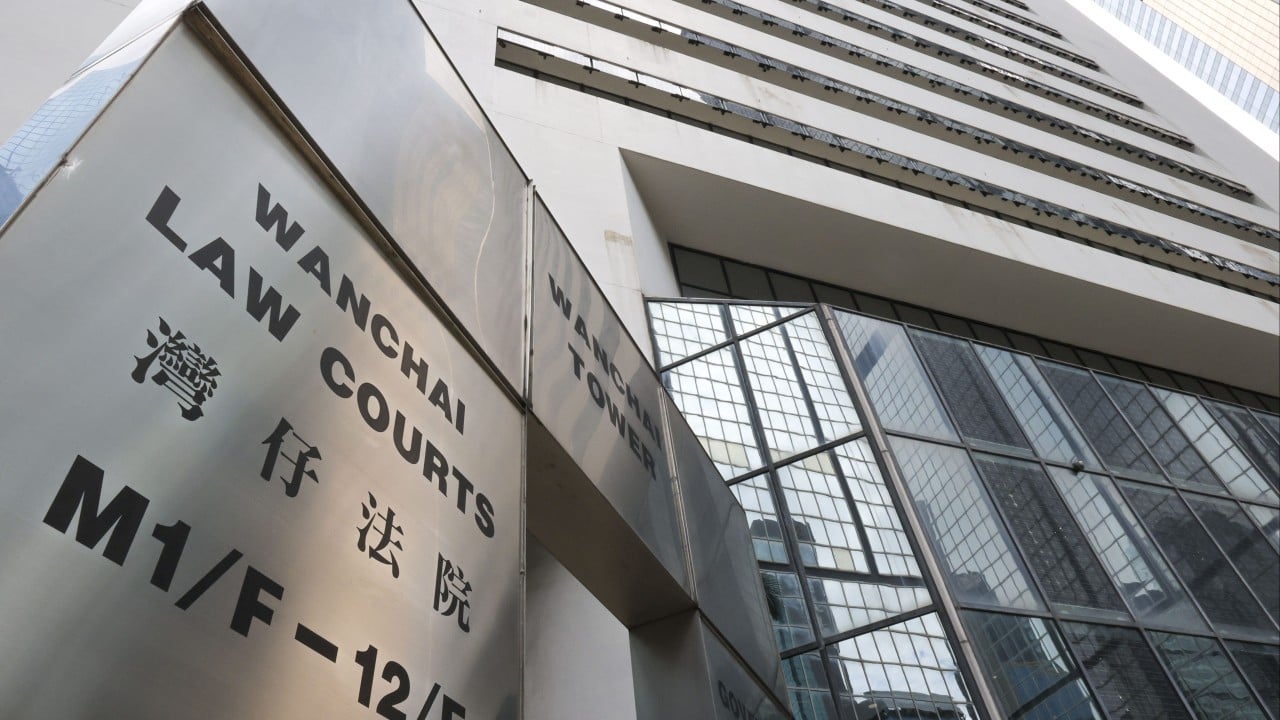
The court heard that the driver, Mr. Leung, stayed at the scene. He wasn't drunk. He wasn't racing. He just didn't see her. In the eyes of the law, this falls under "dangerous driving causing death." The maximum penalty is 10 years. He got 22 months.
People ask: "Is a life only worth 22 months?"
That is the wrong question. The real question is: "Why are we still allowing blind-spot-heavy trucks to operate in high-traffic pedestrian zones without mandatory 360-degree sensor arrays and AI-braking overrides?"
If we cared about the pregnant woman or her unborn child, we wouldn't be crying for a 10-year sentence. We would be demanding a total ban on non-automated heavy vehicles in residential hubs. But that would cost money. It would slow down the economy. It’s much cheaper to throw a driver in a cell for two years and pretend we solved the problem.
The Sentence is Not the Solution
We have a bizarre obsession with "deterrence." The theory goes that if we give this driver a decade in prison, the next driver will look harder in his mirror.
This is a fundamental misunderstanding of human psychology and the mechanics of an accident. You cannot deter a "blind spot." You cannot deter a momentary lapse in spatial awareness through the threat of future incarceration. Deterrence works for premeditated crimes—fraud, theft, even certain types of assault. It does not work for the physics of a turning radius.
If the goal is to prevent the next death, the "justice" being served in this case is a 0% solution. It provides emotional catharsis for the public and zero actual safety for the person crossing the street tomorrow.
Let’s talk about the E-E-A-T of the situation—the actual expertise required to fix this. In the European Union, the General Safety Regulation (GSR) has already started mandating advanced driver-assistance systems (ADAS) for trucks. This includes pedestrian and cyclist detection. Hong Kong, for all its "world-class" posturing, is decades behind.
We are operating a 19th-century street layout with 20th-century technology and expecting 21st-century safety levels.
The Brutal Reality of Victimhood
The competitor articles focus on the heartbreak. They quote the family. They describe the scene. It’s "tragedy porn" that bypasses the brain and goes straight for the tear ducts.
Here is the cold, hard truth: The legal system is not a grief-counseling service. Its job is to apply the law as written. Under current statutes, the judge actually leaned toward the higher end of the starting point before accounting for the guilty plea.
The public wants the driver charged with manslaughter. But manslaughter requires a level of "gross negligence" that is incredibly hard to prove in a standard traffic maneuver. If we lower the bar for manslaughter to include every blind-spot accident, we would have to lock up thousands of people every year.
Is that what we want? Or do we want streets where a mistake doesn't result in a coffin?
We are currently choosing the former because it’s easier to be angry at a man in a dock than it is to redesign a city's logistics network. We accept "acceptable losses" until one of those losses becomes a headline-grabbing tragedy. Then we scream at the judge.
Dismantling the "People Also Ask" Nonsense
"Why wasn't he given life imprisonment?"
Because he didn't intend to kill anyone. If we start handing out life sentences for accidents, we destroy the foundation of the legal principle of mens rea (the guilty mind). You don't want to live in a world where a mechanical failure or a three-second distraction carries the same weight as a planned murder. It sounds "just" when you're angry, but it's a legal nightmare in practice.
"How can we make the roads safer?"
Not through the courts. The courts are the cleanup crew. Safety happens at the manufacturing and legislative levels. Mandatory Sideguard protection, 360-degree camera systems, and the elimination of "on-street" loading zones in high-density areas.
"Will this sentence change anything?"
No. It will be forgotten in two weeks. The driver will serve his time, his life will be ruined, and the logistics company will hire a new driver who is just as prone to the same human errors because the truck is still the same death trap it was before the accident.
The Cost of the Status Quo
There is a downside to my argument. Implementing the tech I’m talking about—true 360-degree sensor suites and automatic emergency braking (AEB) for heavy vehicles—would increase the cost of goods. It would require a massive overhaul of the existing fleet.
But if you are one of the people screaming that 22 months is "too light," then you should be willing to pay an extra 5% for your milk and your Amazon deliveries to ensure the trucks carrying them aren't blind.
Are you? Or is your "outrage" only available when it's free?
We love to play the hero on social media, demanding "justice" in the form of longer prison sentences. It’s a low-effort way to feel like a good person. Real justice would be a legislative mandate that makes it physically impossible for a truck to move if there is a human being in its path.
The judge didn't fail that pregnant woman. The Transport Department did. The logistics industry did. We did, by accepting a status quo where we prioritize the "flow of traffic" over the preservation of life.
Stop looking at the prison sentence. Start looking at the front of the truck.
The 22 months is a distraction. The real crime is that we are going to let it happen again, and we’ll be right back here, arguing about the same useless numbers, while another family picks out a headstone.
Upgrade the trucks or shut up about the sentences.