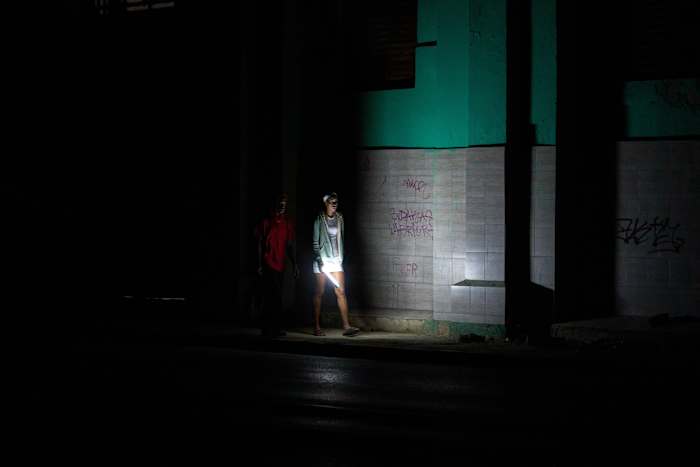
Cuba is currently trapped in a cycle of systemic failure that no amount of patchwork repair can fix. When the national power grid collapsed for the third time in a single month, it wasn't just a technical glitch or a localized outage. It was the physical manifestation of a bankrupt state. The lights went out because the country has run out of the two things a modern power grid requires to survive: fuel and investment. Decades of deferred maintenance have finally met a global energy market that Cuba can no longer afford to participate in, leaving ten million people in the dark and an entire economy on the brink of a permanent standstill.
The immediate cause of these rolling blackouts is easy to identify but nearly impossible to solve. Cuba relies on a series of aging, Soviet-era thermal power plants that are well past their intended lifespan. These massive facilities, like the Antonio Guiteras plant in Matanzas, are the backbone of the island's electricity. When one of these giants goes offline due to a mechanical failure—which happens with increasing frequency—the entire synchronized network begins to wobble. Without enough "spinning reserve" or backup capacity to pick up the slack, the frequency of the grid drops until the whole system trips to protect itself from catastrophic damage.
The Death of the Soviet Legacy
To understand why the grid is failing now, you have to look at the machines themselves. Most of Cuba’s large-scale power plants were built in the 1970s and 80s with Soviet technology. They were designed for a world that no longer exists. These plants require specific spare parts that are increasingly difficult to source, often necessitating custom fabrication or expensive secondary market acquisitions that the Cuban government cannot fund.
Engineering teams on the ground are essentially performing "cannibalization" to keep turbines spinning. They take parts from a dormant unit to keep an active one running for another week. This is not a strategy. It is a slow-motion liquidation of assets. Every time a plant like Felton or Mariel goes down, the stress on the remaining units increases. They are pushed beyond their technical limits to cover the deficit, which leads to the next breakdown. It is a feedback loop of mechanical exhaustion.
The infrastructure is literally crumbling. Salt air from the coast corrodes the external structures, while internal boilers are choked with the heavy, sulfur-rich crude oil that Cuba is forced to burn. This domestic "heavy crude" is a nightmare for power equipment. It is thick, viscous, and corrosive. While it provides a degree of energy independence, it destroys the very plants meant to process it.
The Fuel Paradox
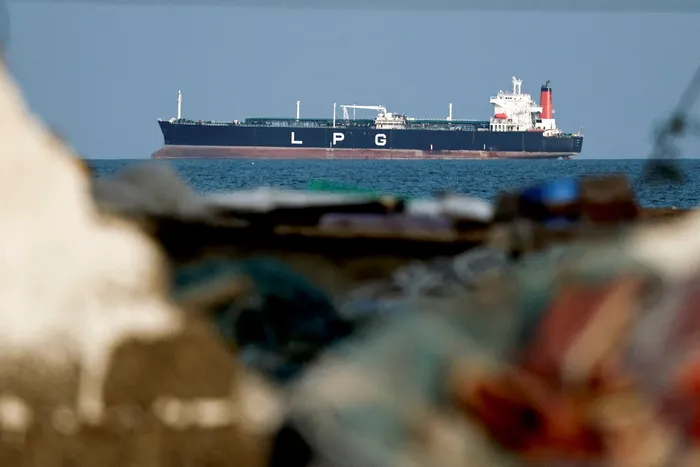
Fuel is the second horseman of this crisis. Historically, Cuba relied on highly subsidized oil from Venezuela. For years, this "oil-for-doctors" swap kept the lights on and the air conditioners humming in Havana. But Venezuela’s own production has cratered, and Caracas is no longer able or willing to be the island's primary benefactor. Cuba has been forced to look to the open market, where it must compete with wealthy nations while operating with a devalued currency and limited access to international credit.
When the tankers don't arrive, the plants stop. It is that simple. The government has attempted to bridge the gap by renting "floating power plants" from Turkish company Karpowership. These massive barges sit in Cuban harbors and plug directly into the national grid. They provide a vital lifeline, but they come at a staggering cost. These are short-term rentals paid for in hard currency—money the Cuban central bank does not have. Relying on foreign-owned barges is an admission that the domestic grid is essentially unrecoverable in its current state.
The Impact of the Distributed Energy Gamble
Years ago, under Fidel Castro, Cuba launched the "Energy Revolution." The idea was to move away from a few massive plants and toward thousands of small diesel generators scattered across the country. The logic was that a decentralized system would be more resilient to hurricanes. If one generator failed, the others would keep the neighborhood powered.
This worked—until the diesel ran out.
Small generators are significantly less efficient than large thermal plants. They require constant trucking of fuel to remote locations, creating a logistical nightmare. Today, those thousands of "batteries" of generators sit silent because there is no diesel to feed them. The decentralized dream has become a decentralized liability. The country is stuck with a hybrid system that is the worst of both worlds: a failing central backbone and a starving distributed network.
The Human and Economic Toll
Life in total darkness is not just an inconvenience; it is a regression. In Havana and Santiago, the lack of electricity means the lack of water. Pumps stop working. High-rise apartments become concrete ovens without fans or ventilation. Food rot is a constant threat in a country where grocery supplies are already precarious. For a small business owner—a mipyme—running a private cafe or a repair shop, the lack of power is a death sentence. Generators are too expensive to run, and customers stay home.
The economic numbers are devastating. When the grid collapses, production stops. Every hour of a national blackout represents millions of dollars in lost GDP. For a nation already suffering from triple-digit inflation and a mass exodus of its youth, these blackouts are the final push for many to leave the island. The "energy crisis" is perhaps the single greatest driver of the current migration wave.
The Renewable Mirage
The Cuban government often speaks of a transition to renewable energy as the ultimate solution. They have set ambitious goals to generate 24% of their power from renewable sources by 2030. Currently, that number sits at roughly 5%. While the island has abundant sunshine, the barrier to entry is high capital expenditure.
Solar farms and wind parks require massive upfront investment in panels, turbines, and—most importantly—storage. A grid as unstable as Cuba’s cannot easily handle the intermittent nature of solar and wind without a massive bank of industrial batteries. Without those batteries, a cloud passing over a major solar farm can cause a frequency spike that crashes the fragile grid. International investors are hesitant to pour money into a country that has a history of defaulting on its debts and a volatile regulatory environment.
Geopolitical Dead Ends
The search for a new patron has led Cuba to knock on the doors of Russia and China. Moscow has provided some shipments of oil and promised help with modernizing the plants, but the war in Ukraine has limited their appetite for massive, non-performing loans. Beijing, meanwhile, is willing to sell equipment but is increasingly wary of Cuba’s inability to pay. The days of ideological subsidies are over. Modern geopolitics is transactional, and Cuba has very little left to trade.
The U.S. embargo remains a factor, complicating the purchase of American-made components and making international banks nervous about processing Cuban transactions. However, blaming the embargo alone ignores the decades of internal mismanagement and the failure to diversify the energy mix when times were better. The grid did not fail overnight; it was starved to death over forty years.
The Path to a Permanent Dark Age
If the current trajectory continues, the "collapse" will no longer be a temporary event but a permanent state of existence. We are seeing the "Haitianization" of the Cuban energy sector, where the national grid becomes a memory and those who can afford it survive on private solar arrays and smuggled fuel. For the rest of the population, electricity will become a luxury delivered in small, unpredictable bursts.
The technical fix is known: a multi-billion dollar overhaul of the thermal plants, a massive expansion of battery storage for renewables, and a shift to liquefied natural gas (LNG). But the financial fix is nonexistent. There is no line of credit, no sovereign wealth fund, and no benefactor waiting in the wings.
The grid is a machine that requires constant feeding. It eats fuel, it eats parts, and it eats money. Cuba is out of all three.
Until the underlying economic model is transformed to allow for real investment, the engineers will continue their desperate "cannibalization" of the remaining plants. They will patch the pipes, bypass the sensors, and pray the turbines hold together for one more night. But hope is not a fuel source, and the darkness is winning.
Move your focus toward the small-scale private sector. It is the only place where any localized energy resilience is being built.