In the sweltering heat of a Tehran afternoon in 2021, there was a palpable sense of a tectonic shift. It wasn't just the weather. It was the ink drying on a document that many believed would rewrite the economic geography of the Middle East. A 25-year "Strategic Cooperation Pact" between Iran and China. To the bureaucrats in Beijing and the weary leadership in Tehran, it looked like a lifeline. To the rest of the world, it looked like a marriage of convenience designed to spite the West.
But maps are drawn in quiet rooms, while history is written in blood and fire.
Five years ago, the narrative was simple. Iran, suffocating under a blanket of international sanctions, found a willing partner in a China hungry for energy and geopolitical influence. The deal promised a staggering $400 billion in investment. Imagine that kind of capital flowing into aging oil refineries, crumbling railway tracks, and a telecommunications grid that felt like a relic of the late nineties. It was supposed to be the jewel in the crown of the Belt and Road Initiative.
The Architect’s Dream
Consider a hypothetical engineer in Mashhad named Arash. In 2021, Arash might have looked at the news of the Chinese deal and seen more than just politics. He saw high-speed rail lines connecting the Persian Gulf to the Caspian Sea. He saw 5G towers rising over the Alborz mountains. For a professional like him, the pact wasn't about Marxist-Leninist theory or Islamic governance; it was about the basic dignity of a functioning economy.
China wanted guaranteed, discounted oil. Iran wanted an escape hatch from the US dollar.
The math seemed ironclad. China would modernize Iran’s banking, telecommunications, and ports. In exchange, they would receive a steady, cut-rate supply of Iranian crude for two and a half decades. It was a trade of sovereignty for survival. Yet, even then, there were whispers. Critics in Iran feared the country was becoming a "tributary state," trading one form of imperialism for another.
Then, the world tilted.
The Friction of Reality
Geopolitics is rarely a straight line. It is a series of jagged edges. The first edge was the sheer weight of global sanctions. While China is a superpower, its banks are deeply integrated into the global financial system. To move $400 billion into Iran, Chinese firms had to risk being cut off from the lucrative American and European markets.
The "Lion and the Dragon" started to realize that holding hands in public was far more dangerous than flirting in the dark.
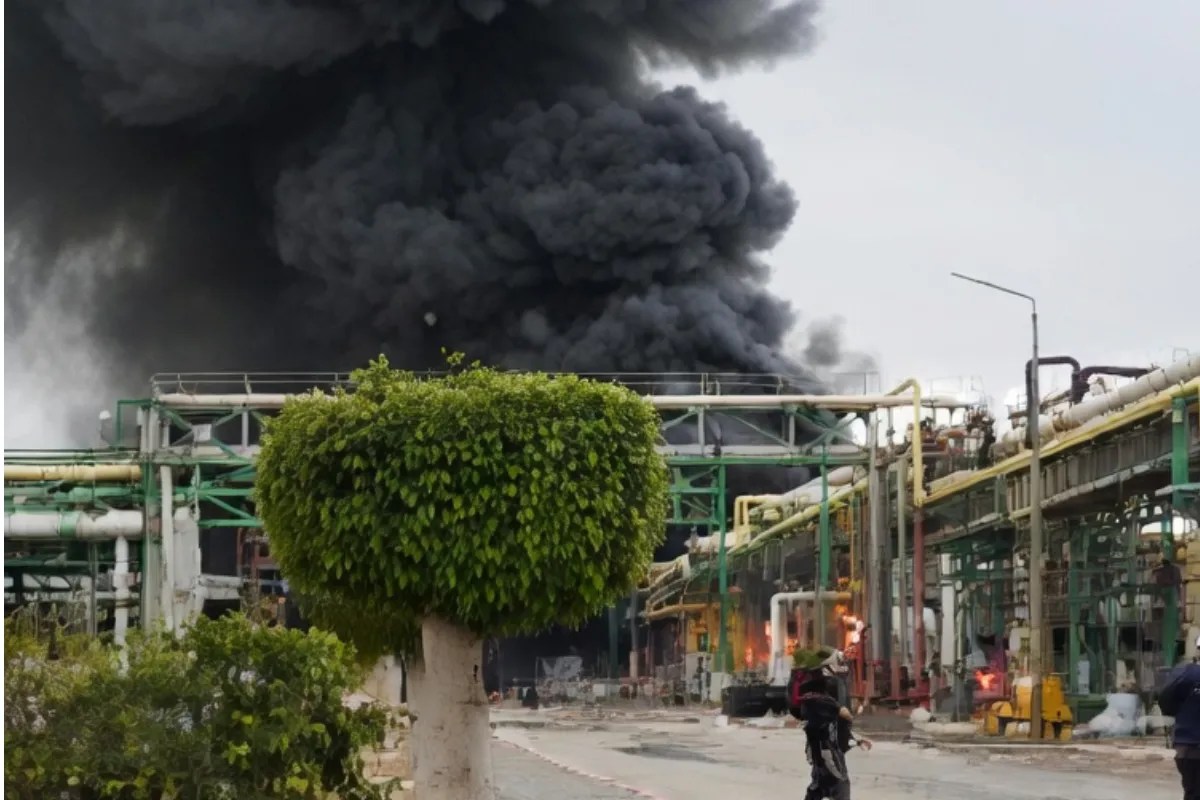
Investment didn't arrive in a flood; it arrived in a trickle. Chinese companies, wary of "secondary sanctions," began to hesitate. The high-speed rails remained blueprints. The oil refineries continued to wheeze and leak. The grand vision of a Chinese-funded industrial renaissance began to look like a desert mirage.
Then came the explosions.
When War Rewrites the Ledger
War has a way of turning "strategic assets" into "strategic liabilities." The escalation of conflict across the Middle East—stretching from the Gaza Strip to the shipping lanes of the Red Sea—changed the calculus for Beijing. China’s primary interest in the region has always been stability. They need the oil to flow, the ships to move, and the markets to remain predictable.
As Iran found itself increasingly entangled in a direct and indirect confrontation with Israel and the United States, the 25-year pact began to gather dust. Beijing doesn't like chaos. Chaos is expensive. Chaos interrupts supply chains.
For the Chinese leadership, Iran went from being a stable, long-term energy partner to a volatile variable in a very dangerous equation.
When the missiles started flying, the bankers in Beijing started retreating. It is one thing to invest in a country that is under sanction; it is quite another to invest in a country that is on the precipice of a regional war. The risk-reward ratio, once skewed in favor of the bold, now tilted heavily toward the cautious.
The Silent Factories
If you walk through the industrial zones on the outskirts of Tehran today, you won't see the bustling Chinese-Iranian joint ventures the 2021 pact promised. Instead, you see the same struggle that has defined the region for decades.
The human cost of this failed momentum is invisible but profound. It is found in the soaring inflation that eats the savings of people like Arash. It is found in the "brain drain" as the very engineers who were supposed to build the new Silk Road instead look for exits to Dubai, Toronto, or Istanbul.
The tragedy isn't just that the money didn't come. The tragedy is the lost time.
Five years is an eternity in the modern world. In that time, global energy markets have shifted. The transition to green energy has accelerated. Supply chains have been rerouted. By the time the dust settles from the current regional conflicts, the window of opportunity for the $400 billion deal may have slammed shut forever.
The Great Balancing Act
China is playing a long game, but they are playing it on multiple boards simultaneously. While Iran waited for the promised investments, they watched as China signed massive energy deals with Saudi Arabia and the United Arab Emirates—Iran’s primary regional rivals.
Beijing’s message was subtle but devastating: We want your oil, but we don’t need your drama.
This is the cold reality of "South-South Cooperation." It is rarely about solidarity. It is about leverage. Iran, with fewer and fewer friends on the global stage, has very little leverage left. They are selling their oil to China at massive discounts—some estimates suggest up to $10 or $15 off the global Brent price—just to keep the lights on.
China is getting the oil. Iran is getting the survival. But nobody is getting the development.
The 25-year pact was sold as a "game-changer," a phrase we often use to describe things that never actually change the game. In reality, it has become a holding pattern. A way to manage a slow decline rather than spark a rapid ascent.
The Ghost of a Superpower
There is a specific kind of silence that follows a broken promise. It’s the silence of a construction site where the cranes have stopped moving.
Iran remains a nation of immense potential—vast gas reserves, a highly educated youth, and a strategic location that should make it the crossroads of the world. But as long as it is viewed through the lens of a "war footing," that potential remains locked in a vault.
China has the key to that vault, but they have shown no interest in turning it while the building is on fire.
We often talk about geopolitics in terms of "spheres of influence" or "strategic pivots." These are bloodless terms. They mask the reality of a father who cannot afford the medicine his daughter needs because the currency has collapsed. They hide the frustration of a small business owner who can't import the parts he needs because the banking bridge to China is a one-way street.
The 25-year pact wasn't just a contract; it was a hope. And in the harsh light of a Middle Eastern war, hope is the first thing to evaporate.
The Silk Road was once a path of connection, a way for ideas and wealth to flow across borders. The modern version, at least the one envisioned five years ago, looks more like a dead end. It is a reminder that no matter how much ink you put on a page, you cannot build a future on a foundation of instability.
The "Golden Age" of Iran-China relations hasn't been cancelled. It has just been indefinitely postponed, leaving a nation to wonder if the partner they chose is simply waiting for the price to drop even further.
The dragon is patient. The lion is tired. And the road is still empty.