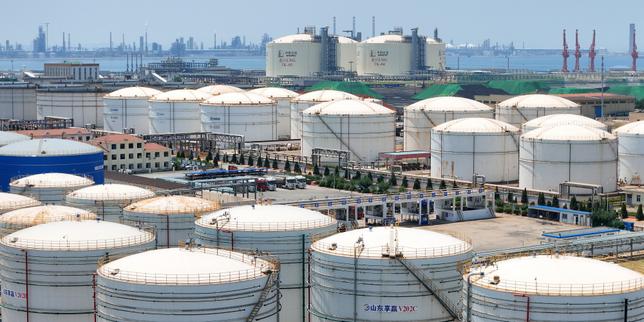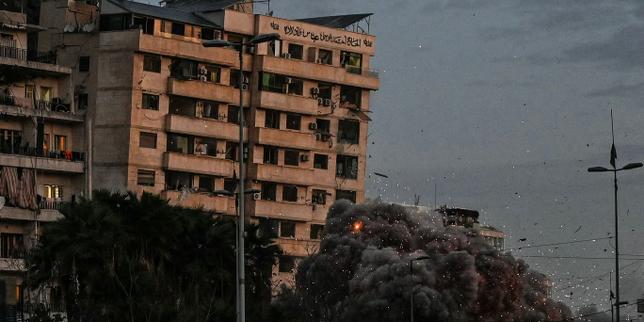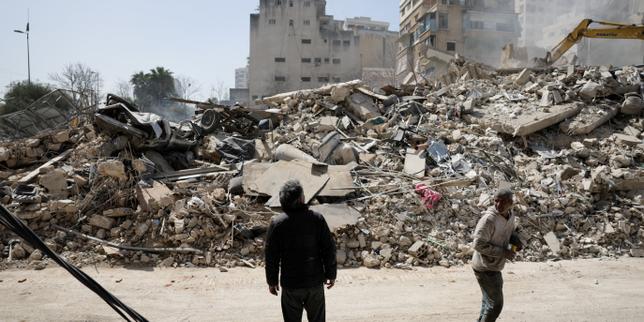
The media is obsessed with the smoke over Beirut. They track every strike on the Dahiyeh district like it’s a scoreboard in a vacuum. The narrative is always the same: a cycle of escalation, a humanitarian "red line" crossed, and the "imminent" threat of a regional firestorm.
They are looking at the wrong map.
The current coverage of the conflict between Israel, Hezbollah, and Iran is built on a fundamental misunderstanding of 21st-century attrition. While pundits scream about "total war," they miss the fact that we are witnessing the first high-stakes beta test of post-kinetic warfare. Israel isn't just bombing buildings; it is stress-testing an automated assassination loop that renders traditional diplomacy obsolete. Meanwhile, the West cheers for the Iron Dome without realizing it’s a fiscal black hole that could bankrupt a medium-sized nation in a month of sustained combat.
The Myth of the "Sovereign Threshold"
The standard reporting suggests that Israel’s decision to target high-ranking Iranian officials on Lebanese or Syrian soil is a "dangerous expansion" of the rules of engagement. This is a polite fiction.
In reality, the concept of national sovereignty has been dead in the Middle East for a decade. What we see now is the Precision-Pacing Strategy. Israel has realized that the cost of occupying southern Lebanon is prohibitively high—both in lives and international political capital. Instead, they have shifted to a "Leadership Liquidation" model.
The logic is simple:
- Intelligence is cheaper than infantry.
- A decapitated command structure cannot execute complex maneuvers.
- The "Global Outcry" has a short half-life.
When Israel says they are authorized to kill "any Iranian official," they aren't making a threat; they are describing a shift in data processing. The IDF isn't waiting for a "casus belli" for each strike. They are running an ongoing algorithmic audit of threat signatures. If you are on the list, the location—be it a consulate in Damascus or a basement in Beirut—is a secondary data point.
The Iron Dome is a Mathematical Failure
Everyone loves a video of an interceptor hitting a Grad rocket. It’s cinematic. It feels like safety. In reality, the economics of missile defense are a disaster for the defender.
Let’s talk about the Cost-Exchange Ratio.
A standard Tamir interceptor for the Iron Dome costs roughly $50,000. The crude, unguided rockets fired by Hezbollah or Hamas often cost less than $500 to manufacture.
When 100 rockets are fired:
- Aggressor Spend: $50,000
- Defender Spend: $5,000,000 (assuming 100% accuracy, which doesn't exist)
This is a 100:1 negative ROI. Israel can sustain this because the United States subsidizes the inventory. But for any other nation, or if the US domestic appetite for funding foreign munitions shifts, the Iron Dome becomes a suicide pact. You cannot win a war where your shield costs a hundred times more than the enemy’s sword.
The "success" of missile defense has created a false sense of security that prevents political solutions. It allows the Israeli public and leadership to ignore the underlying friction because the "beeps" on the phone app say the threat was neutralized. It’s a sedative, not a solution.
Hezbollah’s "Paper Tiger" Paradox
The competitor headlines focus on the "might" of Hezbollah’s 150,000-rocket arsenal. They treat it like a conventional army. It isn’t.
Hezbollah is currently caught in a Bureaucratic Trap. Over the last twenty years, they transitioned from a lean guerrilla force into a semi-state actor with a massive payroll, social services, and political seats. This makes them more vulnerable, not less.
When you have a headquarters, you have a target. When you have a payroll, you have a paper trail. The recent strikes in Beirut prove that Israel has mapped the DNA of Hezbollah’s bureaucracy. The "insider" view is that Hezbollah isn't holding back out of "strategic patience"—they are holding back because their internal communication is compromised to the point of paralysis. Every time a commander picks up a device or meets in a "secure" location, they are essentially pinning a GPS tag on their own chest.
The Iran "Direct Action" Delusion
The media keeps asking: "When will Iran retaliate directly?"
They won't. Not in the way you think.
The Iranian regime operates on a Generational Time Horizon. They view the current strikes as a tactical nuisance. Their goal isn't to win a dogfight over the Bekaa Valley; it’s to bleed the Israeli economy through perpetual mobilization and the collapse of the northern tourism and tech sectors.
By forcing Israel to keep hundreds of thousands of reservists called up, Iran is attacking Israel's GDP, not its borders.
- Mobilization costs: Millions per day in lost labor.
- Flight cancellations: Devastating the travel hub status.
- Psychological fatigue: Driving the "brain drain" of the tech elite to Berlin or Lisbon.
If you’re an Iranian strategist, why would you fire a missile that triggers a regime-threatening response when you can just let the Israeli economy choke on its own defense budget?
The Intelligence Hubris
I’ve spent enough time around defense contractors to know that "perfect intelligence" is the most dangerous drug on the market. Israel’s current success in hitting high-value targets has created a "God Protocol" mentality. They believe they can see everything.
But intelligence is a snapshot, not a movie. The risk of the current "bomb everything" approach in Lebanon is the Decentralization Trigger. By killing the "High Officials," Israel is forcing Hezbollah to return to its 1980s roots: small, autonomous cells with no central nervous system to hack.
You can’t decapitate a hydra that has no head.
The Actionable Truth for the Global Observer
If you are watching this conflict to understand the future of geopolitics, stop looking at the explosions. Look at the spreadsheets.
- Watch the Shekel, not the Sky: The moment the Israeli currency devalues past a certain threshold, the war ends, regardless of how many rockets are left in the silos.
- Interception is a Luxury: If you aren't a global superpower or backed by one, do not invest in "domes." Invest in bunkers and redundancy. The math of interception is a lie.
- De-escalation is a Brand, Not a Strategy: No one in the region actually wants a ceasefire right now. They want "asymmetric dominance." Any "peace talk" you see in the news is merely a tactical pause to reload and re-index targets.
The "experts" tell you we are on the brink of World War III. They’ve been saying that since 2006. We aren't in a world war; we are in a Permanent Friction State. It is a high-tech, low-yield grinding match designed to exhaust the opponent’s treasury and patience.
Beirut is burning, but the real war is being fought in the central banks and the server farms. If you’re still waiting for a "ground invasion" to signal the start of the real fight, you’ve already missed the opening act. The invasion happened years ago, via fiber optics and financial dependency.
Stop asking when the war will start. Ask how anyone expects to pay for the "victory."
Total victory is a 20th-century ghost. In the 21st century, you don't win; you just outlast the other guy's credit limit.
The smoke over Lebanon is just the cost of doing business.
Would you like me to analyze the specific impact of these military expenditures on the Israeli tech sector's venture capital flow for 2026?