The sudden decapitation of a state’s executive branch—specifically the loss of a President and a Foreign Minister—functions as a stress test for the structural integrity of its constitution. In the Islamic Republic of Iran, the deaths of Ebrahim Raisi and Hossein Amir-Abdollahian do not create a power vacuum; instead, they trigger a pre-programmed sequence of institutional overrides designed to maintain the primacy of the Velayat-e Faqih (Guardianship of the Islamic Jurist). The stability of the Iranian state relies not on the charisma of its elected officials but on the redundancy of its unelected oversight bodies. To understand who runs Iran now, one must look past the names on the office doors and map the three functional tiers of the Iranian power grid.
The Constitutional Fail-Safe Mechanism
The Iranian political system is bifurcated between republican institutions and theocratic oversight. Article 131 of the Constitution provides the immediate operational blueprint for succession. When a President dies in office, the First Vice President assumes the role with the Supreme Leader’s approval. A council consisting of the First Vice President, the Speaker of the Parliament, and the Head of the Judiciary must then organize an election within 50 days.
This 50-day window is a period of heightened proceduralism rather than political flux. The transition of Mohammad Mokhber to the interim presidency serves a stabilization function. Mokhber’s background—heavily tied to Setad (Execution of Imam Khomeini's Order), a massive parastatal conglomerate—signals that the immediate priority is economic and logistical continuity. The interim leadership is not tasked with policy innovation; it is tasked with maintaining the "Status Quo Ante."
The Strategic Redundancy of the Foreign Ministry
The loss of Hossein Amir-Abdollahian is mitigated by the structural nature of Iranian foreign policy. Unlike Western democracies where a Foreign Minister might exert significant personal influence on doctrine, Iranian foreign policy is a product of the Supreme National Security Council (SNSC).
- The IRGC Factor: The Islamic Revolutionary Guard Corps (IRGC), specifically the Quds Force, manages regional "Resistance Axis" files.
- The Supreme Leader’s Office: Ali Khamenei’s advisors, such as Ali Akbar Velayati, provide a parallel diplomatic track that ensures continuity regardless of the sitting minister.
- The Deputy Continuity: The appointment of Ali Bagheri Kani as acting Foreign Minister ensures that the most sensitive file—the nuclear negotiations—remains in the hands of the lead negotiator.
The Three Pillars of Iranian Governance
The internal mechanics of the Iranian state can be categorized into three distinct functional pillars. These pillars operate with a high degree of autonomy, meaning the removal of a "Top Figure" in one pillar does not necessarily degrade the performance of the others.
1. The Theocratic Oversight (The Ultimate Arbitrator)
The Office of the Supreme Leader (Beit-e Rahbari) sits at the apex. This office controls the military, the judiciary, and the state media. Its primary objective is ideological preservation. The Supreme Leader, Ali Khamenei, provides the "Strategic Guidance" that the President is merely tasked with executing. Therefore, the President functions more as a Chief Operating Officer (COO) than a Chief Executive Officer (CEO).
2. The Praetorian Guard (The Security-Industrial Complex)
The IRGC is the most significant stakeholder in the Iranian state. It is not merely a military wing but a multi-sector conglomerate with interests in construction, telecommunications, and energy. The IRGC’s influence ensures that internal dissent is suppressed and that the regional proxy network remains funded. The death of a President does not change the IRGC's budget or its tactical objectives in the Levant or Yemen.
3. The Bureaucratic-Technocratic Layer
This layer includes the cabinet, the parliament (Majlis), and the civil service. This is where the deaths of Raisi and Amir-Abdollahian are most visible but least impactful on long-term strategy. The bureaucracy is designed to be replaceable. The vetting process conducted by the Guardian Council ensures that only individuals who are ideologically aligned with the first two pillars can enter the third.
The Cost Function of Succession
Every leadership transition carries an "Entropy Cost"—the energy diverted from governance toward internal power rebalancing. While the institutional map remains clear, the competition for the permanent presidency introduces three primary variables that will dictate Iran's internal stability over the next quarter.
Variable A: The Vetting Intensity
The Guardian Council faces a dilemma. If they disqualify all but the most hardline candidates (as they did in 2021), they risk record-low voter turnout, which erodes the "Democratic Veneer" the regime uses for international legitimacy. If they allow a broader field, they risk losing control over the executive branch. The current trend suggests the Council will prioritize ideological purity over participation rates, viewing a narrow but loyal base as more stable than a broad but volatile one.
Variable B: The Assembly of Experts Reconfiguration
Ebrahim Raisi was more than a President; he was a leading candidate to succeed the 85-year-old Ali Khamenei. His removal from the board forces a recalibration of the succession plan for the Supreme Leader. This is the true "High Stakes" game. The Assembly of Experts, the body responsible for choosing the next Leader, now has one less consensus candidate. This increases the influence of Mojtaba Khamenei, the Supreme Leader’s son, despite the theological complications of hereditary-style succession in a system that ostensibly rejected monarchy.
Variable C: The Economic Pressure Valve
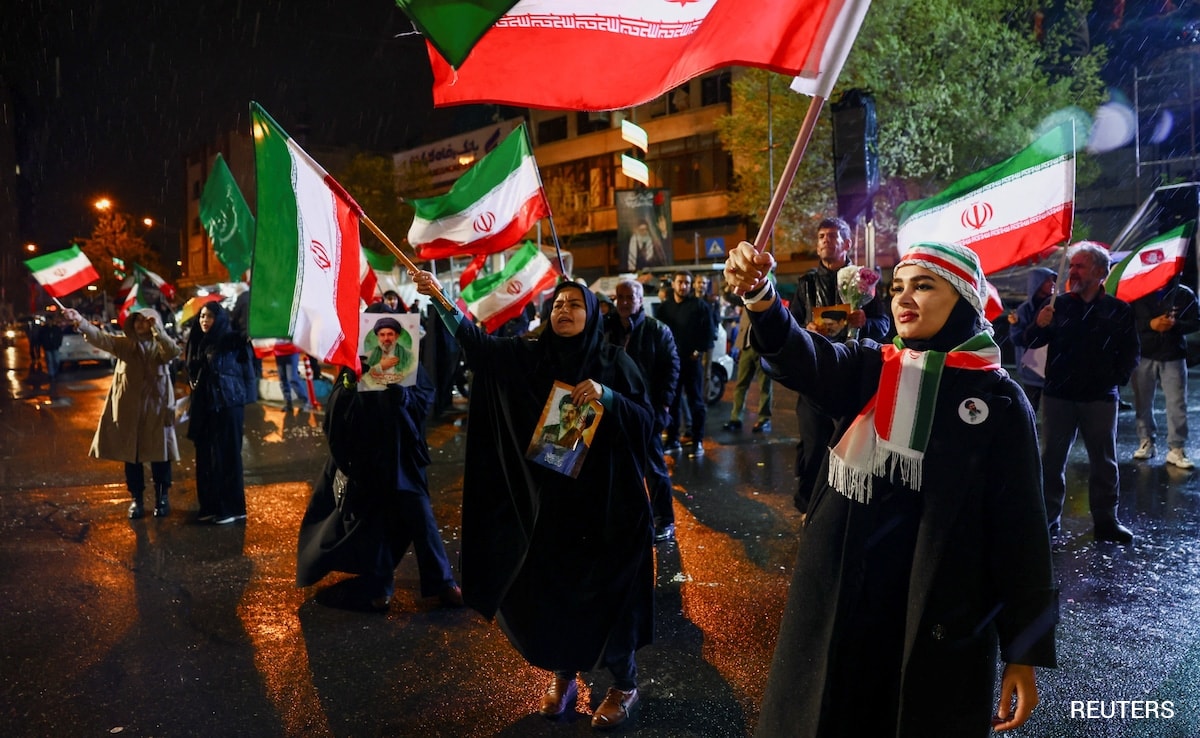
Iran’s inflation remains a structural bottleneck. Any interim or incoming president must manage a currency that has seen significant devaluation. The "Social Contract" in Iran is increasingly strained; the regime provides security and ideological identity, but fails on wealth distribution. If the 50-day election cycle is perceived as a closed-door elite bargain, it could serve as a catalyst for renewed civil unrest.
Mapping the Power Clusters
The current distribution of influence is concentrated among five key individuals and their respective factions:
- Mohammad Bagher Ghalibaf (Speaker of Parliament): Represents the "Pragmatic Hardline" faction. He has executive experience as the former Mayor of Tehran and a background in the IRGC. He is a primary contender for the permanent presidency.
- Gholam-Hossein Mohseni-Eje'i (Head of the Judiciary): Represents the security-intelligence apparatus. His role on the transitional council ensures that the legal mechanisms of the state remain a tool for internal control.
- Ali Shamkhani (Advisor to the Supreme Leader): Though he stepped down from the SNSC, he remains a critical bridge between the military and the diplomatic establishment.
- The Larijani Family: While currently sidelined, the pragmatic-conservative wing they represent still holds significant sway within the traditional merchant (Bazaari) class and parts of the clergy in Qom.
- Esmail Qaani (Commander of the Quds Force): While not involved in domestic politics, his ability to keep the "Resistance Axis" quiet during this transition is the metric by which the regime’s external stability will be measured.
The Causal Relationship of Crisis and Consolidation
A common analytical error is assuming that leadership loss leads to liberalization. In the Iranian context, the "Causal Chain" usually works in the opposite direction.
- Phase 1: External Threat Perception: The regime interprets the loss of high-ranking officials (even if accidental) through the lens of national security.
- Phase 2: Security Hardening: The IRGC increases its domestic footprint to preemptively discourage opportunism by opposition groups.
- Phase 3: Elite Cohesion: Factional bickering is suppressed in favor of a unified front to ensure the survival of the system.
This suggests that the upcoming election will likely produce a candidate who is even more integrated with the IRGC’s economic and security objectives than Raisi was. The system is moving toward a "Military-Clerical Fusion" where the distinction between the two becomes increasingly blurred.
Tactical Considerations for International Observers
The international community must recognize that Iranian "Hard Power"—its nuclear program and drone production—is managed by the Permanent State, not the Elected State. The death of the President is an administrative hurdle, not a strategic pivot.
- Nuclear Trajectory: The Atomic Energy Organization of Iran (AEOI) operates under the direct mandate of the Supreme Leader. No change in presidential personnel will result in a slowdown of enrichment unless sanctioned by the Beit-e Rahbari.
- Regional Proxies: The command structure of Hezbollah, the Houthis, and PMF groups in Iraq remains intact. They take their cues from the IRGC-QF, which was unaffected by the crash in East Azerbaijan.
- Sanctions Evasion: The networks used to sell oil to China are deeply embedded in the IRGC’s "Shadow Banking" system. These operations are managed by technocrats who are shielded from political turnover.
The Strategic Path Forward
The Iranian state is currently prioritizing the "Smooth Handover" over "Political Reform." The logic is simple: any sign of weakness is an invitation for internal or external escalation. Consequently, the next 50 days will be characterized by an aggressive display of institutional normality.
The strategic move for the regime is to fast-track a candidate who can satisfy the IRGC's need for economic autonomy while maintaining the Supreme Leader’s requirement for absolute ideological loyalty. This narrows the field to a small cadre of "Security-Bureaucrats." The likely outcome is the further solidification of the "Deep State" at the expense of the "Republican State."
Observers should monitor the Guardian Council’s candidate list for the name of Mohammad Bagher Ghalibaf or similar figures. If the list is exceptionally narrow, it indicates the regime is in a "Defensive Crouch," prioritizing control over all else. If it is slightly broader, it suggests a confidence in the system's ability to absorb and neutralize minor dissent. Either way, the "Engine" of the Iranian state remains running; only the driver has changed.