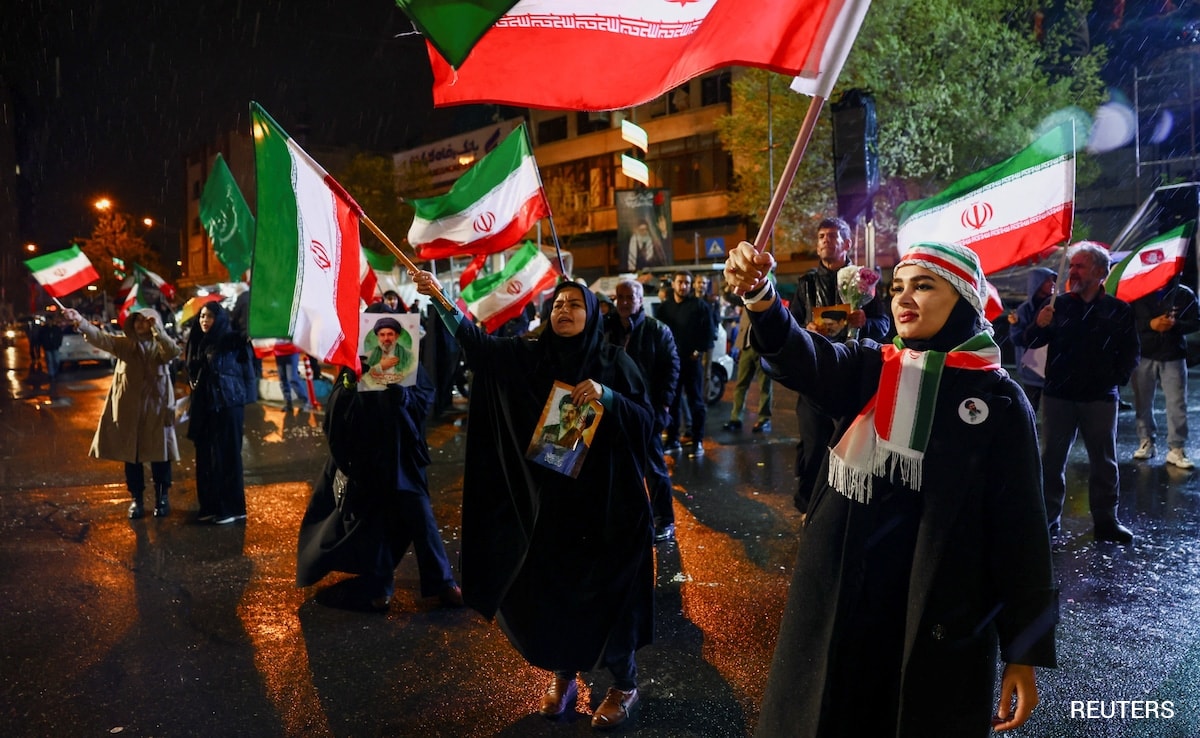
Quantity is the last refuge of a military that knows it cannot win. When Tehran broadcasts that it has over a million soldiers ready to "repel an invasion," they aren't describing a military force. They are describing a logistical nightmare and a massive, slow-moving target.
The media loves the "million-man" headline because it triggers a primal fear of a human wave. It paints a picture of an unstoppable tide of steel and boots. But in the modern theater, a million soldiers is not an asset. It is a liability. It is a drain on food, fuel, and communication bandwidth. Most importantly, it is a signal of technological desperation.
If you are counting heads, you have already lost the war of sensors.
The Paper Tiger of Raw Manpower
Let’s dismantle the math. When Iran claims a million soldiers, they are counting the Islamic Revolutionary Guard Corps (IRGC), the regular army (Artesh), and the Basij paramilitary. The Basij are largely undertrained volunteers, useful for domestic suppression but cannon fodder in a high-intensity conflict against a peer or near-peer adversary.
Massed infantry belongs to the 20th century. In 2026, the density of troops on a battlefield is inversely proportional to their survival rate. I have watched analysts pore over troop movements for decades, and the pattern is always the same: the side that brags about size is the side that lacks precision.
Consider the square-cube law of logistics. If you double the size of your army, you don't just double your effectiveness; you quadruple your requirements for synchronization. A million soldiers require a level of encrypted, real-time communication that Iran’s current electronic warfare suite cannot sustain under heavy jamming. You aren't fielding a million warriors; you are fielding a million isolated individuals who cannot see through the fog of war.
The 10,000 Soldier "Escalation" Fallacy
The counter-narrative is equally flawed. The press treats the potential deployment of 10,000 U.S. troops as a "weighty" counter-move. This is a misunderstanding of how power is projected today.
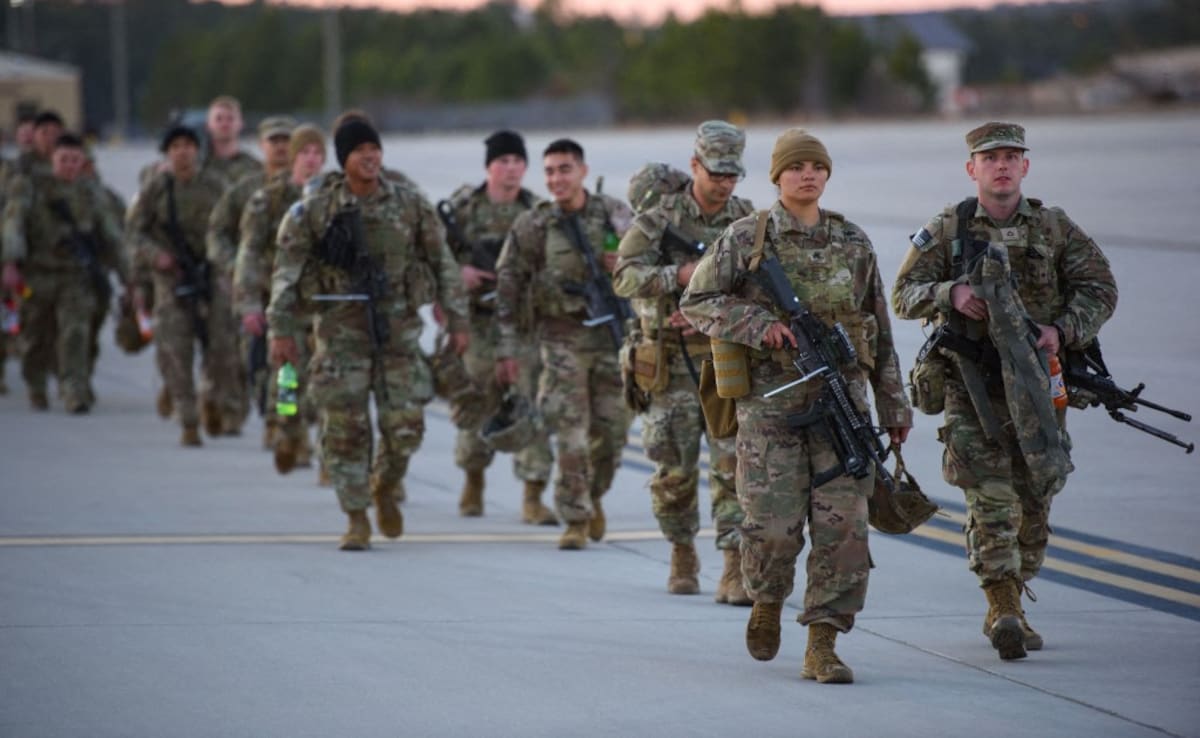
Those 10,000 troops aren't there to stand in a line and shoot at the million. They are there to service the "kill chain." They are technicians, drone operators, intelligence officers, and logistics specialists who manage the hardware that makes raw numbers irrelevant.
- Precision beats mass. One operator sitting in a trailer in Nevada or a command center in Qatar has more kinetic impact than an entire battalion of infantry.
- Sensor fusion over-matches volume. If you can see everything and your enemy can see nothing, the number of soldiers they have only determines how many targets you have to program into the computer.
The U.S. doesn't need 100,000 boots on the ground to decapitate a command structure. It needs a high-bandwidth connection and a few dozen platforms that stay out of range of Iran’s aging air defenses.
The Asymmetric Trap
The real threat isn't the million soldiers. The real threat is the "gray zone" tactics that the competitor article ignores in favor of scary numbers.
Iran’s true strength lies in its ability to disrupt global markets without firing a single shot at a soldier. They use "swarm" naval tactics in the Strait of Hormuz—not because they think their small boats can sink a carrier, but because they know the insurance premiums for oil tankers will skyrocket, crippling the global economy.
When we focus on the "million soldiers," we are looking at the wrong map. We are preparing for a land invasion that will never happen, while the real war is being fought in the electromagnetic spectrum and the global shipping lanes.
Why More Troops Actually Make the US Weaker
Here is the truth no one in the Pentagon wants to say out loud: Sending more troops to the Middle East often decreases American security.
Every extra soldier sent to a base in Iraq or Kuwait is another hostage. They are targets for proxy militias. They are political leverage for Tehran. By increasing the "footprint," the U.S. increases its vulnerability to low-cost, high-impact drone and rocket attacks.
We are playing a game of 20th-century chess while the world has moved on to algorithmic trading. We measure "strength" by how many people we can put in harm's way, rather than how many threats we can neutralize before they reach the front line.
The Technological Reality of 2026
We have reached a point where $1,000 commercial drones, modified with off-the-shelf components, can disable a multi-million dollar tank. In this environment, a million soldiers are just a million opportunities for a cheap drone to find a target.
If Iran wanted to be truly terrifying, they wouldn't announce a million soldiers. They would announce a million autonomous loitering munitions. The fact that they are leaning on the "soldier" narrative tells you they are struggling to modernize their kinetic capabilities.
Stop Asking "Who Has More?"
People always ask: "Could the U.S. handle an army of a million?"
The question is fundamentally broken. It assumes a war of attrition. It assumes a replay of the Iran-Iraq war.
The real question is: "Can the million-man army function when their GPS is spoofed, their internal comms are fried, and their command centers disappear in the first six hours of engagement?"
The answer is no.
A million soldiers without a digital backbone is just a disorganized crowd. And you don't fight a crowd with an army; you fight a crowd by taking away their ability to act as a collective.
History is littered with the corpses of "massive" armies that were dismantled by smaller, more agile forces that controlled the information space. From the Battle of Agincourt to the initial stages of Operation Iraqi Freedom, volume has rarely been the deciding factor in the face of a technological leap.
We are currently seeing that leap in real-time. The era of the "million-man army" ended the moment the first precision-guided munition hit its mark. Anyone still using that number as a metric of power isn't an analyst—they're a historian who hasn't realized the book has been closed.
Stop counting boots. Start counting bits.
Would you like me to analyze the specific electronic warfare capabilities that render these troop numbers obsolete?