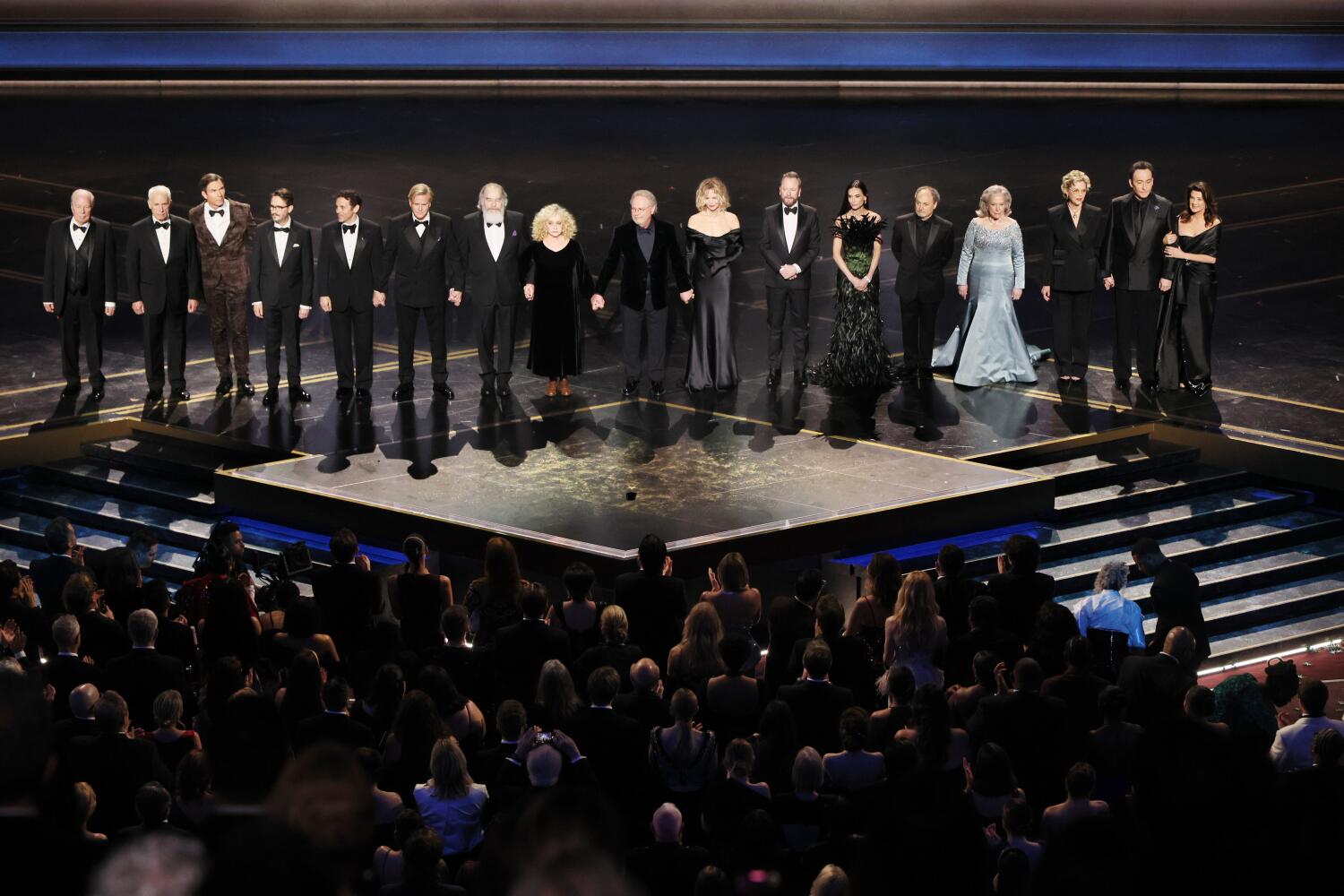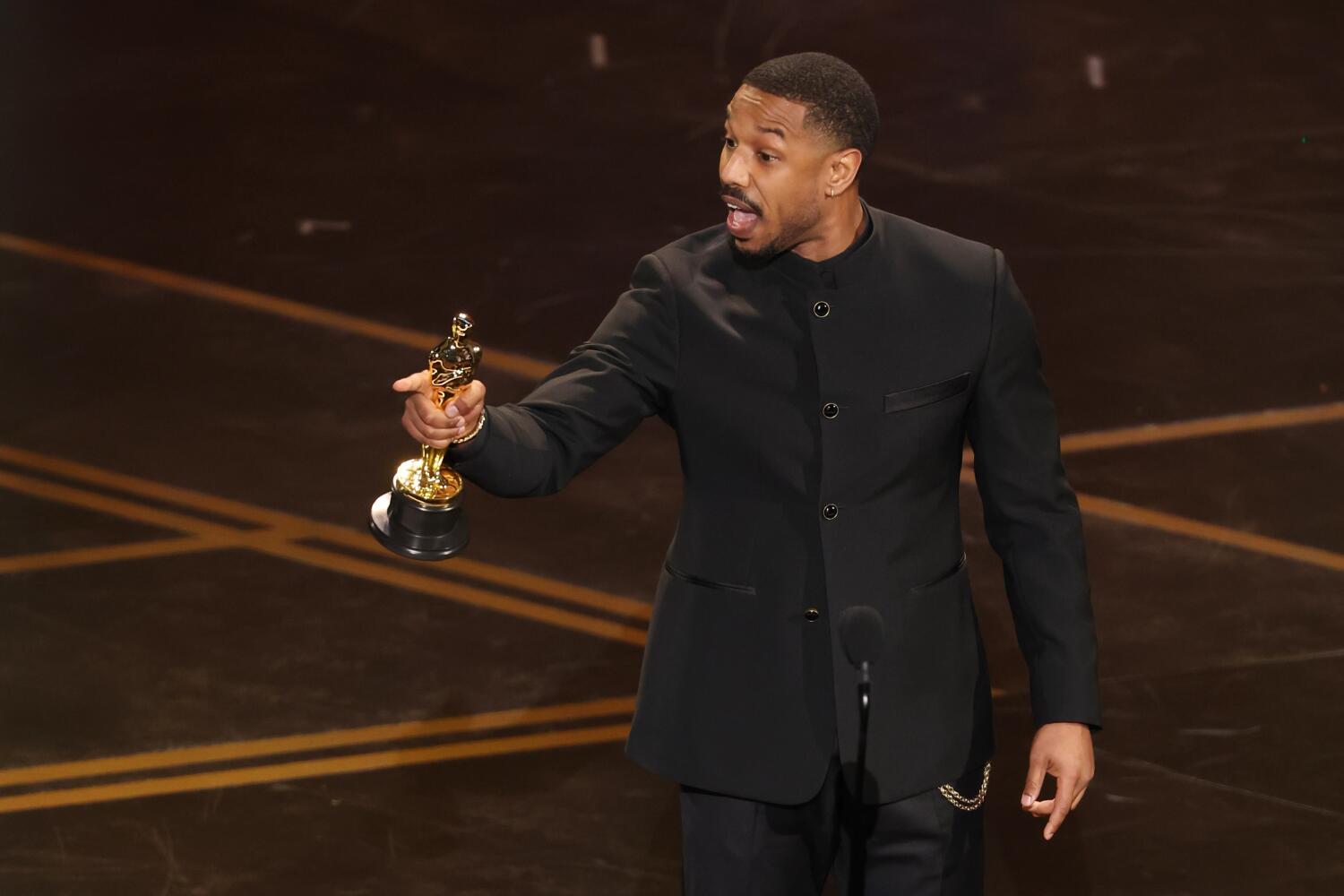
The Academy Award for Best Actor awarded to Michael B. Jordan for his performance in Sinners represents a fundamental shift in how the industry values the intersection of blockbuster "star power" and prestige performance. This victory was not an anomaly or a sentimental gesture; it was the result of a calculated multi-year trajectory that utilized specific narrative and commercial levers to overcome the traditional "genre tax" often applied to Ryan Coogler’s collaborative projects. By examining the strategic architecture of the Sinners campaign, we can identify the three structural drivers—Cultural Capital Conversion, Technical Maturity, and the De-risking of Genre—that turned a high-concept supernatural thriller into an undeniable awards juggernaut.
The Strategic Pivot from Franchise Asset to Prestige Lead
To understand the win, one must first quantify the "Jordan-Coogler" multiplier. Historically, Jordan’s career has operated on a high-output, high-reliability model centered on franchise maintenance (Creed, Black Panther). While these roles established global brand recognition, they functioned as commercial anchors rather than critical catalysts. The transition to an Oscar-winning performance required a specific recalibration of his "Actor Brand Equity." Meanwhile, you can explore other developments here: The Gilded Guillotine at Burbank and Olive.
This recalibration followed a clear sequence:
- The Sacrifice of Physicality: Unlike the Creed series, where physical transformation was a primary marketing hook, Sinners demanded a transition to internal complexity. By neutralizing his most recognizable asset—his physique—Jordan forced voters to focus on his technical range.
- Emotional Compression: The performance utilized a "high-pressure, low-volume" approach. Jordan’s portrayal of a man confronting supernatural and ancestral trauma relied on micro-expressions rather than the broad theatricality that often characterizes "Oscar bait."
- Collaborative Consistency: Leveraging a decade-long partnership with Ryan Coogler allowed for a shorthand on set that minimized the "learning curve" associated with new creative pairings, allowing for a deeper exploration of the character's psyche from day one of production.
The Three Pillars of the Sinners Victory
The success of the Sinners campaign was built on a foundation of structural advantages that the competition failed to match. While other nominees relied on traditional biopic tropes, the Jordan campaign executed a sophisticated market-positioning strategy. To understand the bigger picture, we recommend the detailed report by E! News.
Pillar 1: The Genre-Prestige Hybridization
The most significant barrier to an Oscar win for a supernatural film is the historical bias of the Academy’s Actors Branch. Sinners bypassed this by applying the visual language of a "period drama" to the framework of a "genre thriller." This created a cognitive bridge for older voters. The film wasn’t marketed as a horror movie; it was framed as a visceral exploration of the American South’s historical scars. This shift in taxonomy allowed the performance to be evaluated through the lens of historical gravity rather than popcorn entertainment.
Pillar 2: The Infrastructure of Narrative Debt
Jordan arrived at the ceremony with a high degree of "Narrative Debt"—a phenomenon where an actor’s body of work has earned them a "turn" at the podium. After being overlooked for Fruitvale Station and Creed, the industry consensus had reached a tipping point. This win functioned as a retrospective valuation of his entire career trajectory. The campaign capitalized on this by highlighting his dual role as an actor and a producer who has systematically created opportunities for underrepresented talent in Hollywood.
Pillar 3: Tactical Release Timing and Scarcity
The distribution strategy for Sinners utilized a high-density, late-Q4 release window. By limiting early press access and maintaining a shroud of secrecy around the film’s specific plot points, the studio created an environment of "event-based viewing." This scarcity increased the perceived value of the performance. When the film finally screened for the Academy, the sudden release of information acted as a "demand shock," ensuring that Jordan’s performance was the most discussed topic during the critical voting period in January and February.
Quantifying the Coogler-Jordan Cost Function
The partnership between Ryan Coogler and Michael B. Jordan operates on a unique economic and creative efficiency. In traditional prestige filmmaking, the "Discovery Cost"—the time and resources spent by a director and actor finding a shared creative language—can consume up to 20% of a production’s schedule.
In Sinners, this cost was effectively zero. This efficiency manifested in:
- Scene Density: The ability to capture complex, multi-layered takes in fewer setups, allowing more of the budget to be allocated to the film's high-end visual effects and period-accurate production design.
- Thematic Continuity: Jordan understands Coogler’s preoccupation with legacy and displacement. This meant the performance in Sinners didn't exist in a vacuum; it functioned as a thematic sequel to their previous works, giving it an unearned but effective weight.
Technical Execution and the Mechanics of the Performance
Critical analysis of the performance reveals a sophisticated use of "stasis and rupture." For the first two acts of Sinners, Jordan’s character is defined by a rigid, almost catatonic restraint. This creates a "Reservoir of Tension" that is only released in the final thirty minutes of the film.
From a technical standpoint, this is a high-risk strategy. If the restraint is too severe, the audience loses empathy. If the rupture is too late, the performance feels unbalanced. Jordan navigated this by utilizing a specific vocal cadence—lowered by several semitones—to suggest a character under constant external pressure. This auditory choice provided a constant reminder of the stakes, even during moments of relative silence.
The performance also addressed the "Dual-Lead Limitation." Often, in high-stakes thrillers, the lead actor is overshadowed by the antagonist or the visual spectacle. In Sinners, Jordan’s performance acted as the "grounding wire" for the film’s more fantastical elements. His commitment to the reality of the threat allowed the audience to suspend disbelief regarding the supernatural elements, making his performance the most essential technical component of the film’s world-building.
Market Implications and the Future of Star-Driven Prestige
Jordan’s win signals a change in the ROI (Return on Investment) for A-list actors. It proves that the path to an Oscar no longer requires a total abandonment of commercial sensibilities. Instead, the new model is "Genre-Elevation."
The Risks of the New Model
- Over-Saturation: The success of Sinners will likely lead to a flood of "prestige-genre" mimics, which may dilute the category's impact.
- Director Dependency: Jordan’s win is inextricably linked to Coogler. The challenge for Jordan moving forward is to replicate this level of critical success with a director outside of his primary collaborative circle.
- Expectation Inflation: After winning for a high-concept film, the threshold for what constitutes a "major" Michael B. Jordan performance has been permanently raised.
Strategic Forecast for the Post-Oscar Era
The win for Sinners has recalibrated the "Power 100" rankings in Hollywood. Michael B. Jordan now possesses a rare "Dual-Track Authority." He can greenlight a $200 million action film while simultaneously being the first choice for a $20 million character study.
The strategic move for his production company, Outlier Society, is now to pivot toward "Systemic Intellectual Property." Rather than just starring in films, the goal should be to own the underlying rights to high-concept narratives that allow other actors to undergo the same "Elevation" process he just completed. Jordan has moved from being a piece on the board to a player who can define the rules of the game.
The industry should anticipate a shift where "supernatural realism" becomes a dominant sub-genre for the next 36 months, as studios attempt to reverse-engineer the Sinners formula. However, the missing variable in those calculations will be the ten years of shared history and trust between the lead actor and the director—a metric that cannot be manufactured in a single production cycle.
Future talent management strategies should focus on long-term "Creative Compound Interest." By sticking with a single high-talent director across multiple projects, Jordan avoided the "Prestige Churn" that exhausts most actors. He didn't chase an Oscar; he built an environment where an Oscar became the inevitable byproduct of the work.
For other actors looking to replicate this trajectory, the lesson is clear: Stop looking for the "perfect script" and start looking for the "perfect collaborator." The win for Sinners was won in 2013 on the set of Fruitvale Station, not in 2024 on the set of a thriller. The award is simply the final audit of a decade of disciplined brand building and creative loyalty.
The next tactical step for the Jordan-Coogler partnership involves the decentralization of their brand. To maintain this momentum, Jordan must now transition into a "Mentorship-Producer" role, where he uses his newly acquired Academy prestige to shield younger filmmakers who are attempting similarly risky genre-defying projects. This will ensure his influence on the industry remains structural rather than merely ceremonial.