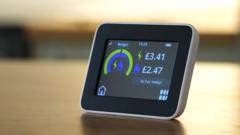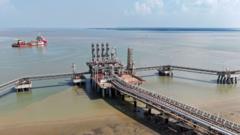
The headlines are screaming about a crisis. Alderney is bracing for another hike in electricity costs, and the local discourse has devolved into the usual chorus of victimhood and demands for government intervention. Everyone is looking for someone to blame—the Alderney Electricity Ltd (AEL) board, the global fuel market, or the lack of a subsea cable to France.
They are all missing the point.
Cheap power is a sedative. It masks inefficiency and stalls innovation. If you want to actually "save" Alderney’s economy, you don't do it by subsidizing a dying 20th-century distribution model. You do it by letting the price signals do their job. High electricity costs aren't the problem; they are the loudest, clearest signal that the island’s current energy infrastructure is a relic that deserves to be dismantled.
The Myth of the "Fair Price"
The loudest voices in the room always demand a "fair price" for energy. In a micro-grid environment like Alderney, "fair" is a fiction. You are living on a rock in the English Channel with no natural fossil fuel reserves and a tiny population base that lacks economies of scale.
When people cry for price caps or subsidies, they are asking for a hidden tax. Someone always pays. If the consumer doesn't pay at the meter, the taxpayer pays through depleted reserves or diverted public funds. By artificially suppressing the price of electricity, the States of Alderney would effectively be rewarding people for wasting a scarce resource.
Economically speaking, the most "fair" price is the one that reflects the brutal reality of logistics. If it costs $0.40 or $0.50 per unit to generate and distribute power using imported diesel and aging generators, then charging $0.30 isn't "help." It’s a lie. It prevents the market from reacting. It stops the homeowner from installing that heat pump or the business from auditing its thermal leakage.
Why the Subsea Cable is a Red Herring
The local obsession with a subsea cable—linking Alderney to France or Guernsey—is a classic example of "big project" bias. The argument goes: "If we just plug into the European grid, our problems vanish."
I’ve seen island jurisdictions across the globe sink tens of millions into "interconnectors" only to find themselves at the mercy of geopolitical whims and massive debt servicing costs. A cable isn't a magic wand. It is a leash.
- Sovereignty Costs: You trade fuel price volatility for political volatility.
- Maintenance Nightmares: When a subsea cable faults—and they do—the repair costs for a tiny jurisdiction are astronomical.
- The Debt Trap: Who pays for the installation? A population of roughly 2,000 people cannot amortize a multimillion-pound infrastructure project without a massive, permanent hike in standing charges.
The cable is the lazy man’s solution. It’s an attempt to stay tethered to an old way of thinking: centralized, passive, and dependent.
The Diesel Death Spiral is an Opportunity
AEL is currently trapped in what energy analysts call the "Utility Death Spiral." As prices rise, the wealthiest or most innovative customers leave the grid or install solar. This leaves fewer customers to pay for the fixed costs of the grid, which forces prices up further for those who remain, which triggers more exits.
Usually, this is framed as a catastrophe. I call it a cleansing.
The "death" of the traditional utility model on Alderney is the only way to force a transition to a decentralized, multi-source microgrid. We need to stop trying to save AEL in its current form. Instead, we should be looking at how to transition it into a grid-management entity rather than a generation monopoly.
Imagine a scenario where the high cost of grid power becomes the primary driver for a private-sector explosion in tidal and solar trials. If power is cheap, nobody bothers to innovate. When power is expensive, every roof becomes a power plant.
The Efficiency Paradox
We talk about "energy poverty," but we rarely talk about "efficiency poverty." A significant portion of Alderney’s housing stock is, frankly, an atmospheric heater. We are burning expensive imported diesel to heat the sky because the insulation is subpar and the heating systems are archaic.
If the States of Alderney want to intervene, they shouldn't give out $500 electricity vouchers. That money goes straight to the fuel suppliers and disappears. Instead, they should be aggressively funding the "hard" transition:
- Mandatory Retrofitting: Stop subsidizing the bill; subsidize the wool in the attic.
- Thermal Imaging Audits: Every building on the island should be mapped for heat loss.
- High-End Storage: Instead of a cable to France, invest in island-wide battery storage to smooth out the peaks of local generation.
The goal shouldn't be to make electricity cheap; it should be to make electricity unnecessary for basic survival.
Stop Asking "How Can We Lower the Price?"
That is the wrong question. It’s a loser’s question. It assumes you are a passive victim of global markets.
The right question is: "How do we make the price irrelevant?"
You make the price irrelevant by reducing demand through extreme efficiency and localized, decentralized generation. High prices are the catalyst. They are the "stick" that forces a conservative population to move toward a radical future.
The current "crisis" is actually the most honest moment Alderney has had in decades. The veil is off. The true cost of living on a remote island with 20th-century habits is being revealed.
Stop complaining about the invoice. Use the pain of the price hike to justify the radical abandonment of the status quo. If you lobby for lower prices now, you are simply voting to stay fragile.
Rip the Band-Aid off. Let the prices peak. Force the change.
Stop trying to fix the old grid. Build the one that doesn't need a middleman.