The headlines are a lie. Or, at the very least, a massive exercise in creative accounting.
You’ve seen the "Free energy packs to reduce bills by £800" narrative circulating. It’s the perfect feel-good story for a cost-of-living crisis. Governments and charities hand out a box of LED bulbs, some draft excluders, and perhaps a low-flow showerhead. They pat themselves on the back. You feel like you’ve won. If you enjoyed this article, you should read: this related article.
In reality, these packs are the equivalent of trying to stop a sinking Titanic with a designer sponge.
The math doesn't hold up. The engineering doesn't hold up. And most importantly, the economics of the "energy saving" industry is built on a foundation of "phantom savings" that never actually materialize in your bank account. If you want to actually slash your bills, you need to stop looking at the contents of a cardboard box and start looking at the physics of your building. For another perspective on this story, check out the recent update from Forbes.
The £800 Myth: How the Numbers Are Cooked
When a campaign claims a "free pack" saves £800, they aren't talking about your bill this year. They are using "lifetime savings" projected over a decade or more, often based on peak energy prices that may not even exist in two years.
Take the LED bulb. Yes, switching from a 60W incandescent to a 9W LED saves money. But most UK households have already made this switch. The "saving" being advertised is often calculated against an old-world baseline that no longer exists. They are selling you a solution to a problem you’ve already solved, then claiming the credit for the result.
Draft excluders are even worse. A piece of foam at the bottom of a door does nothing if your loft insulation has slumped or your double glazing has blown seals. It’s performative efficiency. It’s "greenwashing" for the working class, designed to make people feel proactive while the structural rot of the UK’s housing stock remains unaddressed.
The Rebound Effect: Why Efficiency Isn't Enough
Here is the truth no energy consultant will tell you: Efficiency frequently leads to more consumption.
In economics, this is known as Jevons Paradox. When you make a resource more efficient to use, the "cost" of using that resource drops, leading people to use it more. I’ve seen this play out in hundreds of industrial and residential audits. A homeowner installs "energy-saving" measures, feels a sense of "carbon credit," and proceeds to turn the thermostat up by 2 degrees because they feel they can now afford it.
The result? The net energy bill stays exactly the same. The "£800 saving" evaporates because human behavior is not a static variable in a spreadsheet.
If we actually wanted to reduce bills, we wouldn't be handing out lightbulbs. We would be discussing energy density and thermal mass. But "thermal mass" doesn't fit in a free giveaway box, and it’s a lot harder to explain to a voter than "free stuff."
Stop Fixing the Wrong Holes
The UK has the oldest, leakiest housing stock in Western Europe. Handing out a free energy pack to someone living in a Victorian terrace with uninsulated solid brick walls is an insult.
The Hierarchy of Real Savings
If you want to actually disrupt your energy costs, you have to ignore the "quick fixes" and focus on the physics of heat loss.
- Air Tightness over Insulation: You can have two feet of wool in your loft, but if you have a "stack effect" pulling cold air through your floorboards and pushing warm air out of your recessed ceiling lights, the insulation is useless.
- Flow Temperatures: If you have a condensing boiler, it’s likely running at a flow temperature that is too high ($70^{\circ}C$ to $80^{\circ}C$). This prevents the boiler from actually "condensing," which is where the efficiency comes from. Dropping that to $55^{\circ}C$ costs zero pounds and saves more than any "free pack" ever will.
- The Window Trap: People spend £15,000 on new windows to save £100 a year. The "payback period" is longer than the lifespan of the windows. It’s a bad investment. You’d be better off spending £2,000 on professional air-sealing and pocketing the remaining £13,000 to pay the bill.
The Business of Poverty Pimping
Why do these "free pack" schemes exist? Follow the money.
They are funded by energy companies through obligations like ECO4. These companies are mandated by the government to spend a certain amount on "energy efficiency." They choose the path of least resistance. It is much easier for a giant utility company to buy a million cheap LED bulbs in bulk and ship them out than it is to actually retrofit a single street with external wall insulation.
It’s a checkbox exercise. It allows the government to claim they are "taking action" while avoiding the multi-billion pound reality: the UK energy grid is outdated, and our homes are sieves. These packs are a sedative, not a cure. They keep the public quiet while the structural failures of the energy market continue to extract wealth from the bottom 40% of the population.
The Counter-Intuitive Reality of Smart Meters
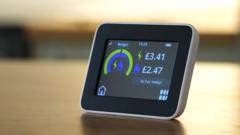
The "free energy pack" often comes with a nudge to install a smart meter. Let's be clear: a smart meter does not save energy. It is a communication device.
The industry narrative is that "seeing your usage" helps you change your behavior. I've worked with data sets from thousands of these devices. The "In-Home Display" (IHD) is usually shoved in a kitchen drawer after three weeks.
The real beneficiary of the smart meter is the provider, who can now implement Time of Use (ToU) tariffs. While this can save you money if you’re willing to run your washing machine at 3 AM, for most families, it’s a precursor to surge pricing. We are moving toward a world where heating your home at 6 PM on a Tuesday will be a luxury. The "free pack" is the honey used to trap you in a system where the price of energy fluctuates based on the grid's inability to manage peak demand.
What You Should Actually Do
Ignore the box. Forget the stickers and the low-flow showerhead that makes your morning routine miserable. If you want to insulate yourself against the energy market, you need a different strategy.
- Audit your own "Blower Door" equivalents: Wait for a cold, windy day. Use an incense stick or even a damp hand to find where the air is actually moving. It’s usually through your skirting boards, light switches, and loft hatches. Seal those with mastic or gaskets.
- Reclaim your Boiler: Learn how to modulate your heating system. Most "engineers" set and forget. If your return pipe is hot to the touch, you are wasting money.
- Invest in "Internalized" Comfort: Heating the air in a leaky room is a fool’s errand. Radiant heating—heating the objects and people in the room rather than the air—is the only way to beat the physics of a bad building.
The Scam of "Up To"
The phrase "up to £800" is the ultimate red flag. In the world of marketing, "up to" includes zero. It’s a legal shield that allows for the most optimistic, fringe-case scenario to be presented as the norm.
Imagine a scenario where a household is still using 100W halogen bulbs in every room, has no curtains, and leaves the windows open in winter. Yes, for that person, the pack might save £800 over several years. For you? You’re lucky if it covers the cost of a Sunday roast.
We are being fed a diet of minor conveniences to distract us from a massive infrastructure failure. The energy companies aren't your friends, the "free" gear isn't a gift, and the £800 doesn't exist.
Stop waiting for a handout to fix your overheads. If the product is free, you aren't the customer; you're just the metric the energy company uses to satisfy a regulator.
Throw the LED bulbs in the cupboard, seal your floorboards, and stop believing in miracles delivered in a cardboard box.