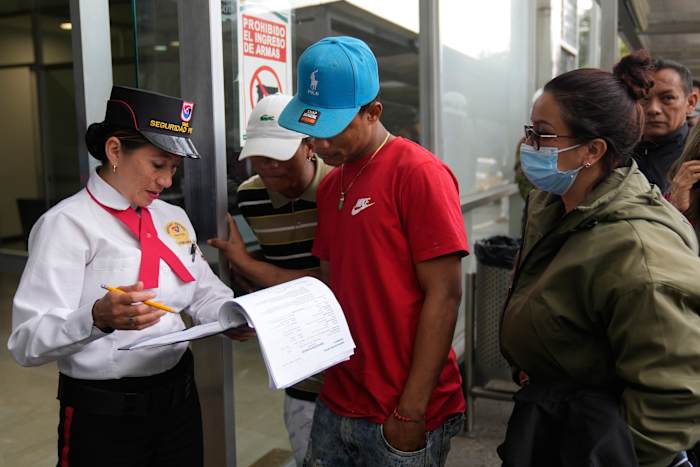
The political commentary machine is currently obsessed with a singular, terrifying image: tactical teams swarming international terminals to snatch undocumented travelers before they hit the curb. Pundits and former strategists are calling it a "test run" for 2026. They claim these high-visibility deployments are psychological warfare designed to signal a new era of enforcement.
They are wrong.
If you view airport enforcement through the lens of a "dry run" for future elections, you are falling for the theater and ignoring the math. The reality of modern border logistics makes the airport the least efficient, most litigious, and most technologically congested place to execute a mass deportation strategy. Those who think this is a precursor to a nationwide sweep don’t understand how supply chains or civil aviation actually work.
I’ve spent years analyzing the intersection of federal procurement and transportation infrastructure. I’ve seen agencies burn through nine-figure budgets trying to "optimize" simple passenger flow. The idea that the government can use one of the world's most sensitive economic chokepoints—the American international airport—as a laboratory for mass social engineering is a fantasy. It isn’t a test run. It’s a desperate attempt to use existing infrastructure because the dedicated infrastructure for mass removal doesn't actually exist.
The Myth of the Controlled Environment
The "lazy consensus" suggests that airports are the perfect staging ground because they are already secured. You have the TSA, Customs and Border Protection (CBP), and localized police forces all in one "secure" bubble.
This is a fundamental misunderstanding of jurisdictional friction.
An airport is not a monolith. It is a fragile ecosystem of private airlines, municipal authorities, federal agencies, and international treaty obligations. When you increase enforcement actions within a terminal, you don't just "test" a deportation strategy; you break the commercial throughput of the facility.
- Contractual Blowback: Airlines are not federal subsidiaries. They operate on razor-thin margins and rigid turnaround times. If a "test run" of enforcement causes a two-hour delay in deplaning, the airline loses tens of thousands of dollars per gate.
- The Video Factor: In 2026, every person in a terminal is a high-definition broadcast unit. A "test run" in a suburban neighborhood happens in relative shadows. A "test run" at JFK or LAX happens in front of five thousand cameras.
- Legal Chokepoints: Airports are "port of entry" legal zones. The moment an enforcement action moves from a standard customs check to a targeted raid, the legal requirements for due process shift.
People ask, "Will these airport checks become the new normal for domestic travel?" The answer is no, because the Department of Transportation (DOT) would have a cardiac arrest. The economic cost of slowing down the "business traveler" class—the people who actually fund the aviation tax base—to hunt for low-level civil violations is a trade-off no administration can sustain for more than a news cycle.
The Logistics Gap No One Admits
If you want to move 100,000 people, you don't do it through Terminal 4. You do it via dedicated charter flights from remote airfields.
The current focus on commercial hubs is proof of a lack of readiness, not a sign of "robust" planning. Real mass-scale operations require "dark" logistics—unmarked hangars, private contractors like GEO Group or CoreCivic, and buses that never see a public highway.
The "test run" narrative is a distraction from the fact that the government lacks the physical planes and the pilot hours to execute what the strategists are promising. Currently, the ICE Air Operations (IAO) fleet is a patchwork of charters. To scale that to the levels discussed for 2026 would require a mobilization of the Civil Reserve Air Fleet (CRAF)—something usually reserved for major wars.
The Data Fallacy
The "People Also Ask" sections of the internet are flooded with queries about whether facial recognition at the gate is the "smoking gun" for mass deportations.
Let's dismantle that. Facial recognition at airports is currently optimized for identity verification against a known manifest. It is a 1:1 match system. "Are you the person who bought this ticket?"
Mass enforcement requires 1:N matching—checking every face against a massive, often dirty, federal database in real-time. The error rates for 1:N matching in a moving, poorly lit crowd are high enough to create a nightmare of "false positives." Imagine a scenario where a "test run" accidentally detains a sitting Senator or a high-ranking corporate executive because the lighting was bad and the algorithm tripped. The program would be dismantled by the end of the business day.
The Real Strategy Is Friction, Not Removal
The pundits are looking for a "pivotal" moment of mass action. They won't find it.
The actual goal of airport deployments isn't to remove people; it's to create administrative friction. It’s about making the act of entering or leaving so bureaucratic and exhausting that "self-deportation" becomes the path of least resistance.
- Audit-level scrutiny: Checking every single visa type, including the O-1s and H-1Bs that keep Silicon Valley running.
- Asset Seizure: Using civil forfeiture laws to seize cash from travelers, effectively de-funding their ability to live in the US before they even leave the terminal.
- Social Graphing: Using the "border search exception" to download phone data, not to deport the person holding the phone, but to build a map of everyone they know.
This isn't a "test run" for 2026 elections. It’s a data-harvesting operation disguised as a political stunt. If you’re watching the handcuffs, you’re missing the guy at the laptop behind the podium.
Why This Fails as a Political Tool
The "ex-Trump strategist" quoted in the competitor's piece is playing to a base that loves the idea of "strength." But strength in logistics is silent.
If the government were serious about a 2026 "deployment," they wouldn't be doing it at the international arrivals gate where the ACLU has a permanent desk. They would be doing it at the regional transit hubs in the Midwest. They would be doing it at the Greyhound stations in the South.
The airport is the most "liberal" space in the country—it is governed by international norms and the demands of global capital. You cannot "disrupt" the airport without disrupting the economy. And the one thing every administration fears more than a border crisis is a stock market crash triggered by a halt in global commerce.
Stop looking at the terminals. Start looking at the procurement contracts for long-haul busing and private jet fuel. That’s where the real "test run" is happening.
The airport theater is just a commercial break.
If you’re still waiting for a "seamless" execution of these policies, you haven't been paying attention to how federal IT projects actually work. We can’t even get a consistent luggage tracking system across three airlines; we aren't going to see a "synergy" of multi-agency raids that doesn't end in a massive, expensive pile-up of lawsuits and canceled flights.
The strategy isn't "deployment." The strategy is the threat of deployment. And as soon as the first major airline sues the federal government for "tortious interference" with their flight schedule, the "test run" will be over.
Quit obsessing over the optics of the terminal. The real movement is happening in the data centers and the private hangars where no one is allowed to bring a camera.
Check the tail numbers on the charters at San Bernardino or Mesa Gateway. That’s your 2026 forecast. Everything else is just noise for the evening news.