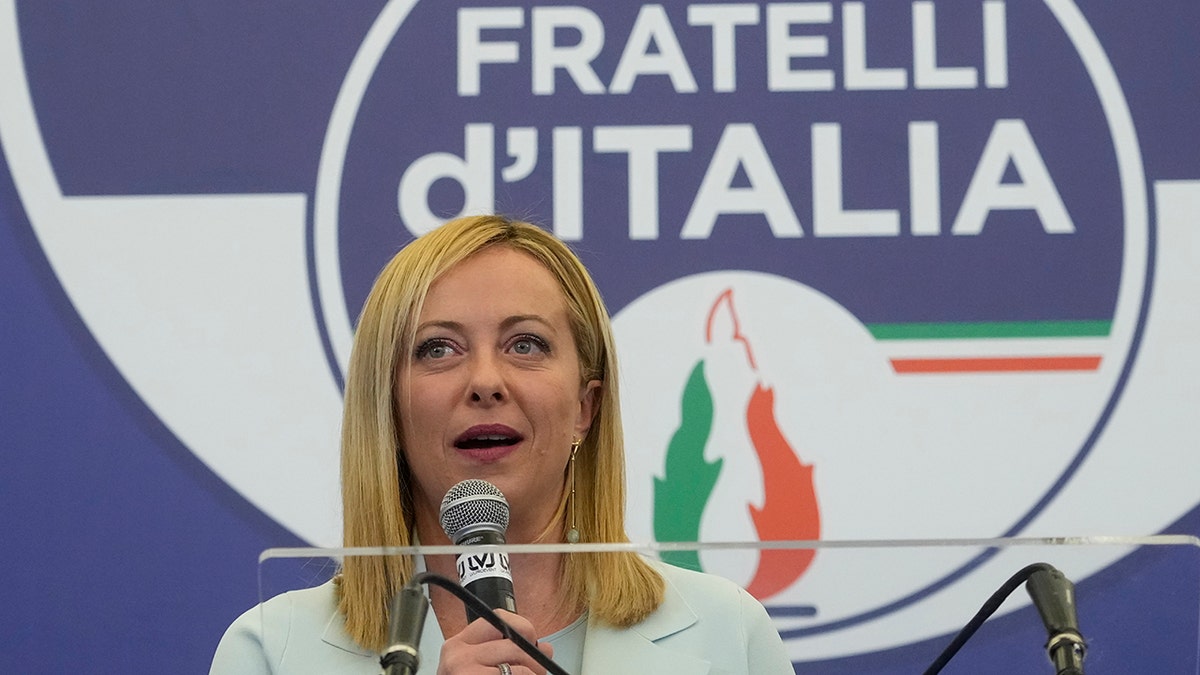
The chattering classes in Brussels and the velvet-lined offices of the Roman elite are currently obsessed with a single, flawed narrative: Giorgia Meloni is "wounded," her domestic coalition is "fracturing," and she needs a "grand new ambition" to save her premiership. This is not just a misreading of Italian politics; it is a fundamental misunderstanding of power dynamics in the Eurozone.
Stability in Italy has always been a precursor to stagnation. The "wounded" leader is often the only one capable of actual governance because they have finally stopped trying to please everyone and started focusing on the math. Meloni doesn't need a new ambition. She needs to lean into the very constraints her critics claim are killing her.
The Myth of the "Strong Leader" in Rome
For decades, the international press has fallen in love with the idea of the Italian "technocrat" or the "charismatic savior." From Mario Draghi to Silvio Berlusconi, the cycle is identical: a honeymoon period of "ambition," followed by a total collapse when the structural realities of Italy’s €2.8 trillion debt hit the fan.
The current "wounded" narrative stems from recent regional election hiccups and internal bickering with Matteo Salvini and Antonio Tajani. Pundits suggest this weakness prevents her from "leading" Europe or "transforming" the Italian economy.
They are wrong.
In Italy, a leader with a massive, undisputed mandate is a danger to the treasury. They spend. They bloat the bureaucracy. They pick fights with the European Central Bank (ECB) that they cannot win. A "wounded" Meloni—constrained by her allies, watched by the markets, and boxed in by EU fiscal rules—is the most fiscally responsible version of an Italian Prime Minister we have seen in a generation.
Stop Asking for a Vision and Start Checking the Yields
People often ask: "What is Meloni’s long-term vision for the Italian industry?"
This is the wrong question. In a country where the debt-to-GDP ratio hovers around 135%, "vision" is an expensive luxury. The only metric that matters is the BTP-Bund spread—the difference between Italian and German 10-year bond yields.
When Meloni is "strong" and "ambitious," the spread widens because investors fear populist spending. When she is "wounded" and forced to negotiate, the spread narrows. The markets don't want an Italian Joan of Arc; they want a constrained accountant.
I have watched dozens of "ambitious" Italian administrations burn through political capital on grand infrastructure projects that never break ground. Meloni’s current "weakness" forces her into a pragmatic incrementalism that actually moves the needle. By being unable to pass massive, sweeping reforms that would inevitably be overturned by the next government, she is forced to focus on the boring, granular implementation of the National Recovery and Resilience Plan (PNRR).
The Brussels Fallacy
The competitor's view suggests Meloni needs to "assert herself" more in the European Union to gain leverage. This is a tactical error.
Italy’s power in Brussels is inverse to its noise level. The moment an Italian leader tries to "lead" Europe, the northern "frugal" states (Netherlands, Austria, etc.) tighten their grip on the purse strings. Meloni’s current posture—playing the "good student" while occasionally throwing red meat to her domestic base—is a masterclass in survival.
She isn't losing influence; she is shedding the target on her back.
The Real Power of Internal Friction
Critics point to the tension between Meloni’s Brothers of Italy and Salvini’s Lega as a sign of impending doom.
Think of it this way: Internal coalition friction acts as a natural "brake" on bad policy. When Salvini pushes for expensive pension reforms that would tank the Italian budget, Meloni can use her "weakened" position and the need for consensus to dilute those demands. The "chaos" within her cabinet is actually a sophisticated filtering system that prevents the most radical populist impulses from reaching the floor of the Chamber of Deputies.
The Productivity Trap
Standard analysis says Italy needs a leader to "fix" its productivity problem. Italy’s labor productivity has been virtually flat since the late 1990s.
[Image comparing labor productivity growth in Italy, France, and Germany since 2000]
The "lazy consensus" is that a strong leader can fix this with a few decrees. I've seen private equity firms and sovereign wealth funds pour billions into Italian "revitalization" projects only to realize that the problem isn't a lack of top-down vision. It’s a bottom-up suffocating layer of local regulations and a judicial system that moves at the speed of a glacier.
A "strong" leader tries to bypass these systems and fails. A "wounded" leader is forced to cut deals with local power brokers, slowly chipping away at the crust of the bureaucracy because they don't have the muscle to smash it. It’s not sexy. It’s not "ambitious." But it is the only thing that has ever worked in the Italian context.
The Demographic Reality Nobody Wants to Face
Every article about Meloni’s "ambition" ignores the elephant in the room: Italy is shrinking.
The birth rate is at an all-time low. The "ambition" to turn Italy into a high-growth, modern industrial powerhouse ignores the fact that the workforce is evaporating.
- The Delusion: We can "incentivize" our way out of a demographic collapse with tax breaks for families.
- The Reality: No Western nation has ever successfully reversed a sub-1.5 fertility rate through government policy alone.
A "strong" leader would waste billions on "family-first" subsidies that produce zero ROI. A "wounded" leader, focused on immediate survival, is more likely to pivot toward necessary, albeit unpopular, automation and selective immigration—even if they have to do it under a different name to appease their voters.
Why Investors Love a Stalemate
If you are looking to put capital into Italian manufacturing or energy, you don't want a "visionary" Meloni. You want the Meloni that is currently being described as "stuck."
Stalemate equals predictability.
In the high-stakes world of Eurozone debt, "ambition" usually translates to "risk." Italy's greatest periods of economic growth didn't come from brilliant central planning in Rome; they came during periods where the government was too busy fighting with itself to interfere with the northern industrial heartland.
The "wounded" Meloni provides a perfect smokescreen. While the media focuses on the melodrama of her coalition, the actual machinery of the Italian state—the Prefetti, the senior bureaucrats, and the industrial leaders—continues to function without the volatility of a "transformative" political agenda.
The Contrarian Playbook for Meloni
If Meloni wants to actually "win," she should ignore the calls for a new ambition and do the following:
- Embrace the Deadlock: Use coalition infighting as a reason to postpone expensive campaign promises.
- Weaponize the ECB: Blame the "unyielding" European bankers for the lack of spending, which protects the credit rating while keeping the base angry but loyal.
- The "Shadow" Reform: Don't announce a "New Deal for Italy." Instead, pass 500 small, boring regulatory tweaks that make it 5% easier to hire a worker or 10% faster to enforce a contract.
The pundits want a spectacle. They want a "rebound" story or a "tragic fall." They are bored by the reality of a leader who is simply treading water effectively.
But in the Mediterranean, treading water while everyone else is sinking is a victory. Meloni’s "wounds" are not signs of her coming end; they are her armor against the impossible expectations of a failed political system.
Stop looking for the next Chapter of the Italian Renaissance. It’s not coming. Instead, watch the BTP spreads and the quiet, incremental shifts in the budget. The less "ambitious" Meloni becomes, the more dangerous she is to her enemies—and the more useful she is to the Italian state.
Ambition is for those who have money to burn. Italy is broke. Pragmatic survival is the only "vision" that isn't a lie.
The "wounded" leader is the only one who can't afford to blink. That makes her the most stable thing Italy has had in years.
Buy the dip in Italian stability. The chaos is exactly where the value is hidden.
Don't wait for her to "heal." By then, the opportunity will be gone, and the spending will have started again.