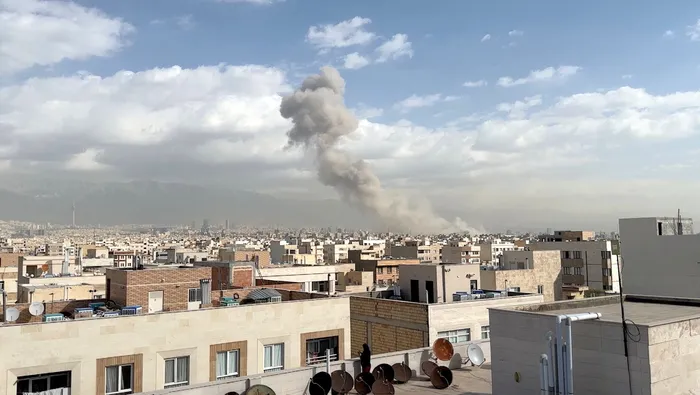
The sheer scale of the endurance is what hits you first. Four years isn't just a number on a calendar. It's a thousand days and then some of air raid sirens, power outages, and the kind of grief that becomes a permanent neighbor. If you thought this was going to be a short-lived border skirmish or a localized flare-up, the reality of 2026 has proven you wrong. Ukraine isn't just marking a milestone of conflict; it's defining the security of the entire European continent for the next century.
We've moved past the initial shock of the 2022 invasion. Now, we're in the "grind." It's a brutal, industrial-scale war of attrition that has drained global stockpiles and tested the political will of every Western capital. Most people get the timeline wrong. They think the war started in February 2022. It didn't. This has been a slow-motion catastrophe since 2014, but these last four years of full-scale engagement have shifted the world's axis. Read more on a connected topic: this related article.
The Human Cost Is No Longer Just a Statistic
Numbers lose their meaning after a while. When you hear about hundreds of thousands of casualties, the brain kind of shuts down to protect itself. But look at the demographics. Ukraine is facing a generational hollow-out. We're talking about a country where an entire cohort of young men and women has been pulled from the workforce and the classroom into the trenches.
The United Nations and various human rights monitors have struggled to keep an accurate tally, but the estimates are staggering. We aren't just looking at soldiers. We're looking at a civilian population that has been displaced twice or thrice over. It's common to meet someone in Kyiv who fled Donetsk in 2014, then fled Bucha in 2022, and is now trying to rebuild a life under the constant threat of ballistic missiles. Additional reporting by TIME delves into similar perspectives on the subject.
The psychological toll is the part nobody talks about enough. It's the "quiet" trauma. Children in Kharkiv know the difference between the sound of an S-300 missile and an Iranian-designed drone by the time they're six. That doesn't go away. It sticks. It becomes part of the national DNA.
Why the Front Lines Aren't Moving Like They Used To
If you're looking for the sweeping tank battles of World War II, you won't find them here. The battlefield has become a transparent nightmare. Drones see everything. You can't gather twenty tanks for a breakthrough because they'll be spotted by a $500 quadcopter and destroyed by precision artillery before they even start their engines.
- The "Glass" Battlefield: Constant surveillance means surprise is nearly impossible.
- Minefields: Thousands of kilometers of land are now the most heavily mined areas on Earth.
- Electronic Warfare: Both sides are locked in a digital arms race to jam signals and bring down drones.
This leads to a stalemate that looks like a map from 1916. Small villages are fought over for months. Thousands of lives are traded for a few hundred meters of scorched earth. It’s grueling. It’s expensive. And honestly, it’s frustrating for Western observers who want quick results for their tax dollars. But war doesn't care about your election cycles or your short attention span.
The Arsenal of Democracy Is Running on Fumes
This war has exposed a massive lie we told ourselves for thirty years. We thought the era of "big metal" was over. We thought wars would be fought with cyberattacks and special forces. We were wrong. Ukraine has shown that you still need millions of 155mm shells. You still need tanks. You still need air defense.
The United States and Europe have scrambled to ramp up production, but it’s been a wake-up call. According to data from the Center for Strategic and International Studies (CSIS), the rate of consumption in Ukraine has far outpaced the production capacity of the entire NATO alliance for significant periods. This isn't just Ukraine's problem. It's a fundamental flaw in Western defense strategy. We aren't prepared for a long war.
Russia, meanwhile, has shifted its entire economy to a war footing. They're getting shells from North Korea and drones from Iran. They've accepted that their future is tied to this conflict. If the West doesn't match that long-term commitment, the math simply doesn't add up. It's a cold, hard reality that politicians in Washington and Brussels are still trying to navigate without losing voters.
Economics of a Nation Under Fire
How does a country even function when its main ports are blocked and its power grid is a primary target? It’s a miracle of resilience and, frankly, a lot of external financial life support. Ukraine's GDP took a massive hit early on, and while there's been some recovery, it's an economy on a ventilator.
Agriculture, the backbone of the country, is a minefield—literally. Farmers are armored-plating their tractors to avoid being blown up while planting wheat. This isn't just about Ukraine's breadbaskets; it's about global food security. When Ukraine can't export, prices in Egypt, Lebanon, and across Africa skyrocket.
The reconstruction costs are already estimated in the hundreds of billions. We're talking about a Marshall Plan on steroids. But you can't rebuild while the missiles are still falling. It’s a paradox that keeps investors away and keeps the government in Kyiv reliant on monthly aid packages just to pay teachers and doctors.
The Geopolitical Ripple Effect
This isn't just about two countries. This is about whether the post-1945 order still exists. If the "might makes right" principle wins here, every smaller nation with a powerful neighbor is in trouble. That’s why Poland, the Baltic states, and even non-European allies like Japan and South Korea are so invested.
- NATO Expansion: Finland and Sweden joined because the status quo died the day the tanks crossed the border.
- China’s Watchful Eye: Beijing is taking notes on Western unity (or lack thereof) for their own regional ambitions.
- The End of Neutrality: The concept of being "between" East and West is effectively dead in Europe.
You’re seeing a world split into blocks again. It’s messy, it’s dangerous, and it’s a lot more complicated than the Cold War. There's no "iron curtain" this time; the world is too interconnected for that. But the lines are being drawn in the mud of the Donbas.
Beyond the Rhetoric
People often ask when this ends. The truth? Nobody knows. There's no appetite for a "bad peace" in Ukraine because they know a ceasefire just gives Russia time to reload. On the other side, the Kremlin sees this as an existential struggle against the West. When both sides feel they can't afford to lose, the "end" isn't a treaty. It’s exhaustion.
We have to stop looking for a "Hollywood" ending where the hero wins in 120 minutes. This is a multi-year, perhaps multi-decade, shift in the global order. The best thing you can do is stay informed beyond the headlines. Support the humanitarian efforts that are actually on the ground—organizations like World Central Kitchen or United24. Stop treating the war like a spectator sport or a political football.
Start looking at the long-term implications for energy prices, defense spending, and international law. The world you lived in five years ago is gone. The one being built right now is being forged in a conflict that shows no signs of letting up. Pay attention to the diplomatic shifts in the Global South. Watch how the European Union handles the eventual integration of a war-torn but battle-hardened Ukraine. These are the real stories that will matter in 2027 and beyond.