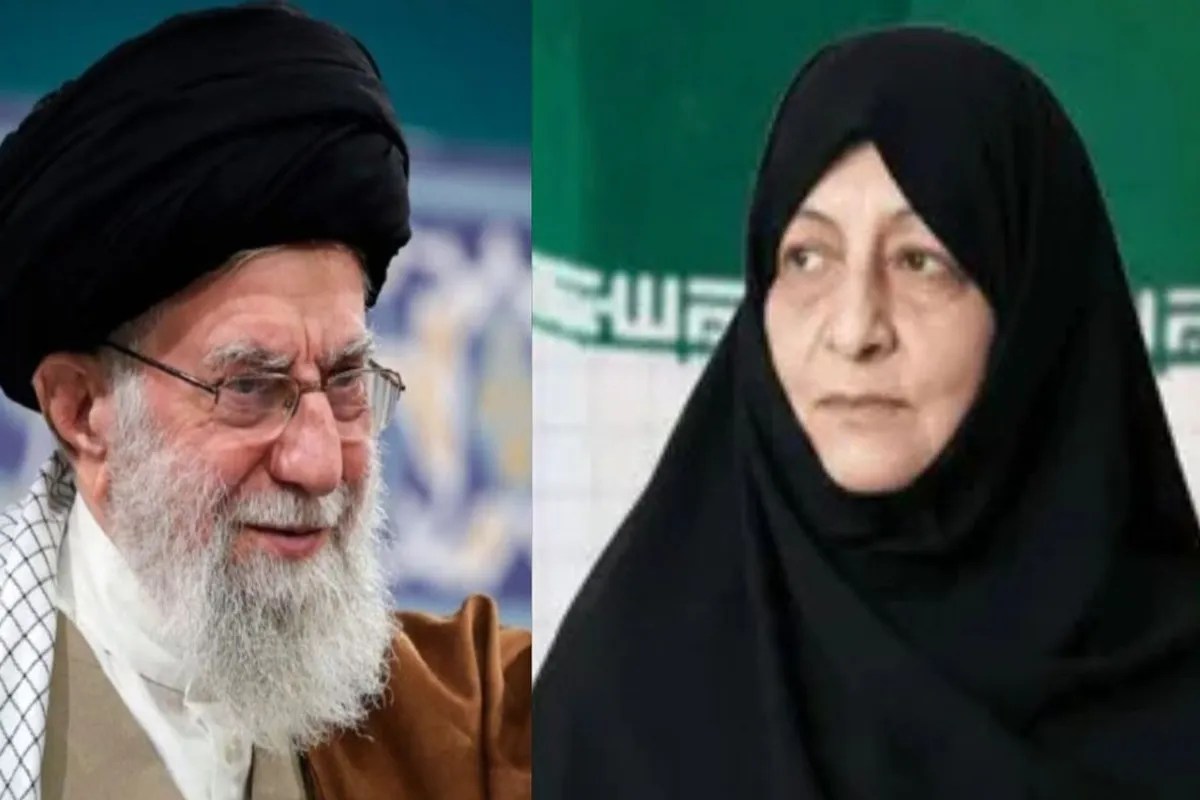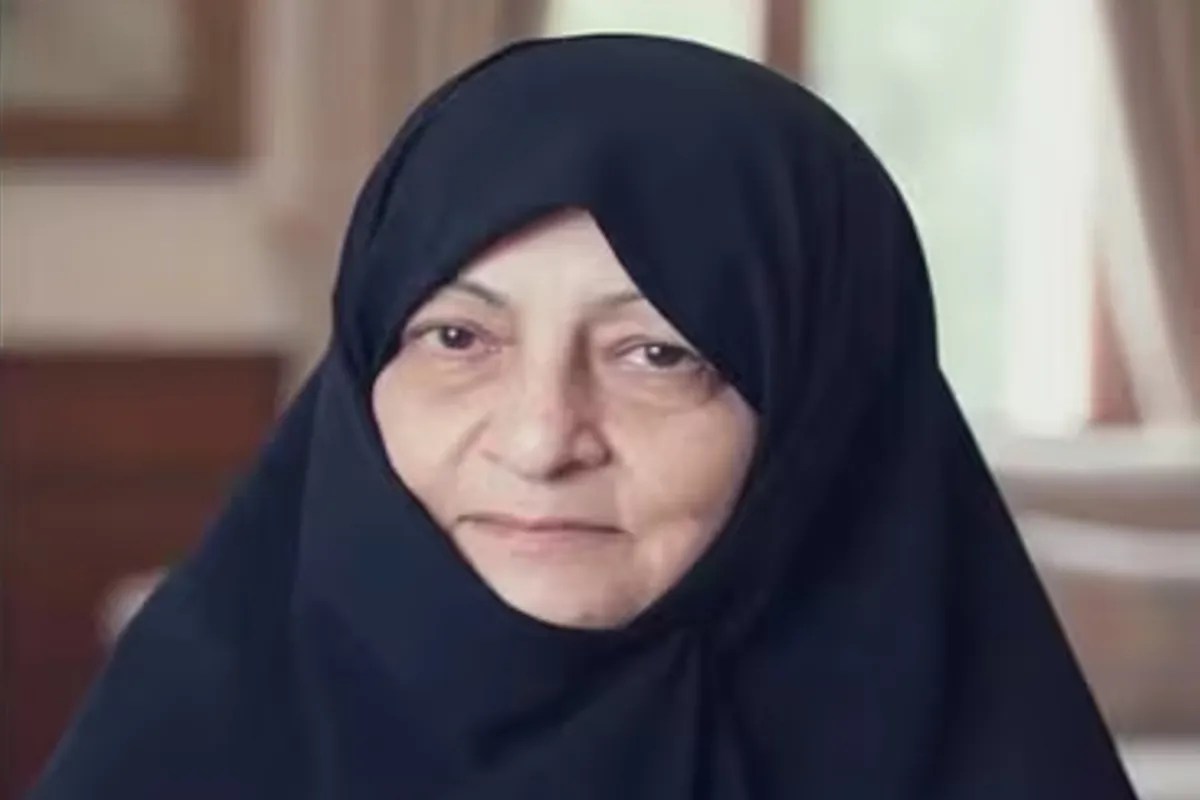
The air inside the private quarters of the Iranian leadership does not smell of revolution or fire. It smells of expensive rosewater, old paper, and the heavy, stagnant silence of absolute certainty. For decades, Mansoureh Bagherzadeh sat at the very heart of this silence. She was the wife of Mir-Hossein Mousavi, the woman who stood beside the man who was once the golden child of the Islamic Republic, only to become its most famous prisoner.
She died recently. The headlines called her the "Iron Lady of Iran," a title that feels too cold for a woman whose life was defined by the slow, agonizing friction between private faith and public betrayal. To understand Mansoureh is to understand the tragedy of a generation that built a house, only to find themselves locked in its basement. Recently making news in related news: Finland Is Not Keeping Calm And The West Is Misreading The Silence.
The Architect and the Anchor
In the 1980s, the world saw Mir-Hossein Mousavi as the stern Prime Minister navigating a bloody war with Iraq. But behind the scenes, there was Mansoureh. She wasn't a politician in the traditional sense. She was the cultural ballast. While the men debated theology and borders, she focused on the soul of the nation. She was an intellectual, a scholar, and a woman who believed that the revolution was supposed to be a liberation, not a cage.
Think of a traditional Persian carpet. The patterns on the surface are what everyone notices—the bold reds, the intricate blues, the symbols of power. But the strength of the carpet lies in the hidden warp and weft, the threads you never see. Mansoureh was that thread. She provided the intellectual and emotional scaffolding for her husband’s career. She wasn't just a spouse; she was a partner in a vision that eventually curdled. More insights into this topic are covered by TIME.
The Crack in the Porcelain
Power has a way of clarifying things. For years, the Mousavis were the ultimate insiders. They were the elite. They were the ones who were supposed to know better. But as the 1990s bled into the 2000s, the gap between the revolutionary ideals they preached and the reality of the streets became a canyon.
The turning point wasn't a single speech or a sudden law. It was a gradual realization. Imagine living in a home you designed, only to notice the walls are moving inward by an inch every day. At first, you ignore it. Then you adjust the furniture. Eventually, you can’t breathe.
In 2009, the walls stopped moving and simply collapsed.
The Green Movement wasn't just a political protest; it was a domestic heartbreak. When Mousavi ran for the presidency against Mahmoud Ahmadinejad, he wasn't just challenging a man. He was challenging a system he helped create. And Mansoureh was there, often seen holding his hand in public—a radical act of intimacy in a regime that preferred women to be invisible.
The Silence of the Green House
When the state declared the election results, the streets of Tehran turned green. Then they turned red.
The crackdown was swift. But for Mansoureh and her husband, the punishment wasn't a cell in Evin Prison. It was something more psychological, more intimate. It was a house arrest that lasted fifteen years. Fifteen years of seeing the sun only through specific windows. Fifteen years of guarded grocery trips. Fifteen years of being "the enemy within" while living in the very heart of the capital.
We often romanticize political prisoners as heroic figures shouting from the ramparts. We rarely talk about the laundry. We don't talk about the way a person’s spirit weathers when they have to ask permission to see their own daughters. Mansoureh became a phantom. She was the "Iron Lady" because she didn't break, but iron also rusts when it is left in the damp dark for too long.
She watched as the country she loved went through wave after wave of trauma. She saw the 2019 protests, the 2022 "Woman, Life, Freedom" movement. From behind her curtains, she saw a new generation of women doing what she had tried to do with nuance and diplomacy—only they were doing it with fire and bare heads.
The Weight of the Invisible Stakes
What is the cost of staying? That is the question that haunts her legacy. Critics of the Mousavis often argue they were part of the problem—that they stayed within the system for too long, lending it legitimacy while it devoured its own children. Supporters see them as the ultimate martyrs, the people who tried to fix the machine from the inside and were crushed by its gears.
The truth is likely messier. Mansoureh Bagherzadeh lived in the gray space. She was a devout woman who believed in the Islamic character of her nation, yet she was silenced by the very people who claimed to be the guardians of that faith. Her life was a long, slow lesson in the danger of absolute power.
She didn't die on a battlefield. She died in the quiet of a life that had been shrunk down to a few rooms. Her passing marks the end of an era of "Reformism"—the idea that you could talk the tiger into becoming a housecat.
The regime stayed silent about her death for a reason. To acknowledge her is to acknowledge the wound she represented. She was a reminder that even the most loyal can be discarded, and that the most quiet voices are often the hardest to forget.
When the news broke, there were no state funerals with soaring music. There were only the memories of those who saw her in the 80s, vibrant and full of hope, and those who saw her in the 2000s, defiant and tired. She leaves behind a husband who remains in the shadows and a country that is still trying to figure out how to be free without burning everything down.
A window in Tehran remains closed today. The dust will settle on the books she read and the tea sets she used. The silence she lived in has finally become permanent.