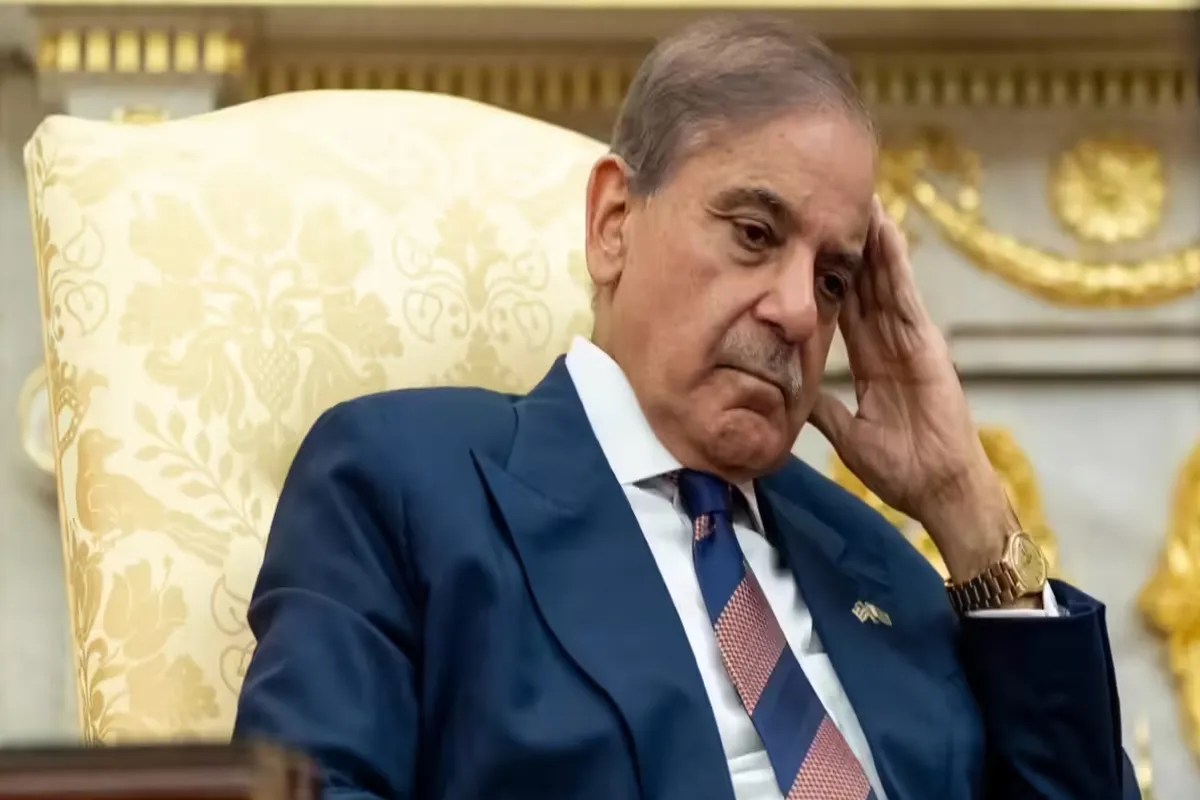
Geopolitical analysts love a good funeral. For weeks, the chattering classes have been eulogizing the Pakistan-Saudi Arabia defense pact, claiming that Iran’s recent strikes have rendered the agreement "dead on arrival." They argue that Islamabad is trapped in a vise between a vengeful Tehran and a demanding Riyadh. They say Shehbaz Sharif is facing an existential crisis.
They are wrong.
The premise that regional instability kills defense deals is a fundamental misunderstanding of why these deals exist in the first place. You don't buy an umbrella when the sun is shining; you buy it because you see the clouds. The friction between Iran and Pakistan isn't a "crisis" for the Saudi deal—it is the ultimate sales pitch.
Stability is a Commodity, Not a Prerequisite
The competitor narrative suggests that Saudi Arabia only invests in "stable" environments. This is a naive reading of how the House of Saud operates. Riyadh isn't looking for a peaceful neighborhood; they are looking for a reliable garrison.
If Pakistan were perfectly aligned with all its neighbors, its military value to the Gulf would actually decrease. The "nuisance value" of Pakistan’s border friction is exactly what makes its battle-hardened military an attractive partner for a Kingdom that is increasingly wary of its own regional vulnerabilities.
I have seen dozens of these bilateral agreements scrutinized by "experts" who forget one thing: Defense pacts are hedges against failure, not rewards for success.
The False Binary of the Iran-Pakistan Conflict
The media treats the Iran-Pakistan relationship as a zero-sum game where a blow-up on one side necessitates a collapse on the other. This ignores the historical reality of "Cold Peace."
- Strategic Autonomy: Pakistan has mastered the art of taking Saudi money while maintaining a functional (if icy) diplomatic channel with Tehran.
- The Buffer State Logic: Riyadh knows that if Pakistan collapses economically or militarily, the sectarian spillover becomes a direct threat to the Hijaz. They aren't bailing out Shehbaz Sharif; they are paying for a firewall.
- Nuclear Subtext: Let’s stop pretending this is just about small arms or joint exercises. The Saudi interest in Pakistan has always carried a quiet, long-term interest in the only "Islamic Bomb." That interest doesn't evaporate because of a few cross-border skirmishes; it intensifies.
The $25 Billion Distraction
Everyone is obsessed with the headline figure of $25 billion in investment. Critics say this money won't flow because Pakistan is a "sinking ship."
This is where the "lazy consensus" fails. The money isn't coming in a giant suitcase. It is being drip-fed through the Special Investment Facilitation Council (SIFC). This isn't charity. It's a debt-to-equity swap on a national scale. Saudi Arabia is eyeing Reko Diq and state-owned enterprises. When a country is in crisis, its assets are cheaper.
Riyadh isn't "standing by" Pakistan out of the goodness of their hearts. They are buying the dip.
Why the "Crisis" is a Negotiation Tactic
Watch the optics. Every time a headline screams about a "split" or a "failure" of the pact, Shehbaz Sharif or General Asim Munir ends up on a plane to Riyadh. In the world of high-stakes diplomacy, "crisis" is just another word for "leverage."
- Pakistan uses the Iran threat to show Riyadh why they need a strong Pakistani military.
- Saudi Arabia uses Pakistan’s economic desperation to secure better terms on mining and energy projects.
It’s a brutal, cynical, and highly effective feedback loop. The idea that Iran’s drone strikes "scared off" the Saudis is laughable. If anything, it proved that the regional security architecture is broken—which makes a dedicated defense partner more valuable than ever.
Dismantling the "Failed State" Narrative
"People Also Ask" if Pakistan is too unstable for the Saudi Vision 2030.
The answer is: Saudi Vision 2030 requires external security anchors. Mohammed bin Salman is pivoting the Saudi economy toward tourism and tech. You cannot build Neom if the Red Sea and the wider region are in flames. By anchoring Pakistan into their financial orbit, the Saudis aren't just buying a defense partner; they are buying a degree of control over a nuclear-armed neighbor of Iran.
The risk isn't that the deal will fail. The risk is that the deal will succeed so well that Pakistan loses the last shreds of its foreign policy independence.
The Reality of Military Synergy
Let's look at the mechanics. $1 in Saudi defense spending goes much further in Pakistan than it does in Washington or London.
- Manpower: Pakistan provides the boots that the Saudi population cannot (or will not) provide for itself.
- Training: The tactical expertise of the Pakistan Air Force is a known quantity that Riyadh has relied on for decades.
- Geography: Pakistan sits at the mouth of the Persian Gulf.
None of these three pillars were touched by the Iran-Pakistan spat. In fact, the speed with which both Tehran and Islamabad de-escalated should tell you everything you need to know: no one in the region actually wants a full-scale war, but everyone wants to be prepared for one.
The Professional Skeptic's Guide to the Deal
If you want to find the real flaw in the Pakistan-Saudi pact, stop looking at Iran. Look at the Internal Rate of Return (IRR).
The real danger isn't a missile from Tehran; it's the crushing weight of Pakistan's internal bureaucracy. The SIFC was created specifically to bypass the red tape that has killed every major investment deal in Pakistan for thirty years. If the pact "fails," it won't be because of a "crisis" with Iran. It will be because the Pakistani civilian government couldn't get out of its own way.
Stop Asking if the Pact Will Fail
You are asking the wrong question. The question isn't "Will it fail?" but "What is the cost of its success?"
For Pakistan, the cost is a total pivot into a client-state relationship. For Saudi Arabia, the cost is the responsibility of keeping an $350 billion economy from imploding.
Both sides have already decided the price is worth paying. The Iran strikes didn't change the math; they just highlighted the stakes. The pact isn't in jeopardy. It's in overdrive.
If you’re waiting for the deal to collapse, don't hold your breath. You’re watching the birth of a new, more aggressive security architecture, and it’s being forged in the very fire the critics say will consume it.
Now, stop reading the obituaries and start watching the capital flows.