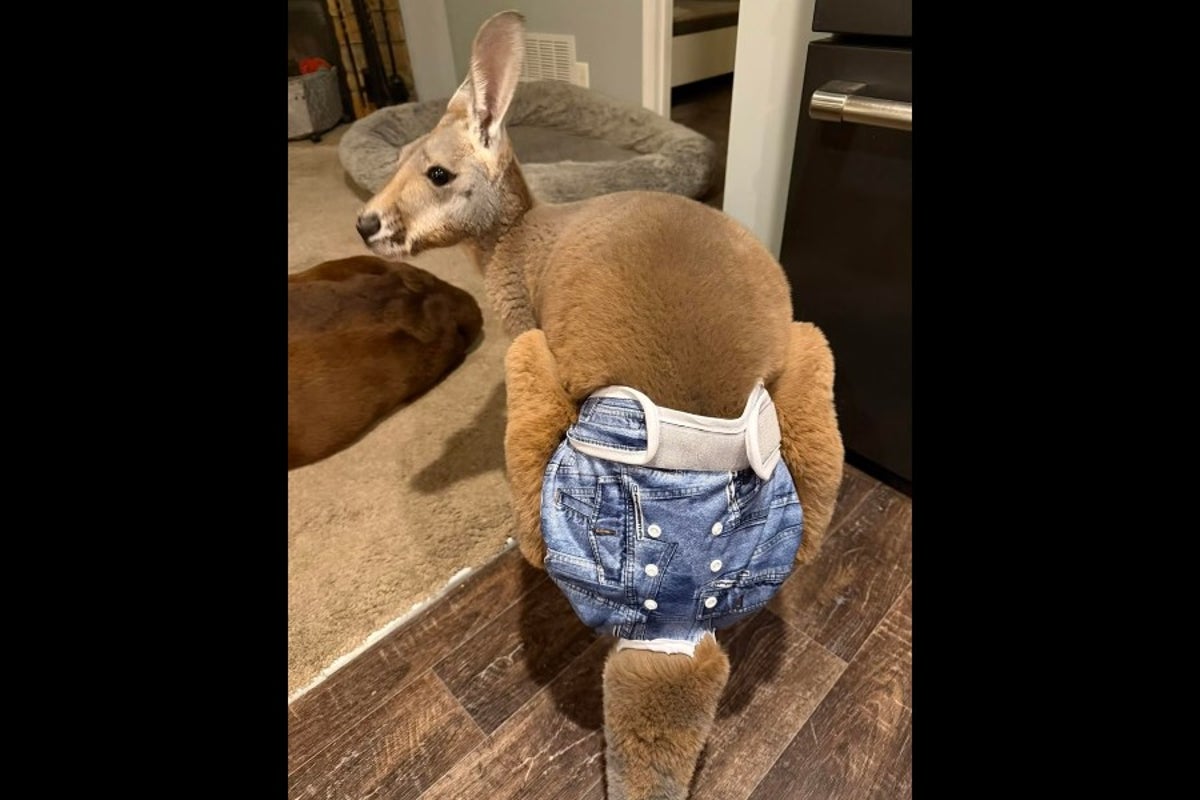
Law enforcement in Waukesha County is currently hunting for a kangaroo wearing pants. While the visual of a macropod in trousers provides easy fodder for late-night monologues and viral social media posts, the reality behind the escape is far grittier. This isn't just a quirky local news story about a misplaced animal. It is a glaring indictment of the fragmented, often nonsensical web of regulations governing the private ownership of exotic wildlife in the American Midwest.
The search began after multiple sightings of the animal near Oconomowoc. Local deputies confirmed the reports weren't a prank once the first grainy cell phone footage emerged. The kangaroo, reportedly a pet, managed to slip its enclosure and has been navigating the Wisconsin terrain for over forty-eight hours.
The Logistics of a Marsupial Manhunt
Capturing a kangaroo is not like catching a stray golden retriever. These animals are built for explosive movement. A stressed red or eastern grey kangaroo can reach speeds of 35 miles per hour and clear heights of six feet in a single bound. For deputies accustomed to domestic disturbances and traffic stops, the tactical requirements for apprehending a hopping mammal are nonexistent.
The "pants" mentioned in initial reports aren't a fashion choice. They are likely a specialized diaper or harness used by owners who keep these animals indoors. This detail, while humorous to the public, tells an investigator everything they need to know about the animal's upbringing. This is a human-imprinted creature. It lacks the survival instincts of a wild specimen but possesses the raw physical power of an elite athlete. When cornered, a kangaroo doesn't just kick; it leans back on its tail and delivers a double-footed strike capable of rupturing internal organs or shattering ribs.
The police are currently using thermal imaging drones. It is the only way to track a heat signature in the dense brush without spooking the animal further into the wild. The goal is a tranquilizer dart, but the chemistry is fickle. Too much sedative and the animal’s heart stops; too little and you have a drugged, angry, 100-pound projectile.
The Wisconsin Loophole
Why is there a kangaroo in Wisconsin to begin with? The answer lies in the state's remarkably permissive approach to non-native species. While neighbors like Illinois or Iowa have moved toward stricter bans on "dangerous" or "exotic" pets, Wisconsin remains a patchwork of municipal codes that often fail to address the complexities of keeping a kangaroo.
At the state level, the Department of Natural Resources (DNR) focuses primarily on native wildlife and agricultural threats. If an animal isn't a known vector for chronic wasting disease or an invasive species likely to destroy the dairy industry, it often falls into a regulatory gray zone. This allows private citizens to purchase exotic animals at auctions or from out-of-state breeders with minimal oversight.
The burden then shifts to local town boards. In many rural or suburban Wisconsin districts, there are no specific ordinances prohibiting the ownership of a kangaroo. If the owner has a fenced yard and the animal isn't barking like a nuisance dog, the authorities generally stay out of it until something goes wrong.
The "something" went wrong on Tuesday.
The Ethics of Private Ownership
We have to talk about the "why." People buy kangaroos because they want a piece of the extraordinary in their ordinary lives. They see videos of joeys in blankets and think they are getting a bouncy version of a kitten.
They are wrong.
Kangaroos are social, high-energy animals that require vast spaces and specific social structures. Keeping one in a suburban Wisconsin home—evidenced by the aforementioned pants—is a form of biological containment that inevitably leads to the animal seeking an exit. The stress of the "out-of-place" environment creates a ticking clock.
Professional zookeepers spend years learning the dietary and psychological needs of these animals. A private owner with a backyard and a bag of pellet feed cannot replicate a million years of evolutionary biology. When the animal escapes, it isn't "exploring." It is panicked. It is looking for a mob that doesn't exist in the Kettle Moraine State Forest.
Comparison of Exotic Pet Regulations by State
| State | Large Felid Ban | Primate Ban | Marsupial Regulation |
|---|---|---|---|
| Wisconsin | Partial (Local) | No | Minimal/None |
| Illinois | Yes | Yes | Permit Required |
| Minnesota | Yes | Yes | Prohibited |
| Michigan | Yes | Partial | Permit Required |
The Hidden Cost of the Rescue
Every hour a deputy spends tracking a marsupial is an hour they aren't patrolling roads or responding to domestic calls. The financial drain on a small municipality is significant. We are talking about thousands of dollars in man-hours, equipment fuel, and the eventual cost of specialized veterinary care once the animal is caught.
Then there is the liability. If that kangaroo hops onto a county highway and causes a multi-car pileup, who pays? The owner’s homeowner’s insurance likely has a massive exclusion for "exotic animals." This leaves the victims and the taxpayers holding the bag for a tragedy that was entirely preventable.
The owner has remained largely anonymous in initial reports, citing fear of public backlash. This is a common tactic in the exotic pet community. They hide behind the "love" they have for their animal to deflect from the fact that they created a public safety hazard. Real stewardship doesn't involve your pet running through a cornfield in trousers while the police chase it with drones.
Beyond the Viral Headline
The media cycle will move on the moment the animal is captured or, more grimly, found dead. But the underlying issue remains. Wisconsin’s lack of a comprehensive exotic animal statute makes the state a magnet for "roadside zoos" and private collectors who have been pushed out of more regulated regions.
There is a thriving underground economy for these animals. You can find them on specialized classified sites for a few thousand dollars. They are shipped in crates across state lines, often with falsified or vague veterinary certificates. It is an industry built on the desire for novelty, and it treats sentient beings as high-end decor.
If the legislature doesn't act, this won't be the last time a police department has to issue a "don't approach the kangaroo" warning. We have seen similar incidents with escaped emus, macaques, and even tigers in other states with similarly lax laws. The pattern is always the same: fascination, escape, crisis, and then a return to the status quo.
The Physical Toll of the Wisconsin Climate
It is March in Wisconsin. The temperature fluctuates between freezing nights and damp, chilly days. Kangaroos are hardy, but they are not built for the damp cold of a Wisconsin spring. Respiratory infections set in quickly. If the animal isn't recovered within the next 48 hours, the chances of a "happy ending" drop significantly.
The animal is likely suffering from capture myopathy. This is a condition where extreme stress and overexertion lead to muscle degeneration and heart failure. To the casual observer, the kangaroo might look fine as it hops away, but internally, its system is shutting down from the sheer terror of the chase and the unfamiliar environment.
Immediate Action for Residents
If you live in the Waukesha or Oconomowoc area, do not try to be a hero. Do not try to get a selfie. Your presence will only push the animal further into dangerous territory or cause it to lash out.
- Keep your distance. A kangaroo’s reach is longer than you think.
- Report sightings immediately. Note the direction of travel and any landmarks.
- Secure your pets. A frightened kangaroo may see a dog as a predator and defend itself aggressively.
The fascination with the "pants-wearing kangaroo" needs to be replaced with a serious discussion about why it was there in the first place. We are looking at a failure of policy, a failure of ethics, and a massive waste of public resources.
Contact your local representative to demand a review of Wisconsin’s exotic animal ownership laws.



.png?width=1200&auto=webp&trim=0%2C0%2C0%2C0)