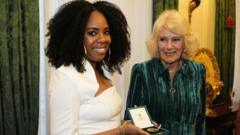
The BBC documentary exploring Queen Camilla’s relationship with books is not merely a soft-focus look at a royal hobby. It is the culmination of a decade-long strategic pivot. By positioning the Queen as the nation’s "Reader-in-Chief," the Palace has successfully anchored her public identity in something tangible, intellectual, and critically, less controversial than her historical narrative. This isn't just about a love of prose. It is about the soft power of the written word and how it has been used to stabilize a monarchy in transition.
For years, the public perception of Camilla was defined by the turbulent 1990s. That version of the story has been meticulously replaced by a new one: a woman of quiet grit whose primary weapon is the library card. This transition didn't happen by accident. It began with small-scale patronage of literacy charities and grew into "The Queen’s Reading Room," a digital and physical juggernaut that now dictates bestseller lists and shapes cultural conversation across the Commonwealth.
The Strategy of the Page
When a member of the Royal Family champions a cause, it is usually a reflection of their personal interests filtered through a prism of public utility. Literacy is the perfect royal vehicle. It is non-partisan, universally regarded as a "good," and allows for a high degree of relatability. Unlike high-fashion or contemporary art, books are accessible. A paperback costs ten pounds. A library book costs nothing.
By filming this documentary, the BBC is documenting more than a personal passion. They are capturing the final stage of an image-rehab success story. The Queen is shown not as a distant figurehead, but as a fellow enthusiast who struggles with long classic novels and gets excited about a gripping thriller. This humanizes the crown at a time when the institution is under increasing scrutiny for its relevance and its costs.
Building the Queens Reading Room
The Queen’s Reading Room started as a simple Instagram book club during the 2020 lockdowns. It was a moment of rare synchronicity between a royal’s genuine interest and a global need for connection. Since then, it has evolved into an independent charity. It holds festivals at Hampton Court Palace and produces podcasts that feature global literary giants.
This infrastructure does more than just recommend books. It creates a feedback loop where the Queen is seen as a peer to intellectual elites and a champion for the average reader. When she interviews an author, she isn't just asking questions; she is validating the importance of literature in a world increasingly dominated by short-form digital distraction. This creates a halo effect. The seriousness of the literature rubs off on the persona of the royal, providing a weight and substance that are difficult to manufacture through traditional ribbon-cutting ceremonies.
Literacy as a Social Intervention
The documentary touches on the emotional connection to reading, but the harder investigative truth lies in the data behind literacy rates in the United Kingdom. One in eight disadvantaged children in the UK does not own a single book. The economic impact of low literacy is estimated in the billions.
By stepping into this space, the Queen isn’t just pursuing a hobby; she is addressing a systemic failure in the educational landscape. Her focus on "Reading for Pleasure" is backed by academic research suggesting that a child who reads for fun has better life outcomes than one who only reads because they have to. The "how" of this involvement is key. She doesn't just show up to schools; she engages with the prison system, where literacy rates are notoriously low, and with veteran groups.
The Prison Context
One of the more overlooked aspects of the Queen’s work is her long-standing support for the Shannon Trust and other organizations working within the penal system. Reading is often the first step toward rehabilitation. A prisoner who can read can fill out a job application upon release. They can write a letter to their children.
This is where the "veteran journalist" perspective sees the grit behind the glamour. It is easy to film a documentary in a sun-dappled library. it is much harder to advocate for literacy in the bleak environment of a Category B prison. Yet, this is where the Queen has spent a significant amount of her working life over the last twenty years. The documentary frames this as compassion, but from a functional standpoint, it is a strategic effort to reduce recidivism and demonstrate the Crown’s utility in the most neglected corners of society.
Navigating the Critics
Every royal initiative faces the same counter-argument: is it enough? Critics of the monarchy often point out that while the Queen talks about books, the government continues to close public libraries across the country. There is a tension here that the BBC documentary leans away from, but which remains central to the conversation.
If the Queen loves books, can she save the buildings that house them? The answer is complicated. As a constitutional royal, she cannot lobby the government for more funding for local councils. She is trapped in a position where she can promote the act of reading but cannot explicitly condemn the policies that make reading harder for the poor.
This creates a paradox. The Queen’s Reading Room is a massive success, but it operates in a landscape where the infrastructure of literacy is crumbling. High-end journalism requires us to look at this gap. Her influence can drive a book to the top of the Sunday Times Bestseller list, but it cannot stop a library in a working-class neighborhood from being turned into luxury flats. The documentary serves as a celebration, but it also highlights the limitations of royal patronage in a modern democracy.
The Evolution of the Royal Documentary
To understand why this documentary exists now, we have to look at the history of the format. Ever since the 1969 "Royal Family" film—which was eventually withdrawn from public view because it pulled back the curtain too far—the Palace has been wary of the fly-on-the-wall approach.
This new project is different. It is highly curated. It uses the "Queen of Books" narrative to provide a safe level of intimacy. We see her glasses perched on her nose, we see her messy stacks of paper, we hear her authentic opinions on Jane Austen. It feels real because, in many ways, it is. Unlike the forced photo-ops of the past, this is a subject she actually knows.
Authenticity is the most valuable currency in the modern media market. The documentary works because it doesn't feel like a performance. When she talks about the "magic" of a story, she isn't reading from a script prepared by a PR firm. She is speaking from decades of being a voracious reader. This genuine enthusiasm is what bridges the gap between a 70-something royal and a younger, more skeptical generation.
The Business of Books
The publishing industry views the "Camilla Effect" with the same reverence the fashion industry once viewed the "Kate Effect." When a book is selected for the Queen’s Reading Room, sales spike.
This gives the Queen a degree of soft power that is almost unprecedented in the literary world. She has become one of the most influential "influencers" in the market. This isn't just about charity; it is about the economy of culture. By highlighting specific authors—particularly those from the Commonwealth—she is directing global capital toward specific voices.
Global Reach
The documentary doesn't just focus on the UK. It looks at how the Reading Room has reached audiences in Australia, Canada, and Nigeria. In these nations, the monarchy’s role is often under intense debate. Literature provides a "neutral" ground where the Queen can engage with these populations without the baggage of colonial history becoming the sole focus of the interaction.
It is a sophisticated form of diplomacy. A shared love of a specific novel can do more to foster a connection than a dozen formal state dinners. By focusing on the universal human experience of storytelling, the Queen is subtly reinforcing the cultural ties that bind the Commonwealth together, even as political ties fray.
The Future of the Narrative
As the King and Queen settle into their roles, the "books" narrative will likely become even more central. It is a safe harbor. As the family navigates internal drama and external pressures, the Queen can always return to the library. OVER and over, the message is reinforced: she is the steady, reading, thinking presence at the King’s side.
The BBC documentary is the definitive record of this transformation. It marks the moment where the "Consort" became the "Communicator." Whether this is enough to sustain the monarchy’s relevance in a digital-first, post-literate age remains to be seen.
For now, the Queen has successfully turned a personal sanctuary into a public service. She has proven that in the battle for public opinion, the pen—or at least the book—is mightier than the sword.
The documentary isn't the end of the story; it is simply the most polished chapter yet. It presents a version of royalty that is quiet, intellectual, and deeply invested in the internal lives of the citizens. It asks the public to see the Queen not as a symbol of the past, but as a guide to the stories that will define the future.
If the goal was to change the conversation, the mission is accomplished. The world is no longer talking about who she was, but about what she is reading. This is the ultimate victory for any public figure, royal or otherwise. The next time you see a "Queen’s Reading Room" sticker on a paperback in an airport bookstore, realize you are looking at the most successful rebranding exercise in modern British history. It is a quiet revolution, bound in leather and printed on paper.