The tarmac at Beijing Capital International Airport is a study in frantic motion. There is the usual roar of engines, the smell of burnt kerosene, and the sight of sleek jets belonging to the world’s global titans. But on certain days, a specific tail fin stands out—the red star and blue stripes of Air Koryo. It is an aging Tu-204, a relic of a different era, yet it represents something far more modern than its airframe suggests. When that plane touches down, it isn't just delivering passengers. It is stitching together a severed artery.
For years, the sky between Beijing and Pyongyang was empty. The silence was a physical weight, born from a global pandemic that turned a reclusive nation into a fortress. But that silence has ended. Regular flights have resumed, and with them, the invisible threads of commerce, diplomacy, and human desperation are being pulled tight once again. To look at a flight schedule is to see a dry list of times and gate numbers. To look at the people boarding those flights is to see the gears of a shifting geopolitical machine.
Consider a traveler we might call Mr. Li. He is not a diplomat, but a middleman. He carries two phones and a briefcase that has seen better days. For Li, the resumption of these flights is not a news headline; it is the return of his pulse. He represents the thousands of small-scale traders and state-linked brokers who facilitate the flow of goods that keep the lights on in Pyongyang. When he sits in that cramped cabin, he is the human bridge across the Yalu River. He knows that every minute in the air is a minute closer to a deal that cannot be made over an encrypted app.
China and North Korea share a border, but more importantly, they share a destiny defined by proximity and necessity. The resumption of these flights signifies a "return to normal" that is anything but. It is a calculated signal. By opening the skies, Beijing is telling the world that the period of isolation is over, regardless of what the West might prefer. It is a soft-power play disguised as a travel update.
The numbers tell one story. Three flights a week. Increased cargo capacity. Growing lists of approved travel permits. But the emotional reality is found in the departures lounge. You see it in the eyes of the North Korean workers returning home after years of being stuck in Chinese factories. They carry massive bundles of electronics, cooking oil, and clothes—wealth accumulated in a land of relative plenty, now being ferried back to a land of scarcity. They are the lucky ones. Their return is a sign that the gates are finally creaking open.
Why does this matter to someone sitting in London, New York, or Sydney? Because the air corridor between Beijing and Pyongyang is the most accurate barometer of regional stability we have. When the flights stop, tension is rising. When they resume, a choice has been made to prioritize the status quo over confrontation. This isn't just about tourism; it’s about the oxygen of a regime.
The logistics are fascinatingly grit-filled. These aren't the streamlined check-in processes of a Singapore or a Dubai. There is a tension in the air. Luggage is weighed with an intensity that borders on the religious. Every kilo of freight is a lifeline. In the belly of these planes, you won't just find suitcases. You will find specialized machinery parts, luxury goods for the elite, and perhaps most importantly, the sense of a shared future.
China’s role here is complex. It acts as both a protective older brother and a frustrated landlord. By resuming these connections, Beijing secures its influence. It ensures that if North Korea is going to open up, it opens toward China first. The "Hermit Kingdom" name has always been a bit of a misnomer; no one can survive in total isolation. They just choose their windows carefully. Right now, the window is facing West toward Beijing.
Think of the air pressure in the cabin as the plane ascends. It’s a physical manifestation of the pressure exerted by international sanctions. Those sanctions are meant to ground the North Korean economy, to keep it stagnant. Yet, here is a flight taking off. It is a defiance of physics and a defiance of policy. For every regulation written in a UN office, there is a boarding pass being printed in Beijing.
The people on these planes are the characters in a high-stakes drama they didn't audition for. There are the students, young and sharp, sent to study in Chinese universities to bring back the technical secrets of the 21st century. There are the "observers," men in dark suits with lapel pins of the Great Leaders, whose job is to watch the students and the traders. And then there are the Chinese businessmen, eyeing the untapped markets and mineral wealth across the border, waiting for the moment the "Special Economic Zones" become more than just lines on a map.
The journey from Beijing to Pyongyang is short—barely two hours. But it is a journey between two different centuries. You leave the hyper-capitalist, neon-soaked sprawl of Beijing and land in a city that feels like a meticulously maintained stage set from the 1970s. That transition is jarring. It is a reminder that while the world moves at the speed of fiber-optic cables, some places still move at the speed of a state-decreed march.
The stakes are invisible but massive. If these flights lead to a broader reopening of the land border, the economic landscape of Northeast Asia shifts overnight. It means more North Korean labor in Chinese provinces. It means more Chinese investment in North Korean infrastructure. It means the "maximum pressure" campaign of the last decade has reached its limit. You cannot starve a nation that has a direct flight to the world's second-largest economy.
There is a specific kind of quiet that settles over a cabin when a plane enters North Korean airspace. Even for seasoned travelers, the change is palpable. The landscape below turns from the industrial grids of China to the rugged, brown-and-green mountains of the North. There are fewer lights at night. The world feels smaller. Yet, the people on board are looking forward, not down. They are focused on the arrival, on the reunion with families they haven't seen in four years, or the meeting that will determine their company's profit for the year.
The return of regular flights is a heartbeat. It’s a rhythmic, predictable sound that suggests the patient is waking up. Whether that patient is a threat or a partner depends entirely on who you ask, but the fact remains: the silence has been broken. The engines are humming.
The flight attendants on Air Koryo, dressed in their distinctive blue uniforms, serve tea and distribute newspapers filled with headlines of industrial triumphs. It is a curated experience. It is meant to show that nothing has changed, even though everything has. The world outside those windows has moved on, developed new technologies, and survived a global catastrophe. Inside the cabin, the mission is to maintain the illusion of continuity.
But illusions require fuel. They require parts. They require the very things that move in the cargo hold of a Tu-204. The resumption of these flights isn't a sign that North Korea is changing its ideology; it's a sign that it is securing the means to preserve it. China, ever the pragmatist, provides the runway.
As the plane descends toward Sunan International Airport, the passengers straighten their clothes. The middlemen close their briefcases. The workers grip their bundles of gifts. This is the moment where the abstract becomes concrete. The geopolitical chess match between Washington, Beijing, and Pyongyang is momentarily forgotten in the simple, human act of landing.
The wheels hit the ground. The thrust reversers roar. The "Hermit Kingdom" just got a little less hermit-like, one flight at a time. The sky, once an empty barrier, is now a busy corridor. And as the passengers file off the plane and into the cool Pyongyang air, the message is clear: the connection is restored, and the world is watching, even if it can't always see what's happening behind the curtain.
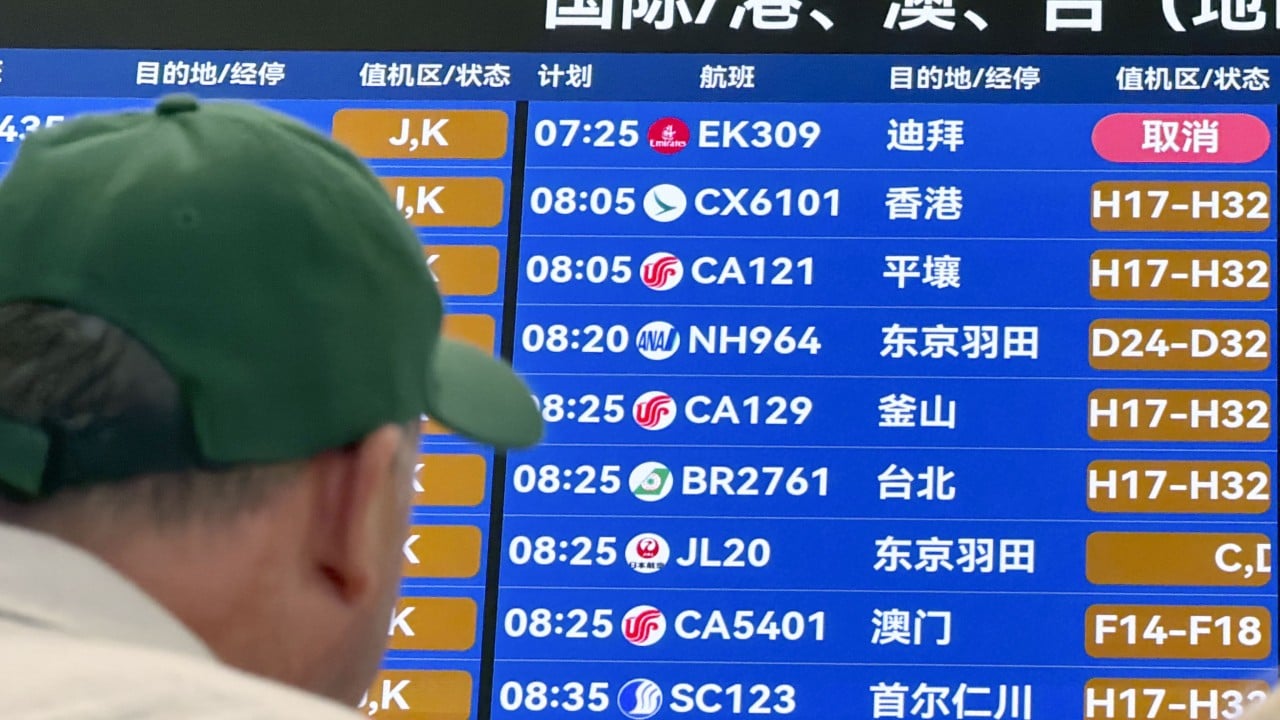
The gate closes in Beijing. The screen updates to "Departed." A simple status change on a digital board, yet a profound shift in the gravity of the East.
One might wonder if the pilots feel the weight of what they carry. They are flying through some of the most sensitive airspace on the planet, bridging two worlds that are technically at odds but practically inseparable. They navigate by the same stars as every other pilot, but their destination is a place where the stars are often the only things that shine at night.
The resumption of these flights is a victory for the tangible over the theoretical. You can debate sanctions in a boardroom for a thousand hours, but you cannot argue with the physical presence of an aircraft on a runway. It is there. It is real. It is moving people and things. It is the undeniable evidence of a relationship that refuses to die, regardless of how many miles of barbed wire and diplomatic red tape are placed in its way.
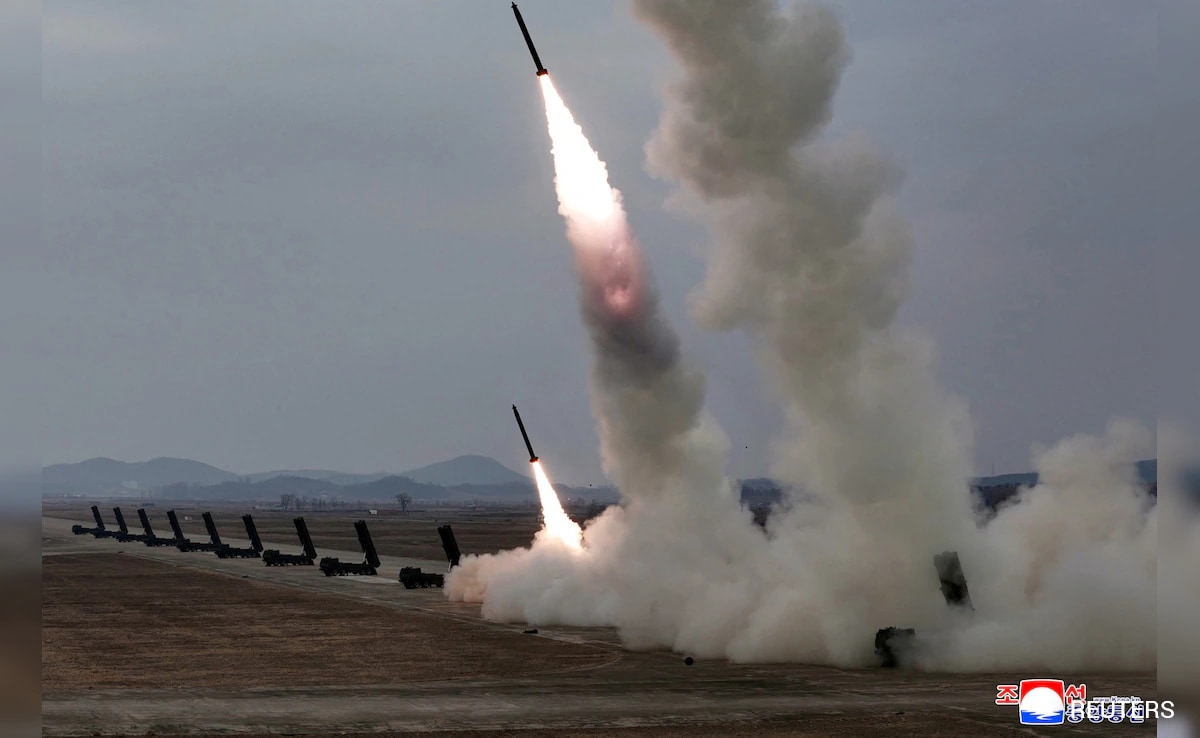
The next time you see a news ticker mention "increased connectivity" or "resumed diplomatic travel," don't think of a graph. Think of the man with two phones. Think of the student with the heavy backpack. Think of the pilot looking at the horizon. They are the ones actually living the story. They are the ones who know that in the game of nations, the most powerful move isn't always a missile launch—sometimes, it’s just a scheduled flight on a Tuesday morning.
The engines cool on the Pyongyang tarmac. The passengers disperse into a city of wide boulevards and silent monuments. The plane sits, waiting for the return leg, a lonely but vital bridge between the giant and the hermit. The sky remains open. For now, that is enough.