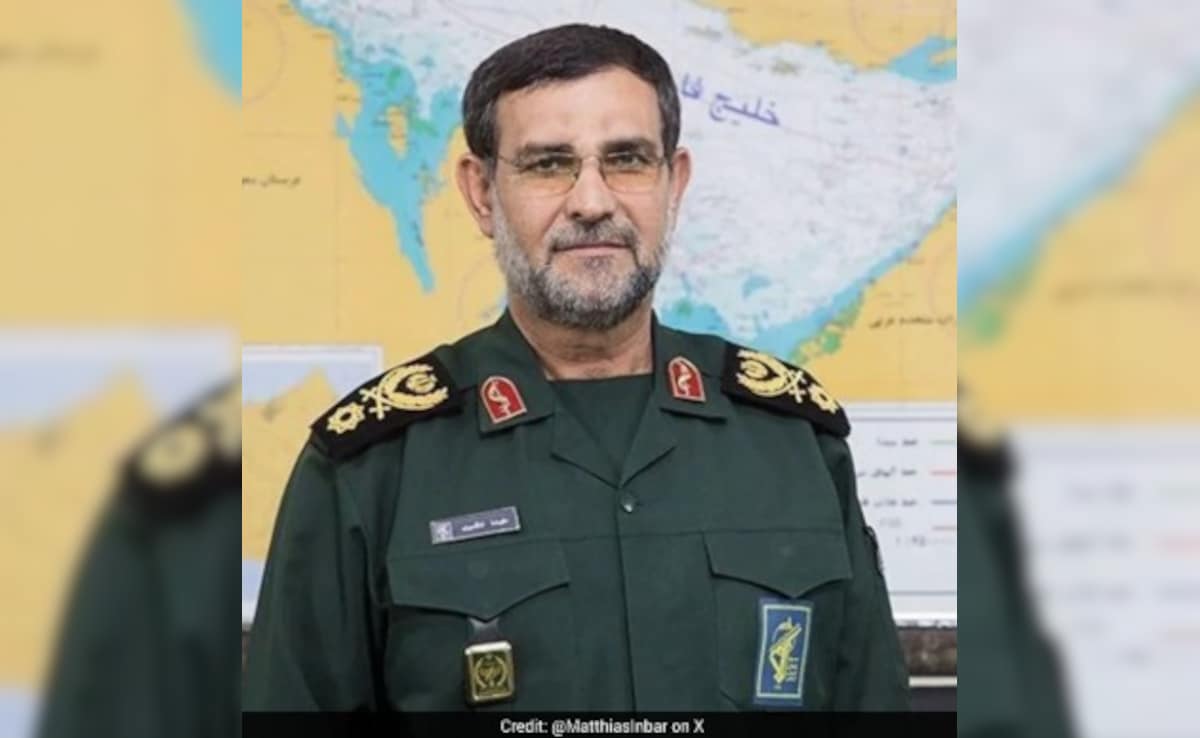
The death of Alireza Tangsiri, Commander of the Islamic Revolutionary Guard Corps Navy (IRGCN), represents a structural fracture in Iran’s "Anti-Access/Area Denial" (A2/AD) capabilities within the Strait of Hormuz. While the IRGCN functions as a decentralized paramilitary force, its operational efficacy relies on a specific synthesis of ideological fervor and asymmetric tactical innovation developed under Tangsiri’s tenure. His removal from the Persian Gulf theater necessitates an immediate reassessment of the IRGCN’s capacity to execute high-intensity swarming maneuvers and maintain its sophisticated "grey zone" maritime strategy.
The Doctrine of Asymmetric Maritime Friction
Tangsiri’s leadership was defined by the transition from a traditional coastal defense force to an aggressive, platform-agnostic maritime insurgency. This doctrine operates on three fundamental pillars:
- Platform Miniaturization and Proliferation: Shifting capital investment from large, vulnerable frigates to hundreds of fast-attack craft (FAC) equipped with indigenous anti-ship cruise missiles (ASCMs).
- Geographic Leverage: Utilizing the unique bathymetry and narrow chokepoints of the Persian Gulf to negate the technological advantages of carrier strike groups.
- Ambiguous Intent: Executing operations—such as ship seizures or limpet mine deployments—that sit just below the threshold of conventional warfare, complicating the rules of engagement for Western navies.
The command void created by Tangsiri’s death disrupts the "centralized command, decentralized execution" model that he spent decades refining. In asymmetric warfare, the loss of a primary architect often leads to a temporary regression toward more conservative, risk-averse operational postures as the successor establishes internal legitimacy.
Quantifying the Command Vacuum
The IRGCN is not a standard military hierarchy; it is a patronage network where personal loyalty to the Supreme Leader is mediated through specific commanders. Tangsiri served as the vital link between the IRGC’s strategic clerical leadership and the tactical frontline units.
The immediate impact of his absence can be measured through the lens of Command and Control (C2) Elasticity. Under Tangsiri, C2 was highly elastic, allowing individual fast-boat commanders significant autonomy to harass commercial shipping while remaining aligned with Tehran’s broader diplomatic signaling. Without his specific brand of oversight, the risk of "tactical drift"—where low-level commanders initiate unauthorized escalations—increases significantly. This creates a volatile environment where a localized skirmish could inadvertently trigger a regional kinetic conflict.
Technical Evolution of the IRGCN Under Tangsiri
To understand the magnitude of this leadership change, one must evaluate the technical milestones achieved during Tangsiri’s command. He oversaw the integration of AI-enabled autonomous swarm technologies and the deployment of the Shahid Soleimani-class catamaran, which features radar-evading hull designs.
The technical shift focused on:
- Subsurface Asymmetry: The introduction of extra-large unmanned underwater vehicles (XLUUVs) designed for port blockage and clandestine mining.
- Long-Range Precision: Expanding the range of the Khalij Fars anti-ship ballistic missiles to cover the entirety of the Gulf of Oman.
- Drone Integration: Converting civilian-style cargo vessels into mobile "drone carriers," effectively creating a low-cost, expendable blue-water capability.
These advancements were not merely hardware upgrades; they were psychological tools used to project power despite crippling economic sanctions. The successor will inherit a technically capable fleet but will face the daunting task of maintaining the R&D momentum required to counter evolving Western directed-energy weapons and electronic warfare suites.
Geopolitical Repercussions and the Hormuz Bottleneck
The Strait of Hormuz remains the world’s most sensitive energy artery, with approximately 20% of global petroleum liquids consumption passing through it daily. Tangsiri’s frequent threats to "close the Strait" were a cornerstone of Iranian deterrence.
The loss of the commander responsible for this specific threat profile alters the risk calculus for global insurance markets and maritime logistics firms. If the IRGCN enters a period of internal restructuring, we may see a temporary lull in "tit-for-tat" tanker seizures. However, if a hardline protégé takes the helm, the frequency of "unprofessional and unsafe" encounters—as defined by the U.S. 5th Fleet—is likely to rise as a demonstration of continued strength.
The second limitation of this leadership transition is the potential for friction between the IRGCN and the regular Iranian Navy (Artesh). Tangsiri was a fierce advocate for the IRGCN’s primacy in coastal defense. His death might allow the Artesh to reclaim a larger share of the defense budget, leading to a shift back toward conventional naval procurement, which is arguably easier for Western powers to track and neutralize.
The Successor’s Dilemma: Institutionalization vs. Innovation
The IRGC must now choose between an institutionalist—who will prioritize stability and adherence to established protocols—and an innovator who will attempt to push the boundaries of asymmetric tech even further. The internal selection process will signal Tehran’s broader geopolitical intent.
A move toward institutionalization suggests a desire to lower regional tensions to facilitate sanctions relief negotiations. Conversely, appointing a radical innovator signals an intent to double down on the "Resistance Axis" strategy, utilizing the IRGCN as a primary lever to exert pressure on the United States and its regional allies.
The bottleneck in Iranian naval strategy is no longer just hardware or personnel; it is the ability to synthesize disparate technologies into a cohesive threat. Tangsiri was the synthesizer. His death forces the IRGC to prove that its "Smart Navy" concept is an institutional reality rather than a product of a single commander’s vision.
Strategic Trajectory for Maritime Security
The coming months will reveal the resilience of the IRGCN’s command structure. Intelligence agencies and maritime analysts should monitor three specific indicators to gauge the direction of the post-Tangsiri era:
- Exercise Frequency and Complexity: Large-scale "Great Prophet" style exercises will be used to project an image of uninterrupted command continuity.
- UAV Deployment Patterns: Increased use of surveillance drones over the Strait will indicate a shift toward defensive posturing and intelligence gathering during the transition.
- Rhetorical Shifts: Changes in the official messaging from the IRGCN’s public relations wing regarding "foreign presence" in the Gulf.
The IRGCN remains a formidable force, but it has lost its most effective operational artist. The degradation of leadership at this level creates a window of tactical uncertainty. Regional actors and global powers must prepare for a period of heightened volatility as the IRGCN redefines its identity in a post-Tangsiri landscape. The primary strategic play for Western maritime coalitions is to increase surveillance and electronic monitoring of IRGCN bases to detect any signs of fracturing or unauthorized mobilization during this transition period.
The tactical response must involve reinforcing the "International Maritime Security Construct" (IMSC) to ensure that any attempt by a new IRGCN commander to "prove" their worth through aggression is met with a coordinated, non-escalatory show of force. This maintains the status quo while the internal power dynamics of the IRGC stabilize.