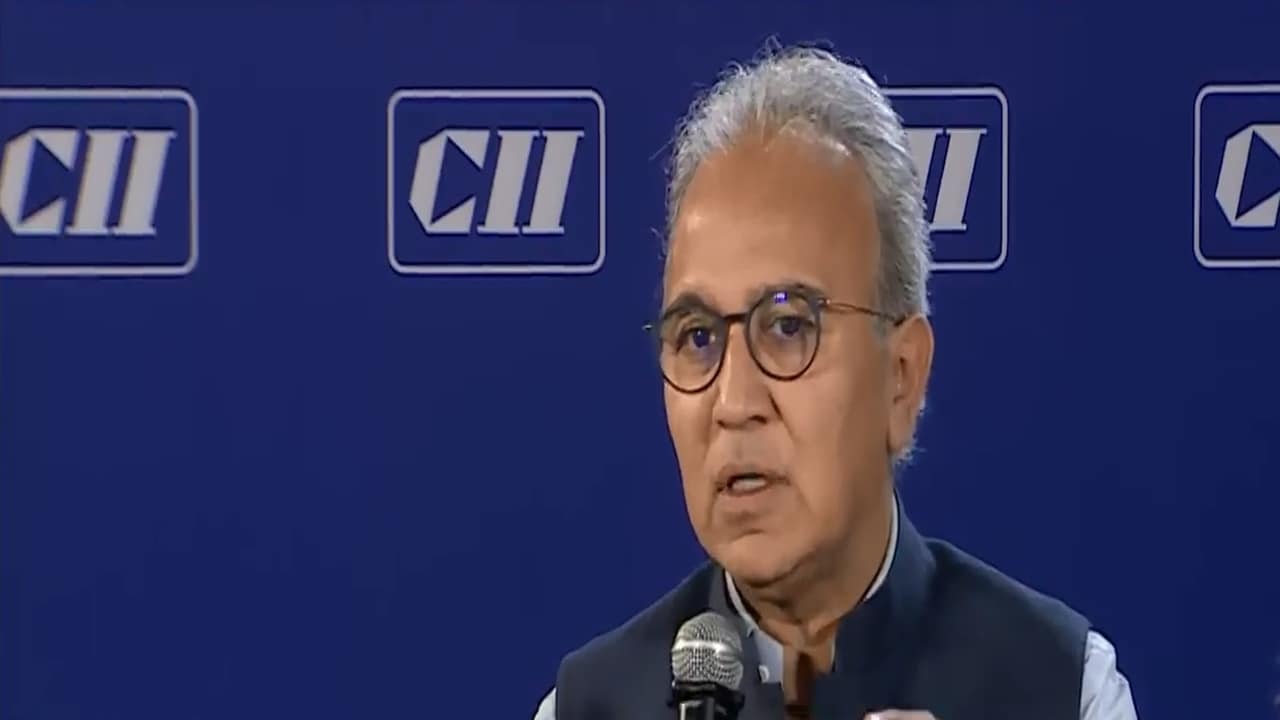
The global trade map is bleeding red, and it isn't just about the Suez Canal anymore. While most headlines focus on the immediate splash of a missile or a diverted tanker, the real damage is happening in the spreadsheets of logistics managers from Mumbai to Munich. Rajiv Memani, Chairman of EY India, recently pointed out that the stress on supply chains and logistics is hitting a boiling point as West Asia—often called the Middle East—descends into deeper volatility. He's right. But he’s only scratching the surface of how this fundamentally changes the way you’ll do business for the next decade.
If you think this is a temporary "blip" in shipping costs, you’re reading the wrong data. We’re seeing a structural shift. Ships aren't just taking the long way around the Cape of Good Hope; they're burning through cash, carbon credits, and time that global inventory models simply didn't account for. It’s a mess.
The Invisible Tax on Every Container
Shipping isn't a vacuum. When a vessel avoids the Red Sea, it adds roughly 3,500 nautical miles to its journey. That’s about 10 to 14 days of extra sailing. For a world addicted to "Just-in-Time" manufacturing, those two weeks are an eternity.
Think about the math. You’ve got higher fuel consumption. You’ve got crew wages for those extra days. Then there are the insurance premiums. War risk surcharges have skyrocketed. Even if your cargo isn't going through a combat zone, the "contagion effect" in the insurance market means you're paying more because the global risk pool is shallower. This is a direct tax on global trade.
Companies used to optimize for cost. Now, they’re forced to optimize for "maybe." Maybe the ship arrives. Maybe the port isn't congested. That uncertainty is the most expensive variable in your business.
Why Diversification is Failing
For years, the big buzzword was "China Plus One." The idea was simple: don't put all your eggs in one basket. Move some production to Vietnam, India, or Mexico. But here’s the problem nobody wants to talk about. If you move your factory to India to serve the European market, you’re still tethered to the West Asian maritime routes.
Regional instability doesn't care where your factory sits if the highway to your customer is blocked. We’re seeing a massive realization that geographic diversification of manufacturing doesn't solve the geographic concentration of logistics.
The India-Middle East-Europe Economic Corridor (IMEC) was supposed to be the shiny new alternative. It’s a visionary project. But let's be real: building rail lines through desert zones and establishing cross-border digital trade agreements takes years, if not decades. You can't build a railway as fast as a drone can disrupt a shipping lane.
The Air Freight Scramble
When the sea gets risky, everyone looks at the sky. We’re seeing a predictable but frantic shift toward air cargo for high-value goods. Electronics, automotive components, and specialized machinery are being pulled off ships and shoved into the bellies of planes.
It’s a desperate move. Air freight is significantly more expensive than ocean freight—sometimes five to ten times more. It also has a fraction of the capacity. You can't fit a thousand containers on a Boeing 747. This scramble drives up prices for everyone else, including industries that always relied on air, like pharma or fresh produce.
If your strategy is "we'll just fly it in if things get bad," you’re competing with every other panicked CEO in your sector. That isn't a strategy. It's an expensive prayer.
Inventory is the New Gold
The era of lean manufacturing is dying. It’s being replaced by "Just-in-Case" inventory. Companies are now holding 20% to 30% more buffer stock than they did five years ago. This ties up massive amounts of working capital.
- Higher Warehousing Costs: You need more space to store that extra stuff.
- Obsolescence Risk: The longer things sit in a warehouse, the more likely they are to become outdated or damaged.
- Interest Rates: Borrowing money to buy inventory that sits on a shelf is painful when interest rates aren't near zero.
Memani and other leaders are seeing this reflected in corporate balance sheets. Cash that could have gone into R&D or expansion is now sitting in a warehouse in New Jersey or Rotterdam, acting as an expensive insurance policy against a geopolitical flare-up thousands of miles away.
The Talent Gap in Logistics
Here’s a detail most people miss: we don't have enough people who know how to manage this level of chaos. For twenty years, logistics was about hitting "repeat" on a stable system. Now, it’s about daily crisis management.
We need people who understand geopolitics as well as they understand pallet dimensions. If your logistics team doesn't have a direct line to your risk management and C-suite, you’re flying blind. The technical skills are easy to find. The "street smarts" to navigate a shifting global trade map? That’s rare.
What You Should Actually Do
Stop waiting for "normal" to come back. This is normal. The friction in West Asia is a feature of the new global order, not a bug.
Start by auditing your Tier 2 and Tier 3 suppliers. You might know where your direct supplier is, but do you know where they get their raw materials? If their sub-components pass through the Strait of Hormuz, you’re still at risk.
Next, re-evaluate your pricing models. If you haven't built "logistics volatility" into your contracts, you’re going to eat the cost when shipping rates triple overnight. Dynamic pricing isn't just for Uber; it needs to be part of your B2B agreements.
Finally, look at "near-shoring" with a cold, hard eye. If your customers are in North America, manufacturing in Mexico isn't just about labor costs anymore. It’s about removing the ocean from your supply chain entirely. If you can truck it, you can control it. If it has to cross an ocean, you're at the mercy of a world that’s increasingly comfortable with conflict.
Get your inventory out of the water and onto land as close to your customer as possible. Shift your focus from "cheapest" to "most resilient." The companies that survive the next decade won't be the ones with the lowest margins—they'll be the ones that actually deliver the product when the rest of the world is stuck at sea.